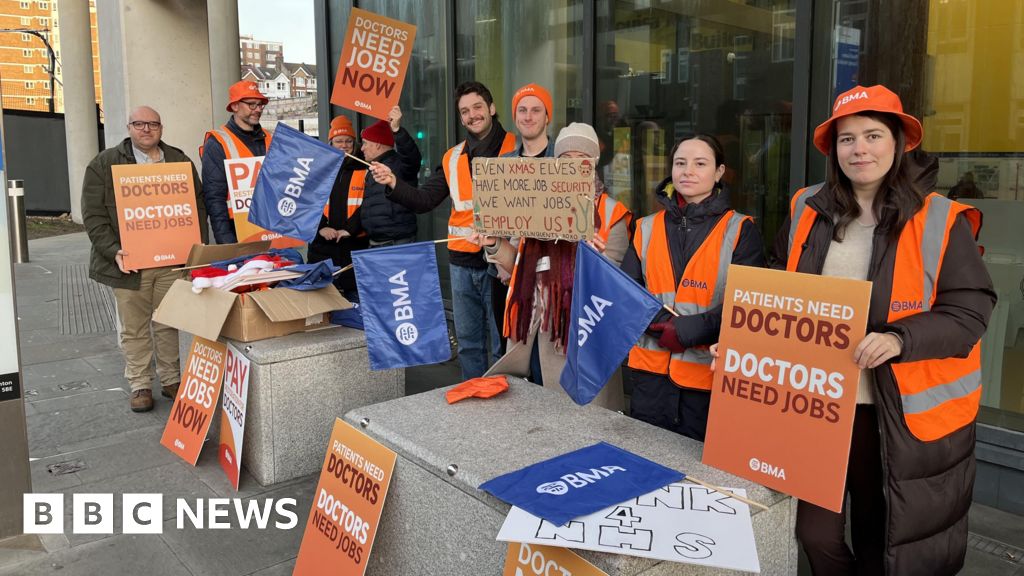
Doctors in south‑east England (Kent, Sussex and Surrey) have begun a five‑day strike—the 14th walkout in the long‑running pay dispute—prompting NHS trusts to warn of widespread service disruption and cancelled or rearranged appointments as they struggle to maintain capacity. The British Medical Association is calling for a long‑term pay increase for resident (junior) doctors and guaranteed new training places, while Health Secretary Wes Streeting said talks remain stalled on pay and estimated the industrial action will cost about £250m and worsen operational pressures. NHS leaders say emergency care will be maintained and ask patients to use 999 for serious emergencies and NHS 111 for less urgent issues, but the dispute underscores sustained recruitment and retention risks and potential financial and activity impacts for trusts until a settlement is reached.
Resident doctors in south‑east England (Kent, Sussex and Surrey) have begun a five‑day strike — the 14th walkout in the ongoing pay dispute — with the British Medical Association demanding long‑term pay rises for resident (junior) doctors and guaranteed new training places. Health Secretary Wes Streeting reported talks remain stalled after five hours, saying parties are "too far apart" on pay.
NHS leaders warn trusts are struggling to maintain the same level of services seen in previous walkouts, citing cancelled or rearranged appointments and added pressure on staff making difficult patient contacts. Streeting put a headline cost on the industrial action at about £250m and said the strikes will increase operational pressures and affect patients and the workforce, while the BMA says it will work with trusts to maintain safety.
The repeat nature of the strikes and the recruitment/retention rationale cited by doctors point to persistent structural pressures in staffing and pay that can translate into higher near‑term operating costs and elective backlogs for affected trusts. Sentiment attached to the story is moderately negative (sentiment score -0.45) with a low measured market impact (0.28), implying concentrated operational and fiscal risk regionally rather than an immediate systemic market shock; investors should monitor negotiation outcomes, reported cancellation volumes and any government funding responses as primary risk triggers.
AI-powered research, real-time alerts, and portfolio analytics for institutional investors.
Request DemoOverall Sentiment
moderately negative
Sentiment Score
-0.45
