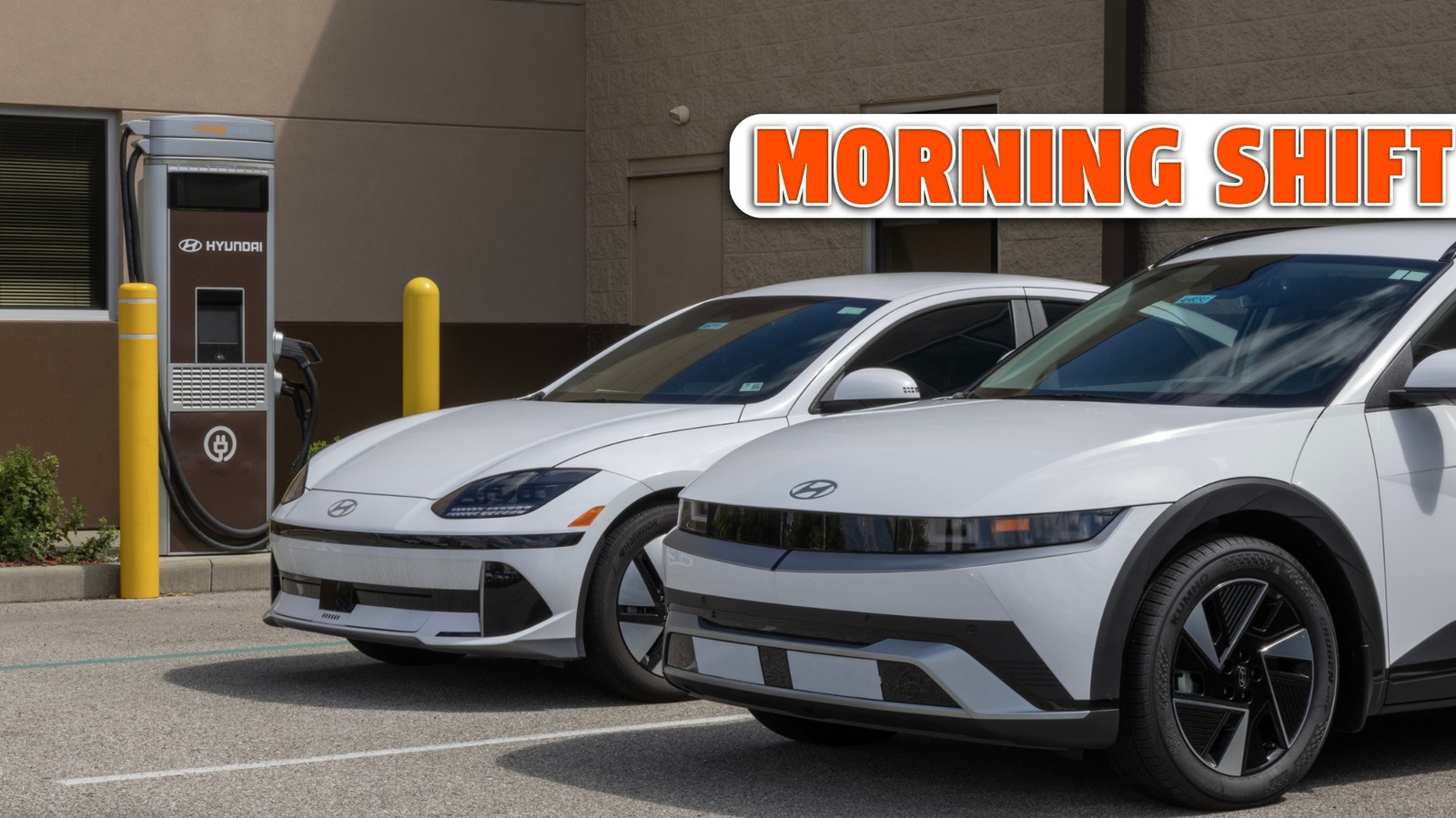
EV registrations plunged 41% YoY in January to 59,802 units, cutting EV market share to 5.1% from 8.3% a year earlier. Policy shifts (federal tax-credit repeal and relaxed fuel-economy penalties) and stronger gasoline/hybrid demand forced OEM pullbacks—Honda warned up to $15.8B in write-downs as Prologue sales fell 74% (658 Jan registrations) and Tesla registrations dropped 26% to 32,123. Geopolitical risk from the U.S.-Israel war with Iran is pushing crude back above $90/bbl and national gas to $3.63 (+$0.65, +19.7% since pre-war), heightening downside risk to auto demand, while the federal lawsuit against California’s ZEV rules increases regulatory uncertainty for the industry.
Policy-driven demand destruction for EVs has migrated quickly from headline risk to a measurable inventory and residual-value problem: unsold BEVs are forcing deeper dealer discounts, accelerating used-EV supply and compressing lease residuals that were underwriting OEM EV margins. That dynamic will pressure a) captive finance profit pools (losses on residuals) within 2-4 quarters and b) battery suppliers facing order deferrals, which can cascade into idled capacity and fixed-cost write-offs over the next 6-18 months.
Geopolitics is creating a two-stage demand shock. In the near term (days–months), oil-price spikes and consumer uncertainty cut discretionary vehicle spending and favor lower-priced ICE/hybrid volume sellers; over 6–24 months, sustained high pump prices would normally accelerate EV substitution, but absent federal incentives and with lingering affordability gaps the conversion will be partial and uneven — benefitting low-cost EVs and hybrids rather than premium niche models.
Regulatory uncertainty — the federal vs California fight — is a multiplier on corporate capital-allocation Optionality: automakers can now justify pausing EV capex knowing that one major jurisdiction may be blocked from enforcing aggressive ZEV mandates. Expect strategic retrenchment into product platforms that maximize short-term FCF (platform sharing, rebadging) and opportunistic M&A, not a smooth continuation of prior multi-year electrification roadmaps.
From a competitive angle, market share gains will accrue to manufacturers that can flex production between ICE/hybrid and EV and those with strong franchise used-vehicle channels; luxury EV hopefuls face the steepest re-rating risk as demand bifurcates and residuals fall. Credit and ABS pools tied to lease residuals are an underpriced contagion node that should be watched as a first-order risk to securitized auto credit spreads within 3–9 months.
AI-powered research, real-time alerts, and portfolio analytics for institutional investors.
Request DemoOverall Sentiment
strongly negative
Sentiment Score
-0.70
Ticker Sentiment
