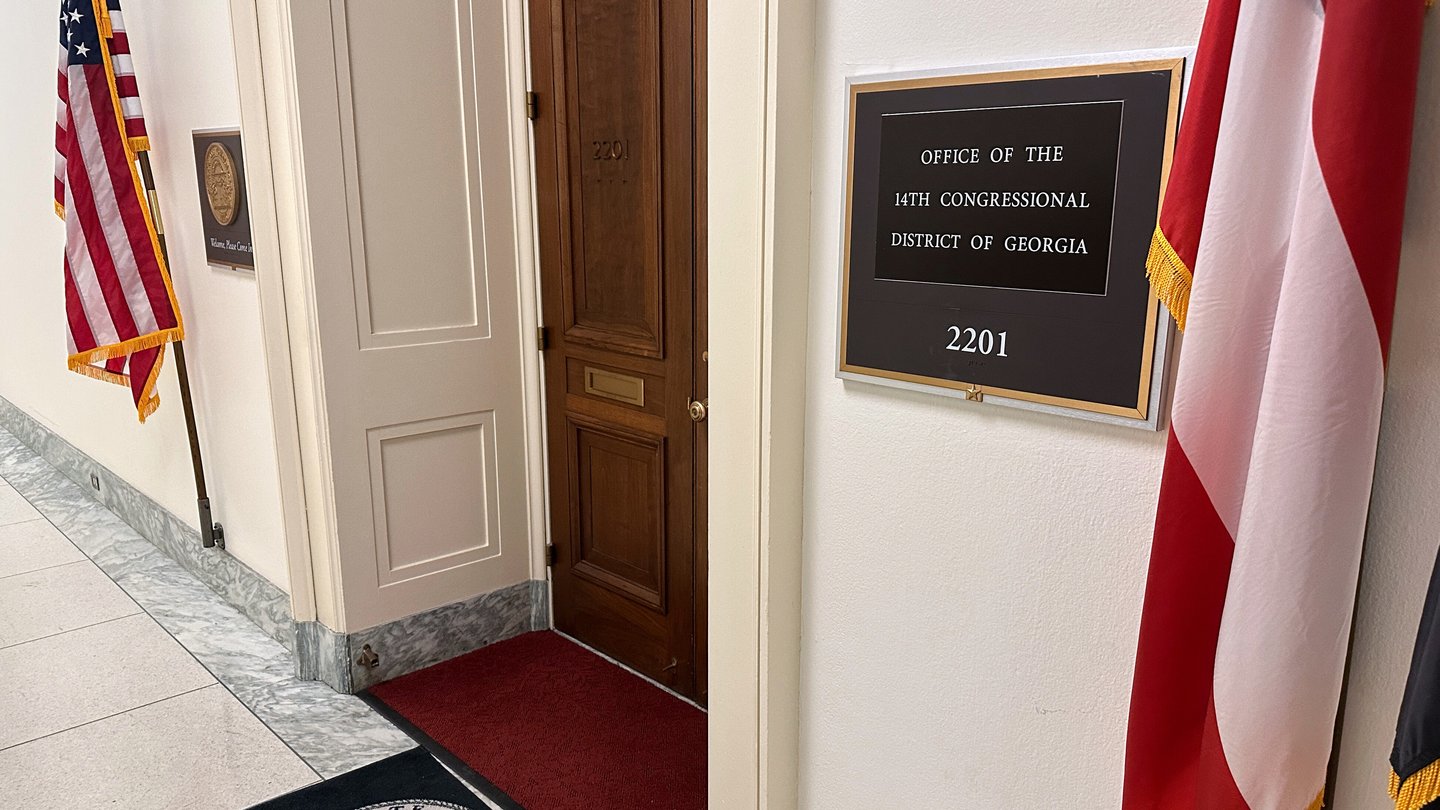
Key event: A special election for Georgia's 14th Congressional District is being held Tuesday to replace Marjorie Taylor Greene, with 17 active contenders remaining and roughly 521,000 registered voters; nearly 54,000 ballots had already been cast. Fundraising: Democrat Shawn Harris leads with about $4.3M raised and ~$290k cash on hand; Republican Clay Fuller has raised ~$787k with ~$238k cash; the contest features 12 Republicans vs. 3 Democrats and could force an April 7 runoff if no candidate wins a majority. Context: Trump carried the district with ~68% in 2024 and Republicans hold a slim U.S. House majority, so an upset would tighten GOP margins; separate Georgia special elections for SD-53, HD-94 and HD-130 are unlikely to flip state legislative control.
The special-election structure (single ballot, crowded GOP field, potential April runoff) creates a multi-week event window that amplifies headline and local-ad-spend volatility rather than delivering a one-day pivot. Expect two identifiable volatility pulses: immediate market noise around Tuesday’s results and a second, higher-impact episode if a runoff is triggered for April 7; the latter carries asymmetric tail risk because it prolongs uncertainty about the House margin into the Q2 legislative calendar.
Because the Democratic vote is concentrated across few candidates while the GOP is split, the path to a Democratic advance is idiosyncratic and low-signal — small shifts in turnout or targeted messaging can flip outcomes with minimal change in aggregate polling; that makes option-based hedges and concisely timed directional plays preferable to large directional equity exposures. Ad-buy dynamics are a second-order winner: concentrated local and digital political spend over the next 6–8 weeks will disproportionately benefit platforms with highly efficient regional targeting and short-cycle monetization.
Legislative friction from a tightened House majority is a medium-term macro risk for markets — higher odds of budget showdowns, delays to deregulatory or fiscal measures, and episodic T-bill liquidity pressures. That elevates the value of short-duration liquid hedges and selective exposure to earnings-resilient, advertising-dependent technology names that monetize incremental political spend quickly.
AI-powered research, real-time alerts, and portfolio analytics for institutional investors.
Request DemoOverall Sentiment
neutral
Sentiment Score
0.00
