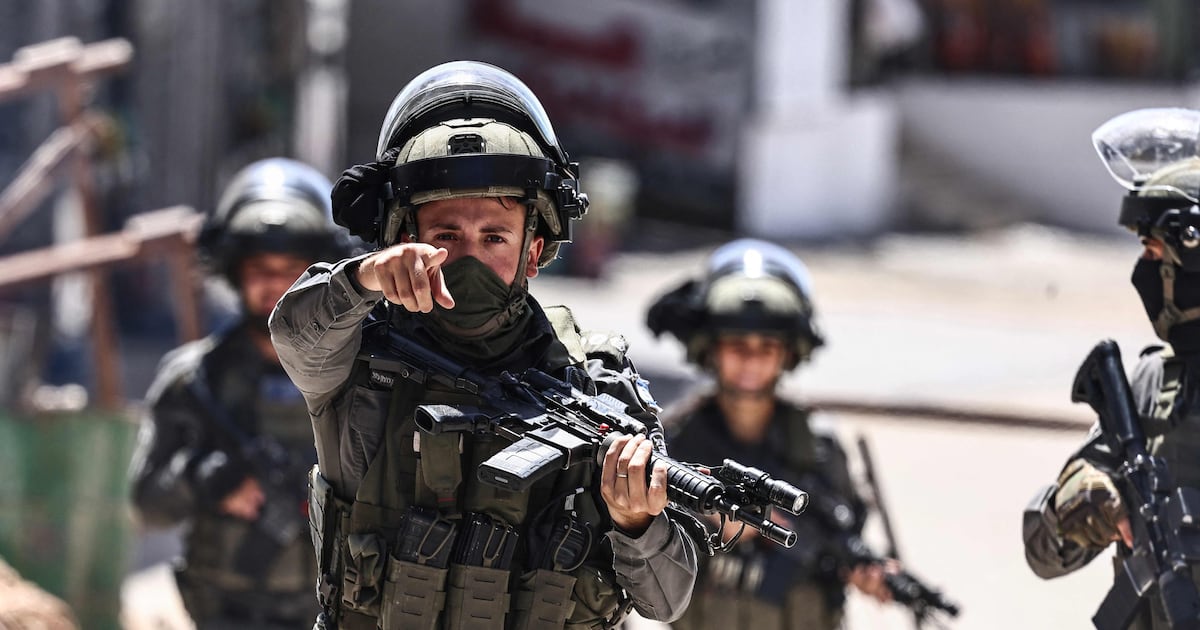
Israeli forces killed two Palestinians in separate incidents in the West Bank, including a suspect in a ramming attack that injured two settlers and another man who later died from gunshot wounds near Jerusalem. The report also cites escalating Israeli military operations, forcible displacement of 75% of Tulkarm refugee camp residents, and 170 settler-violence incidents in the first 17 days after the February 28 Iran strikes. The broad escalation in violence and displacement raises regional geopolitical risk and keeps the situation highly volatile.
The market implication is not a direct commodity shock, but a rising probability of a durable West Bank instability regime that keeps Israel’s domestic risk premium elevated. That tends to support defense, border-security, surveillance, and counter-drone procurement over the next 6-18 months, while pressuring Israeli consumer, transport, and tourism-linked exposures through repeated disruption and higher insurance/security costs. The more important second-order effect is that persistent fragmentation in the West Bank can force the IDF to sustain manpower-intensive operations, which is fiscally negative and politically sticky even if it doesn’t move macro data immediately.
The escalation also raises the probability of asymmetric retaliation elsewhere, which is where the real tail risk sits: a single incident can cascade into rocket exchanges, shipping risk, or broader regional proxy activity. That means the near-term catalyst set is event-driven rather than fundamentals-driven, with the highest volatility window over days to weeks around funerals, raids, arrests, and any additional official designations or international actions. The report language around blacklists and rights accusations matters because it increases the odds of reputational drag, procurement scrutiny, and legal friction for firms with Israeli security or prison-service ties.
Contrarianly, the market may be overpricing headline risk for broad EM or oil-beta because this pattern has not yet translated into a sustained energy supply disruption. The better trade is to isolate beneficiaries of persistent internal security spending rather than making a macro-geopolitical bet. If the violence remains contained to the West Bank, defense software/hardware and cyber names should outperform broader Israel-sensitive equities, while any pullback in Israeli banks or consumer cyclicals is more likely to be a timing opportunity than a structural short unless the unrest broadens materially.
AI-powered research, real-time alerts, and portfolio analytics for institutional investors.
Request TrialOverall Sentiment
strongly negative
Sentiment Score
-0.80
