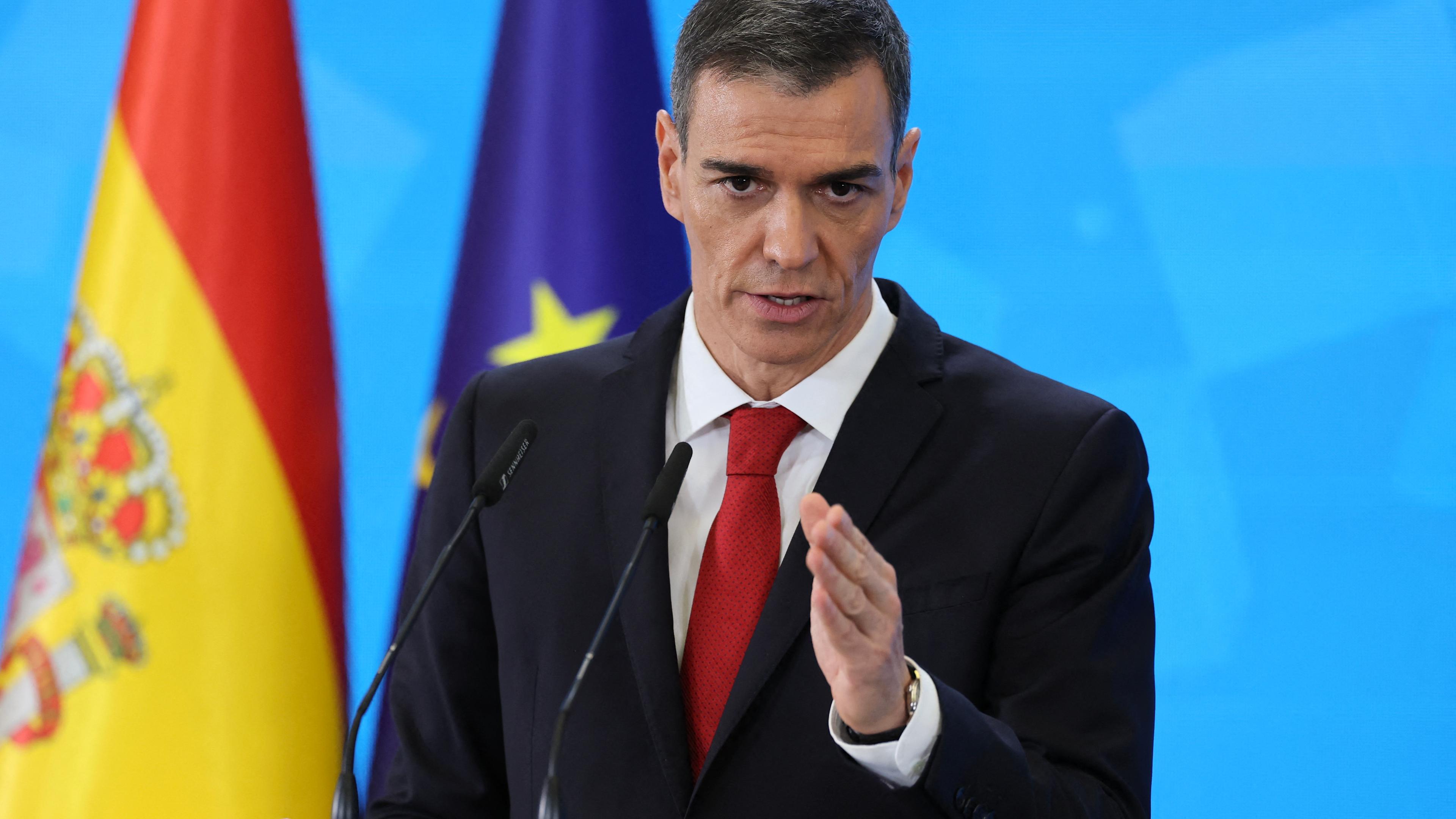
Spain rejected reports that the U.S. is considering suspending it from NATO after Madrid refused support for U.S. operations in the Iran war, including denying base access and closing airspace to U.S. planes. The article highlights escalating strain between the U.S. and NATO allies, with Trump also threatening trade retaliation against Spain and questioning Britain’s Falklands claim. While NATO says there is no mechanism to expel members, the rhetoric increases geopolitical and alliance risk.
The market’s first-order read is ‘headline noise,’ but the second-order effect is more important: any credible signal of conditional U.S. retrenchment from NATO raises the policy option value of European rearmament, joint procurement, and domestic industrial capacity. The winners are not the headline defense primes alone, but the full stack of enablers — munitions, air defense, shipbuilding, secure comms, and maintenance — because Europe’s constraint is no longer intent but inventory and throughput. That shifts spending from long-cycle platform orders toward near-term replenishment and readiness, which typically benefits companies with existing EU production footprints and shorter delivery lead times.
The more investable implication is a widening dispersion inside European defense. Countries perceived as strategically aligned with Washington may gain accelerated procurement flows, while Spain-specific political friction is likely a nuisance rather than a macro driver unless it spills into base access, airspace coordination, or NATO staffing decisions over the next 1-3 quarters. A larger risk is that alliance uncertainty raises the probability of duplicated procurement and fragmented standards, which is negative for integration-dependent vendors but positive for domestic champions that can localize production quickly.
The contrarian angle is that markets may be underpricing the duration of the scare but overpricing the probability of formal NATO rupture. Legal and institutional barriers make outright expulsion or exit unlikely in the near term, so the tail risk is not a clean break but a slow erosion of trust that forces Europe to spend more regardless of headlines. That argues for buying the spending beneficiaries on weakness rather than chasing the headline, because the underlying budget reallocation can persist for years even if diplomatic rhetoric cools in days.
Tradeable catalysts are: upcoming NATO defense budget revisions, EU procurement announcements, and any U.S. move to condition cooperation on burden-sharing, which could re-rate the defense basket again. The near-term hedge is that if rhetoric de-escalates, the most crowded defense names could give back quickly, but the munitions/replenishment complex should remain bid as inventories are still the binding constraint.
AI-powered research, real-time alerts, and portfolio analytics for institutional investors.
Request TrialOverall Sentiment
moderately negative
Sentiment Score
-0.35
