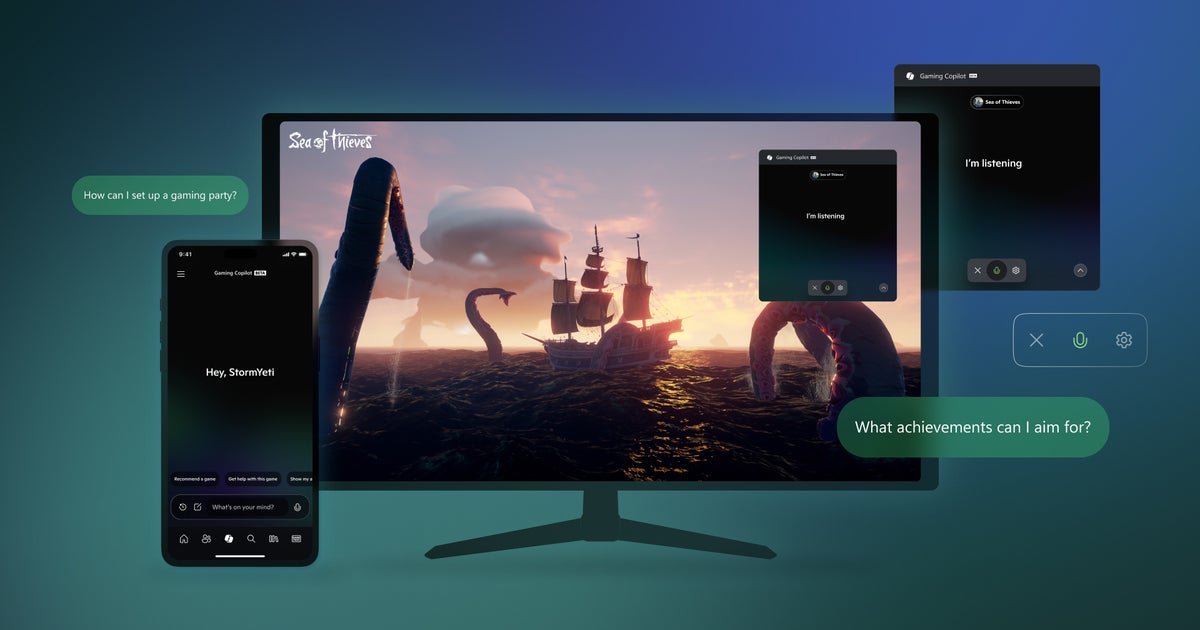
Gaming Copilot will be expanded to current‑gen Xbox consoles (slated for 2026), after launching in 2024 on Minecraft and entering beta on PC, mobile and the ROG Xbox Ally; Microsoft announced beta testing in May 2025. New Xbox Gaming CEO Asha Sharma and CCO Matt Booty stressed a cautious, user‑centric approach—'no bad AI' and no pressure from Microsoft to force AI—suggesting limited immediate revenue implications and modest near‑term market impact.
Microsoft expanding player-facing AI into its gaming services materially changes the unit economics of retention and engagement: even modest uplifts in session length (1–3%) or churn reduction (50–150bps) across a multi-million subscriber base maps to low‑hundreds of millions in annual recurring revenue, concentrated in the 6–24 month window. That lever can be pulled without raising content spend, because incremental engagement monetizes existing back catalog and Game Pass-style bundles more efficiently than funding new AAA titles.
The infrastructure kicker is underappreciated: cloud-hosted inference and low-latency model hosting create a recurring, high-margin demand signal for Azure compute and GPU capacity distinct from one‑time platform sales. A 10–30% step-up in gaming inference hours would show up as durable revenue growth for Azure’s gaming vertical over 12–36 months and benefits upstream GPU suppliers and datacenter services.
Countervailing frictions compress near‑term monetization. Microsoft’s explicit cultural posture to avoid “soulless” or churn‑driven AI deployment suggests conservative feature rollouts and slower capture of advertising/data revenue, delaying visible P&L impact into FY+1 and FY+2 horizons. Regulatory, IP, and multiplayer integrity issues (cheating, hallucinations, moderation) are credible tail risks that could force feature rollbacks or require expensive compliance tooling.
Strategically, the move raises switching costs across ecosystems: integrated AI assistance becomes a sticky layer on top of subscription services and cloud streaming, increasing barriers for competitors who lack comparable cloud scale or first‑party subscription platforms. This erects a two-sided moat—consumer retention on one side, and higher marginal demand for cloud compute and developer tooling on the other—while creating second-order winners in GPU and middleware providers.
AI-powered research, real-time alerts, and portfolio analytics for institutional investors.
Request DemoOverall Sentiment
mildly positive
Sentiment Score
0.10
Ticker Sentiment
