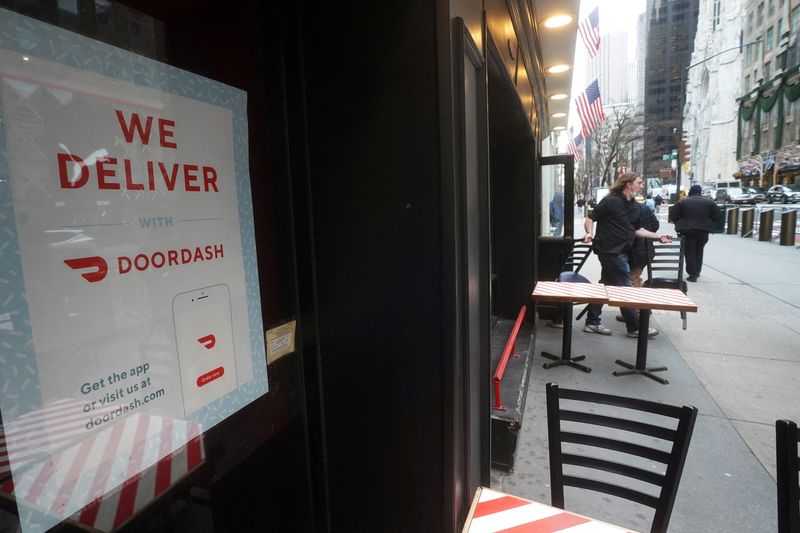
Morgan Stanley turned constructive on the gig-economy group after Q1 results, keeping DoorDash and Uber at overweight while highlighting strong demand across rideshare, food delivery and grocery/retail delivery. DoorDash and Uber's online grocery/retail GOV grew 32% and 40% year over year to $4.1 billion and $3.5 billion, respectively, versus Instacart's 13% growth to $10.3 billion. Snap's price target was raised 8% to $7 after a Q1 EBITDA beat of $233.3 million, though estimates were cut after the loss of an expected Perplexity partnership.
The clearest market signal is not that gig/commerce demand is healthy, but that monetization is compounding faster for the platforms with the best subscription flywheels and merchant density. The combination of higher order frequency, heavier subscriber spend, and improving grocery/retail attach suggests the category is moving from a pure take-rate story toward a mix-shift story where margins expand even if headline growth moderates. That favors DASH and UBER over CART because the former two are still in the phase where share gains can be captured without needing to defend an incumbent-scale base.
The second-order winner is any enabler of merchant onboarding, inventory digitization, and last-mile orchestration. If GenAI meaningfully lowers catalog setup and substitution friction, the bottleneck shifts from consumer acquisition to operational integration, which benefits the platforms that can standardize merchant workflows at scale. That also means AMZN is the real strategic overhang: an Amazon push in fast delivery can compress the long-term terminal multiple for all three by raising the bar on convenience and pricing discipline.
The market may be underestimating how asymmetric the current growth gap is. If DASH/UBER keep comping at roughly 3x CART in grocery/retail, share loss becomes self-reinforcing for the incumbent because smaller relative growth reduces reinvestment capacity and weakens merchant mindshare. The risk to the bullish case is that this remains a share-shift story rather than category expansion; if frequency normalizes after the current earnings cycle or if consumer baskets downshift, the leverage to EBITDA can fade quickly over the next 2-3 quarters.
SNAP looks like a lower-quality beneficiary of the AI theme: the valuation lift is being funded by cost discipline rather than durable revenue reacceleration. Without the removed partnership, the company has a harder time proving that AI improves monetization rather than just engagement efficiency, so near-term upside is capped unless North America user trends stabilize. The consensus likely still overweights optionality and underweights the fact that user decay in a mature ad product is much harder to reverse than short-term margin beats.
AI-powered research, real-time alerts, and portfolio analytics for institutional investors.
Request DemoOverall Sentiment
mildly positive
Sentiment Score
0.35
Ticker Sentiment
