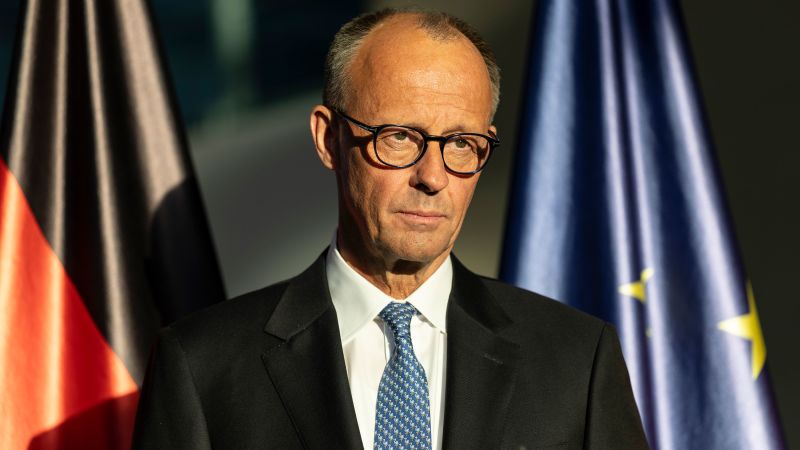
German Chancellor Friedrich Merz has recently shifted his tone regarding Germany's support for Israel, expressing dismay over the civilian suffering in Gaza and questioning the logic of the IDF's actions, marking a notable departure from Germany's long-standing policy of virtually unquestioned backing rooted in "staatsraison." While Merz has reiterated that Israel's security remains part of Germany's national interest, his recent criticisms, including questioning potential violations of international law, suggest a potential re-evaluation of the relationship, though the extent of any shift remains uncertain.
Recent pronouncements from German Chancellor Friedrich Merz indicate a significant recalibration of Germany's traditionally steadfast support for Israel, a stance historically rooted in "staatsraison" due to Germany's past. Merz expressed dismay over civilian suffering in Gaza and questioned the strategic logic of current Israeli Defense Forces' operations, stating he "no longer sees any logic as to how they serve the goal of fighting terror and freeing the hostages." This marks a departure from the unequivocal backing reaffirmed by his predecessor, Olaf Scholz, post-October 7, 2023, and Angela Merkel's 2008 declaration that Israel's security is non-negotiable for Germany. Analyst Peter Lintl from the German Institute of International and Security Affairs described this as a "clear change in tone and change in positioning," noting a global perception of the conflict's aims becoming unclear. While Merz has reiterated that Israel's security remains part of Germany's national interest, his questioning of whether Israel might be violating international law and his warning that "the Israeli government must not do anything that its best friends are no longer prepared to accept" signal a nuanced and more critical approach. The full extent of this shift in German-Israeli relations remains uncertain, with Merz committing to continued dialogue with Israeli leadership. Israel's official response has been measured, with its ambassador acknowledging the criticism as coming from a friend. The neutral sentiment and low market impact score (0.1) accompanying this news suggest that while politically significant, immediate financial market repercussions are perceived as limited, though such geopolitical re-alignments can bear longer-term strategic consequences.
AI-powered research, real-time alerts, and portfolio analytics for institutional investors.
Request DemoOverall Sentiment
neutral
Sentiment Score
0.00
