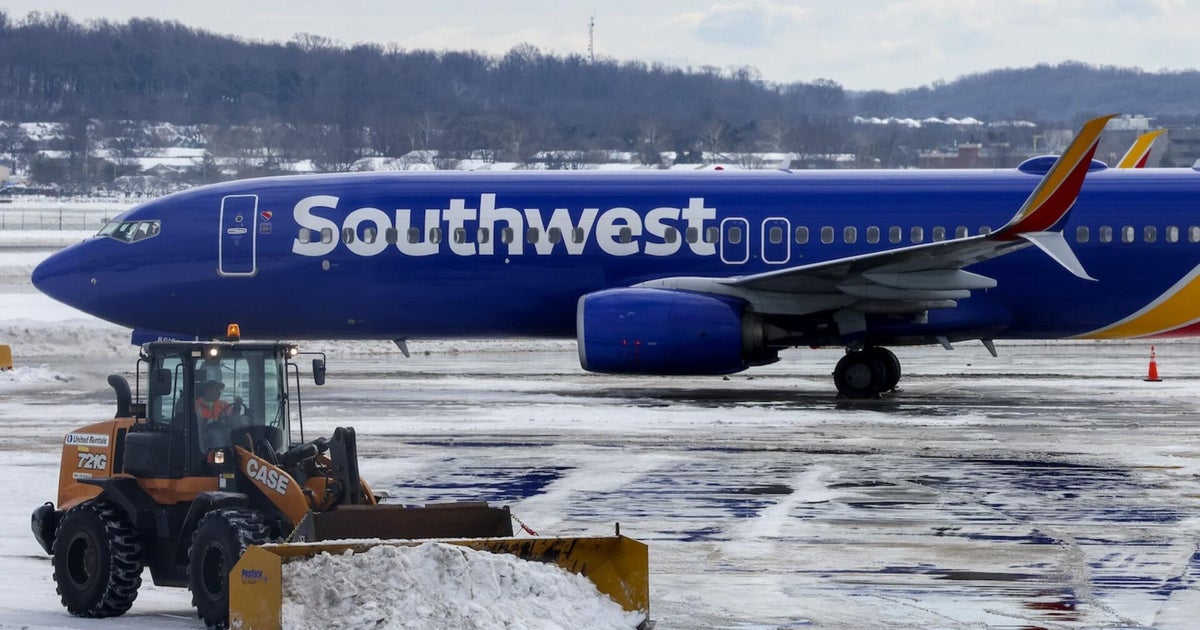
Southwest Airlines rolled back part of its overweight passenger policy, now allowing a free second seat at the gate when two adjoining seats are available and offering refunds for prebooked extra seats under specific conditions. If adjacent seats are unavailable, affected passengers may be rebooked on a later flight. The change is operationally meaningful for customer experience but is unlikely to materially affect industry pricing or broad market performance.
This is a marginally positive brand and load-factor signal for LUV, but the important second-order effect is operational: Southwest is reintroducing a manual, gate-level exception process that adds variability to boarding, rebooking, and compensation workflows. That can create small but persistent friction in unit costs if agents spend more time resolving seat disputes and if same-day misconnects or involuntary reaccommodations rise, especially on fuller flights. The upside is that Southwest is partially repairing a customer-segmentation mistake that had made its value proposition look indistinguishable from legacy peers without delivering the premium revenue discipline those carriers extract.
For competitors, the direct P&L impact is negligible, but the policy reversal may slightly narrow Southwest’s self-inflicted demand leakage versus UAL/AAL, particularly among price-insensitive leisure travelers who disproportionately value low-friction travel. More importantly, it reinforces that airline customer-policy moves can move sentiment faster than earnings: if Southwest stabilizes its brand, it reduces the odds of further share loss in short-haul domestic leisure, where schedule convenience matters more than loyalty points. The broader industry takeaway is that punitive operational policies can backfire when they are perceived as arbitrary and unevenly enforced.
The contrarian view is that this is not a true strategic pivot; it is a limited rollback that preserves the hard part of the January policy by keeping the burden of proof and timing risk on the passenger. That means the policy remains vulnerable to negative press and advocacy pressure, while the airline still inherits reputational risk if passengers are bumped after arrival. If Southwest sees even modest incremental gate complexity or refund processing drag, the market may realize the change is more about optics than economics, limiting any sustained re-rating.
Catalyst-wise, the near-term risk is PR-driven rather than financial: one viral incident can quickly undo any goodwill and pressure management to soften the rule further over the next 1-3 months. Longer term, if Southwest keeps layering customer-policy reversals without a clear revenue framework, it signals governance drift and strategy inconsistency, which is more relevant to valuation than this specific seat policy.
AI-powered research, real-time alerts, and portfolio analytics for institutional investors.
Request DemoOverall Sentiment
neutral
Sentiment Score
0.15
Ticker Sentiment
