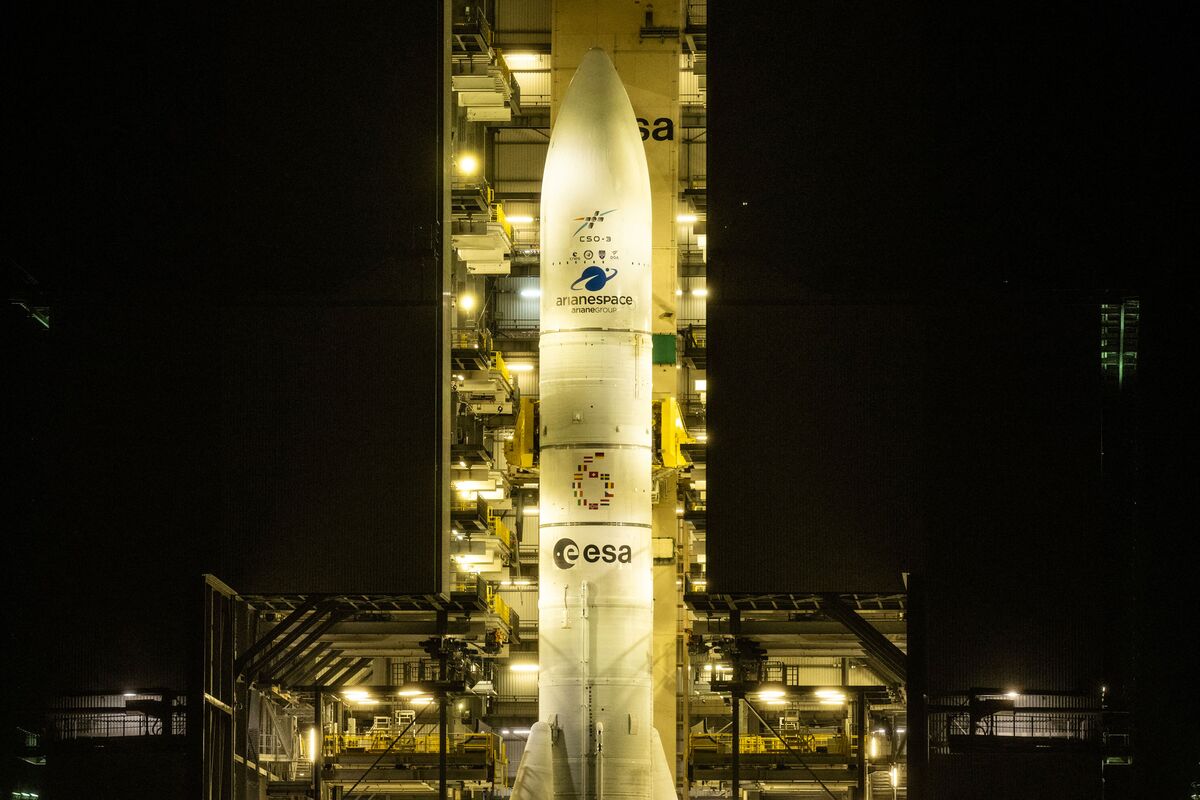
The European Space Agency is seeking €22 billion ($25.5 billion) from member states for the next three years — a 36% increase from its prior budget — and will propose a €1.35 billion program to synchronize and strengthen Europe’s defense capabilities in space at a triannual conference in Bremen. The move marks the first time the civilian ESA is formally pushing into military-related programs, signaling a policy shift toward greater European defense coordination in orbit and potential procurement opportunities for aerospace and defense suppliers.
Market structure: A €22bn/3yr ESA push (+€1.35bn defense program) materially favors EU primes and domestic supply chains—Airbus (AIR.PA), Safran (SAF.PA), Leonardo (LDO.MI), and launch/component suppliers (Avio AVIO.MI, STMicroelectronics STM) should capture higher-margin defense work and fixed-contract backlog; non‑EU incumbents face procurement headwinds. Pricing power will shift toward vertically integrated suppliers of satellite buses, avionics and RF components; expect orderbook visibility to improve over 12–36 months and margin expansion of +200–400bps for winning contractors versus peers.
Risk assessment: Tail risks include program cancellations, export-control fragmentation, and cost overruns that could erase expected profits—assign a 10–20% probability of significant schedule slippage that would hit small-cap suppliers hardest. Near-term (days–weeks) market moves will be muted; medium (3–12 months) will reflect contract awards; long-term (1–4 years) benefits depend on sustained national contributions and local content rules. Hidden dependency: semiconductor supply and launch capacity constrain delivery; bottlenecks in RF chips or small-sat launch slots could delay revenue recognition.
Trade implications: Direct plays are overweight AIR.PA/SAF.PA and STM on a 12–24 month horizon, underweight US pure-play launchers (RKLB, SPCE) which won’t benefit from EU preferential procurement. Use 6–12 month call spreads on STM/IFX to express component-demand upside while selling short-dated calls to finance cost; buy 3–6 month puts on speculative launchers as asymmetric hedges. Fixed income: small upward pressure on peripheral spreads (+5–25bps) if member states front-load spending; monitor 10y bunds for duration trades.
Contrarian angles: Consensus will overstate headline size—€22bn is large for ESA but modest vs. EU defense budgets; market may overpay for smaller OEMs expected to capture outsized share. Mispricings: underweight positions in large diversified primes (AIR, SAF) look contrarian cheap relative to expected defense EBITDA tailwind; unintended consequence is consolidation risk—expect M&A among tier‑2 suppliers, creating buyable dip opportunities on confirmed contract awards.
AI-powered research, real-time alerts, and portfolio analytics for institutional investors.
Request DemoOverall Sentiment
neutral
Sentiment Score
0.12
