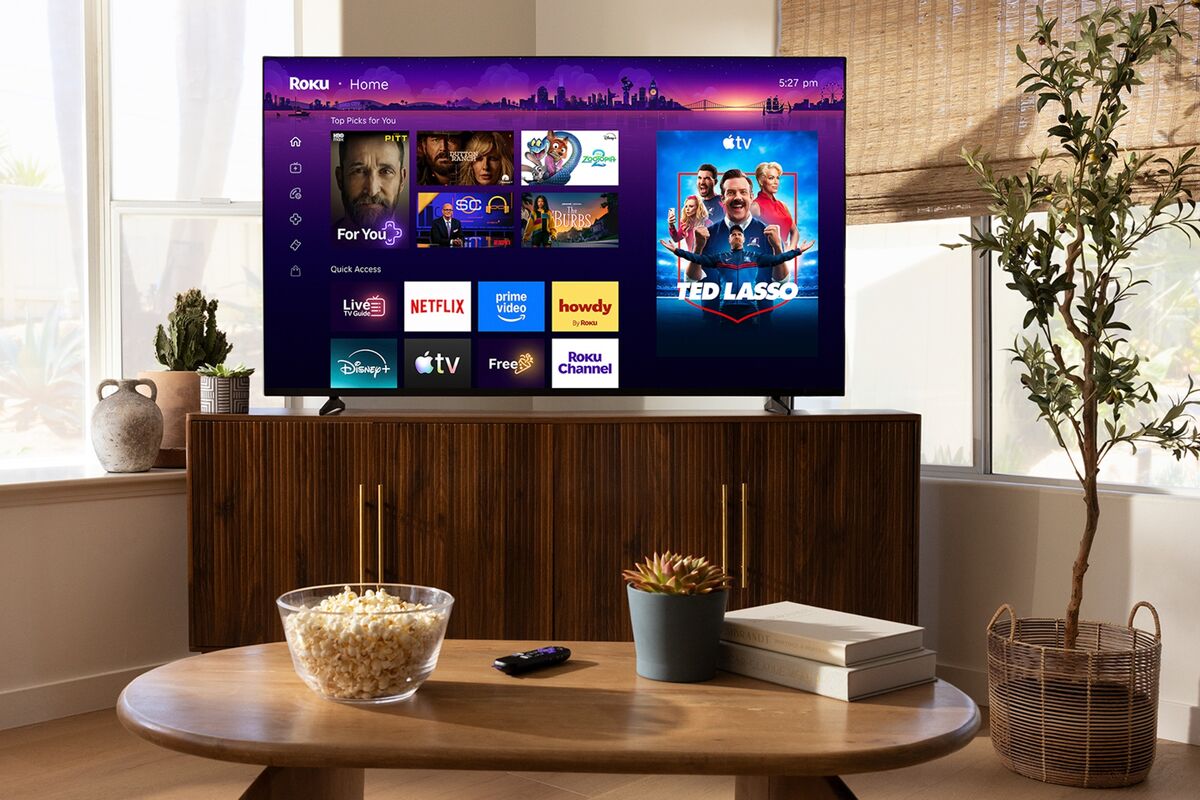
Roku unveiled its first major home-screen redesign in a decade, centered on a personalized AI-powered main screen that adapts to viewer habits and time of day. The update is designed to create additional advertising opportunities and could improve ad inventory monetization. The announcement is positive for Roku’s platform strategy, though the article does not provide financial targets or quantified impact.
This is less about a cosmetic refresh and more about Roku trying to re-price its real estate. A more personalized, shifting home screen should increase monetizable impressions and improve ad relevance, which matters because platform economics are driven by engagement depth, not just device activations. The second-order winner is Roku’s ad load expansion: better targeting should lift CPMs and reduce the revenue drag from a broad, low-intent landing page. The competitive angle is that Roku is defending its position against OEM operating systems and walled-garden streaming hubs that control the first screen. If the personalization layer works, it strengthens Roku’s distribution leverage with advertisers and content partners by making the home screen a higher-converting demand surface. The main beneficiary downstream could be ad-tech intermediaries and performance advertisers seeking TV inventory with more measurable intent signals, while weaker streaming apps may lose share if the new layout nudges discovery toward higher-bidding content. The near-term risk is execution: if users perceive the redesign as cluttered or slower, engagement could fall before ad yield improves. Over a 1-3 month horizon, the market will likely focus on product reception and whether management quantifies lift in monetization; over 6-12 months, the key question is whether this is an incremental UX tweak or the first step toward materially higher ad density. The contrarian view is that the market may be underestimating how much room Roku has to optimize its interface without hurting retention, but also overestimating how quickly AI personalization translates into EBITDA—ad buyers usually need a few quarters of clean data before paying up for new surfaces.
AI-powered research, real-time alerts, and portfolio analytics for institutional investors.
Overall Sentiment
mildly positive
Sentiment Score
0.25
Ticker Sentiment
