



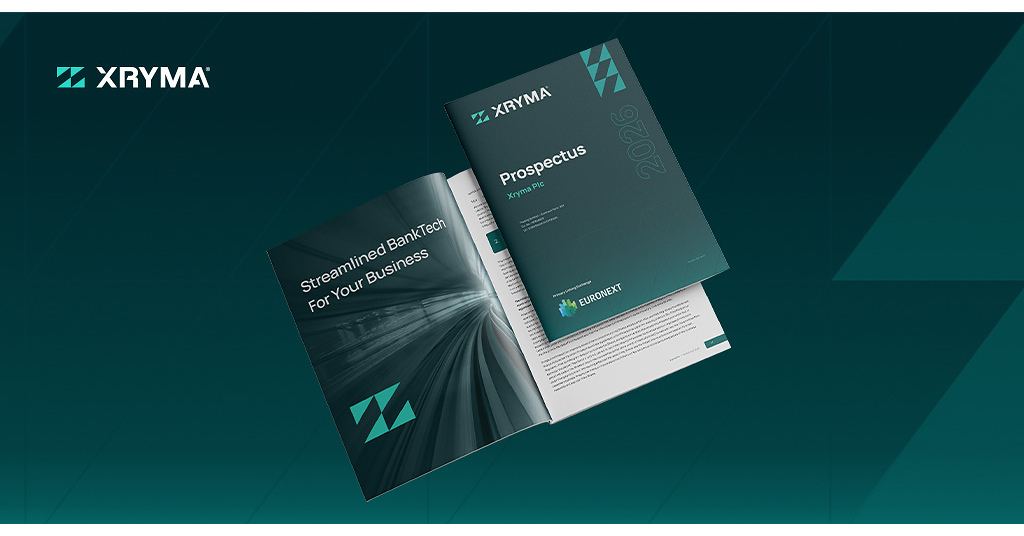
CySEC approved Xryma Plc’s prospectus for the admission of 110,079,450 ordinary shares to the regulated market of Euronext Paris, with trading expected to begin at market open on 24 July 2026 (subject to Euronext Paris approval). The listing is a technical/direct listing with no new shares issued and no capital raised. Xryma reported FY25 fee- and transaction-driven revenue of €53.4m (incl. other income) and processed €4.0bn in own volume, positioning the cross-border open-banking/payments platform for improved liquidity and broader investor access.
This is a liquidity and signaling event more than a balance-sheet event. A direct listing without primary capital usually creates an initial scarcity premium, but that premium is fragile if the free float is tight and early holders use the first tradable window to monetize. For the first 2-4 weeks, price action will be driven by turnover and benchmark inclusion talk, not by any near-term change in intrinsic value.
The second-order read-through is to regulated payments software, not to the specific venue. Investors may use this as a proof point that profitable, compliance-heavy cross-border infrastructure can still command public-market attention; that modestly supports quality names like GPN over lower-quality European processors such as WWRL. The winner set is narrow: firms with recurring software revenue, direct rail access, and demonstrable margin durability. Pure merchant acquirers with weaker pricing power get little benefit unless they can show similar economics.
The contrarian view is that the market may be overrating the listing as a growth catalyst. No new capital means no immediate acceleration in product rollout, M&A, or geographic expansion; if anything, greater transparency could expose concentration risk in processing corridors, customer loss, or regulatory dependency. The key falsifier over 1-3 months is a thin first-month tape or any disclosure that recurring software growth is slower than transaction activity, which would reclassify the story from platform quality to niche processor. Over 6-18 months, the stablecoin/token angle is the real optionality, but it also carries the highest regulatory shutdown risk.
AI-powered research, real-time alerts, and portfolio analytics for institutional investors.
Request TrialOverall Sentiment
mildly positive
Sentiment Score
0.35
Ticker Sentiment
