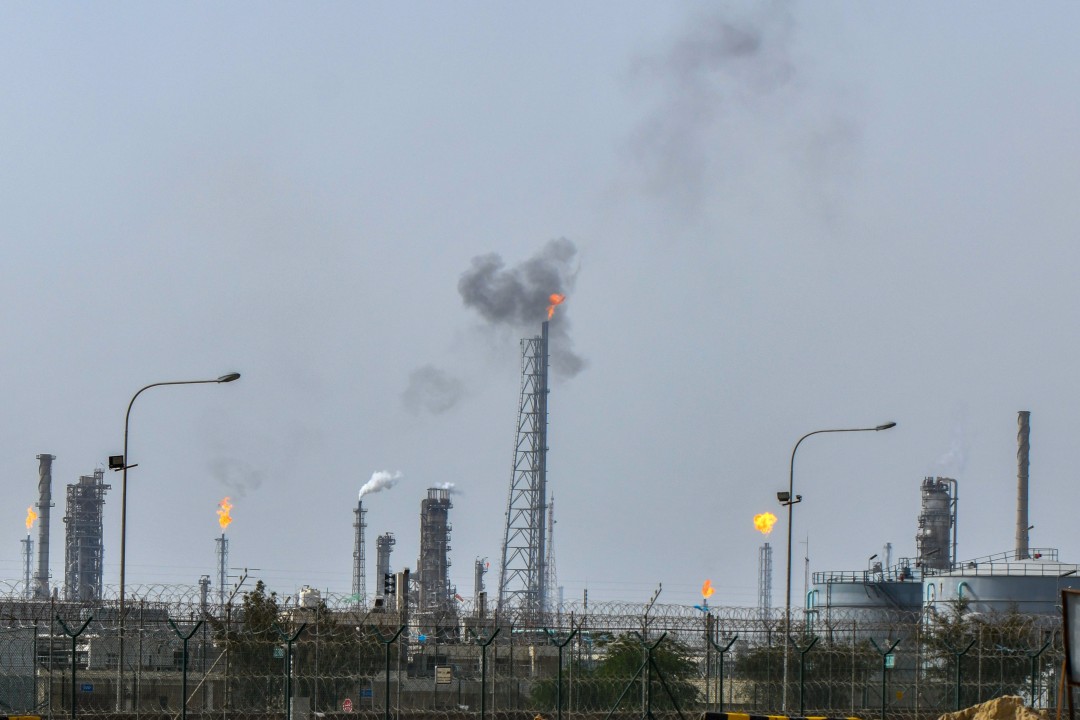
A Kuwaiti refinery (Mina Al-Ahmadi) capable of processing ~730,000 barrels per day was struck in two waves of Iranian drone attacks, sparking fires after being damaged in a prior attack the day before. The strikes, alongside Israeli strikes over Tehran as the conflict entered its third week, heighten the risk to Gulf energy infrastructure and could tighten oil processing capacity and increase oil price volatility and broader market risk.
The immediate market impact is a rising Gulf risk premium that transmits through three channels: crude price, product arbitrage, and freight/insurance. A sustained reduction in regional refining throughput of even a few hundred kbpd typically supports a $6–$15/bbl lift in nearby Brent within weeks as buyers scramble for product swaps and seaborne barrels, disproportionately benefiting high-margin upstream producers and VLCC owners.
Second-order winners are those that can re-route flows quickly: US Gulf Coast exporters (short-term logistical winners), Atlantic basin refiners with spare capacity (midsized refiners able to take displaced Asian/EM product), and tanker owners who capture outsized dayrates while insurance markets reprice. Conversely, import-dependent refiners with limited access to incremental crude, airlines and road-transport intensive corporates, and regional service suppliers face margin compression and stock-specific demand shocks on a 0–3 month horizon.
Key catalysts that will define the trade window are binary and time-dependent: de-escalation or credible naval escorts can collapse the premium in days; SPR releases or OPEC spare capacity can unwind most of the price move within 30–90 days; a closure of strategic choke points would create a persistent shock lasting quarters and push secondary effects into capex/insurance cycles that last years. Monitor freight (TD3/TD20) and regional crack spreads as higher-frequency indicators that precede broader price moves.
Tail-risk framing: the market is pricing more episodic risk than structural change today — if hostilities broaden to interdiction of export terminals or insurance market paralysis, expect nonlinear moves (Brent +$20–$40) and rapid reallocation into hard-asset and defense exposures. Conversely, a limited diplomatic cooldown could produce sharp mean reversion within 2–6 weeks, penalizing leveraged directional plays.
AI-powered research, real-time alerts, and portfolio analytics for institutional investors.
Request DemoOverall Sentiment
strongly negative
Sentiment Score
-0.70
