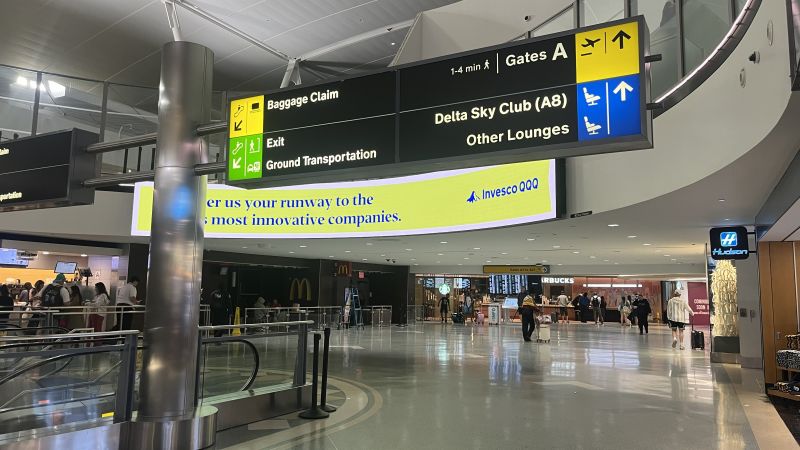
Major carriers, hotel chains and online travel agencies are rolling out early Cyber Monday promotions that extend into December and cover travel well into 2026, with notable offers including American Airlines domestic fares under $100 one-way and tiered AA Vacations package savings ($75/$150/$250 on $2,500/$3,500/$5,000 minimums), Delta $250 off SkyMiles flight+hotel packages, JetBlue up to $1,000 off packages, Spirit one-way fares from $25–$30, Qatar 20% off, Qantas fares from $834 LAX–SYD and various European and Pacific sale fares. Hotel discounts include Hyatt up to 30% for members, Marriott Bonvoy 25% via app, Best Western 20% and Wyndham up to 30% depending on length of stay; Amtrak and OTAs (Expedia/Booking.com) are offering up to ~25–50% discounts on select inventory. For investors, these promotions imply modest near-term demand stimulation for airlines, hoteliers and intermediaries but represent routine seasonal marketing rather than a material structural change, while credit-card-related protections and co-marketing (Chase, Capital One, AmEx) remain relevant to booking behavior and consumer spend patterns.
Market structure: Early Cyber Monday travel discounts signal an industry pushing load factors in the shoulder season (Jan–Mar 2026) via price stimulus. Direct beneficiaries are OTAs (EXPE) and payment processors/card issuers (AXP) that capture increased booking volume and interchange fees; legacy carriers (AAL) see revenue booked but face downward fare mix and margin pressure. Low-cost carriers under stress (e.g., Spirit) add volatility to capacity and yield dynamics.
Risk assessment: Tail risks include an oil-price shock (> $90/bbl sustained 30+ days), macro slowdown that cuts discretionary travel (-5%+ YoY spend), or bankruptcy restructurings that impair loyalty liabilities and counterparty payments; each could materialize within 1–6 months. Immediate catalysts: Travel Tuesday (Dec 2) and weekly booking flows; short-term (next 3 months) depends on conversion rates from promotions, long-term (2026+) hinges on pricing power recovery and corporate travel return. Hidden dependency: higher bookings don’t equal margin — OTA take rates and credit-card chargebacks are second-order P&L drivers.
Trade implications: Tactical preference for EXPE exposure into Travel Tuesday (Dec 2) and Dec consumer data, paired with selective AXP exposure to monetize higher swipe volume over the next 2 quarters. Use options to express asymmetric views: 3-month EXPE call spreads ahead of booking prints, AAL protective puts to hedge PRASM risk. Monitor triggers: EXPE monthly bookings growth >8% to add; AAL PRASM contraction >3% to increase hedges.
AI-powered research, real-time alerts, and portfolio analytics for institutional investors.
Request DemoOverall Sentiment
mildly positive
Sentiment Score
0.25
Ticker Sentiment
Contrarian angles: Consensus overlooks yield erosion from widespread discounts — booking volumes may rise while industry EBITDAR compresses. Market may be underpricing fintech/OTA capture of promotional flow and overpricing airlines’ ability to recoup losses via ancillaries. Historical parallels to pre‑COVID promo cycles show temporary load-factor gains but persistent yield weakness for 6–12 months; prefer payment/OTA exposure over pure airline leverage.
