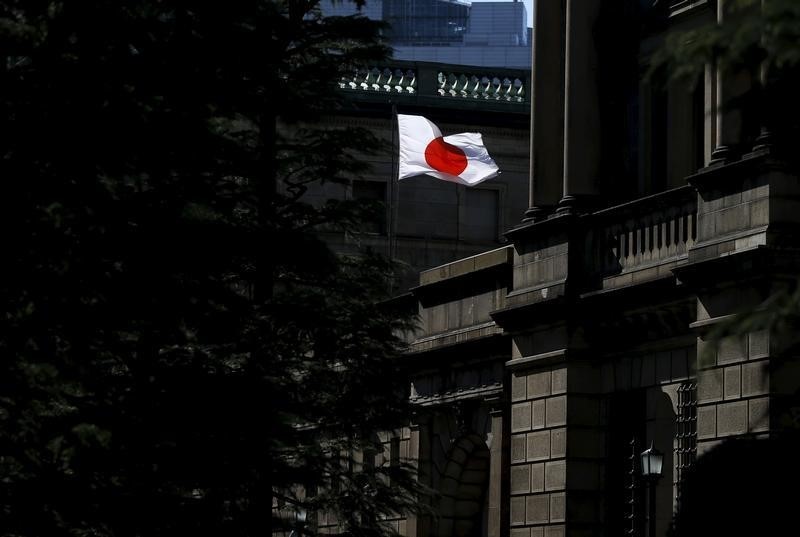
The Bank of Japan is widely expected to keep its benchmark rate unchanged at 0.75% on April 28, but the meeting may carry a hawkish bias amid sticky inflation, higher oil prices, and Middle East-related supply risks. Markets have shifted toward a hold after the yen stabilized near the 160 USD/JPY level, though Governor Ueda could still signal future tightening. The decision and commentary could move the yen and Japanese equities, with the Nikkei vulnerable to profit-taking if the BOJ sounds more hawkish than expected.
The immediate market read is not just “BOJ holds,” but that Japan is drifting into a policy regime where the central bank is reluctant to validate yen weakness with aggressive tightening. That matters because once USD/JPY becomes a one-way carry trade again, the marginal buyer of Japanese equities shifts from domestic allocators to foreign momentum and hedged global funds, which usually supports exporters and high-beta growth more than the broad index. In the short run, the risk is a hawkish-sounding statement paired with a hold: that combination often triggers a violent FX move first and an equity de-risking second.
The second-order impact is on rates-sensitive financials and leveraged balance-sheet sectors. If the BOJ signals even a small probability of a June hike, JGB volatility rises and the market starts repricing domestic funding costs before the actual move, which can compress multiples in banks, REITs, and highly geared industrials. Conversely, a weaker yen still functions as a stealth earnings upgrade for multinationals, but that benefit is increasingly offset by imported inflation and the political need to avoid another FX intervention episode.
The more interesting trade is the divergence between Japanese AI-related hardware beneficiaries and the market’s assumption that “higher rates = lower tech.” If the BOJ only nudges guidance while USD/JPY stays elevated, domestic liquidity conditions remain loose enough for capex-heavy demand to persist, which is constructive for semiconductor capex proxies and power/thermal infrastructure tied to AI deployment. The article’s Intel reference is best read as a sentiment signal: investors are rediscovering that CPU demand can reaccelerate when AI workloads broaden beyond pure GPU training into inference and enterprise deployment.
Consensus is probably underestimating how quickly a hawkish surprise could unwind crowded Japan equity longs, but also underestimating how resilient the yen can be if Ueda opts for verbal tightening without immediate action. That creates a setup where implied volatility in USD/JPY is cheap relative to the event risk, while Japanese equities face asymmetric downside if the BOJ disappoints carry traders and local leverage at the same time.
AI-powered research, real-time alerts, and portfolio analytics for institutional investors.
Request DemoOverall Sentiment
neutral
Sentiment Score
-0.05
Ticker Sentiment
