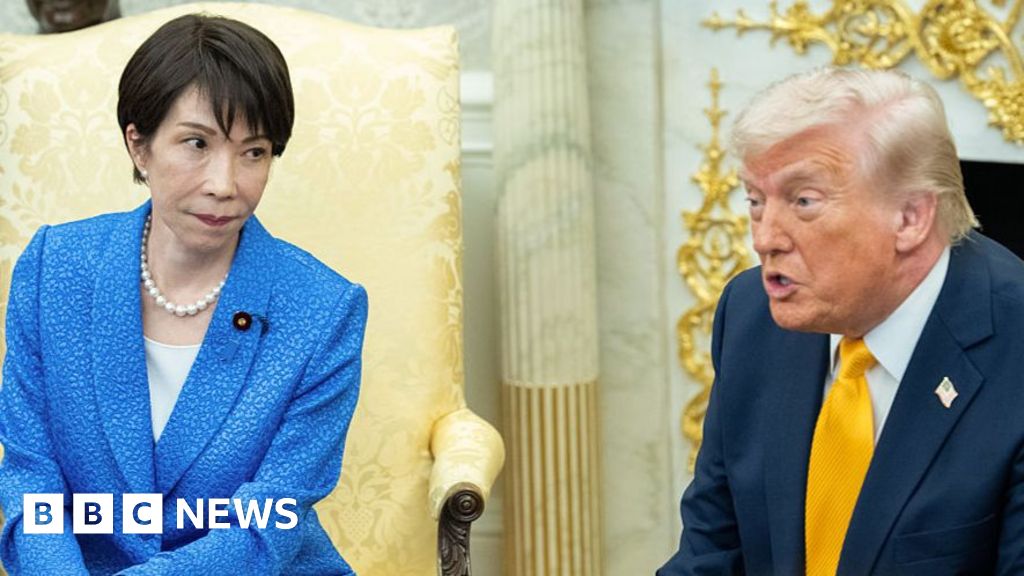
President Trump's Pearl Harbor remark (referenced during questions about a 28 February strike on Iran) overshadowed Japanese PM Sanae Takaichi's Washington visit and created visible diplomatic discomfort. Before talks, Japan joined six other countries pledging to 'contribute to appropriate efforts' to ensure safe passage through the Strait of Hormuz; the closure has pushed global oil prices sharply higher, with about 20% of the world's oil transiting the passage. Takaichi briefed Trump on what support Japan can provide under its laws but offered no specific commitments.
Energy markets are the immediate transmission mechanism: disruption or threat to Strait of Hormuz flows raises short-term crude and product volatility and forces shipping reroutes that increase transit costs and insurance premia. Historically, each 1mbd perceived supply hit lifts Brent by roughly $5–10/bbl within 2–6 weeks; if market participants price persistent closure, the shock becomes self-reinforcing via higher refinery feedstock, narrower product cracks, and front-month backwardation.
A less obvious second-order is a stepped-up Japanese defense and logistics procurement cycle. Political discomfort with public alignment on Middle East operations makes Tokyo more likely to prefer capability buys (surveillance, AAW, logistics) and host-nation support agreements that can be contracted inside 12–24 months via FMS channels — a multi-year revenue stream for US prime contractors rather than one-off sales to traders or utilities.
Shipping, insurance, and supply-chain frictions amplify winners and losers across sectors: VLCC and tanker owners and P&C reinsurers can capture outsized margin expansion if rates spike persistently, while just-in-time exporters (autos, electronics) face measurable margin squeezes from longer voyage times and higher freight. Currency and sovereign-risk repricing (JPY volatility, JGB yield moves) are likely to present tactical windows rather than structural shifts given deep US–Japan ties, but they materially raise option premia for hedgers.
Catalysts to watch: diplomatic de-escalation or coordinated SPR releases (days–weeks) that can snap oil back, and concrete Japanese budget announcements (3–18 months) that validate a defense-capex rerating. Tail risks include escalation beyond the Strait or mis-calibrated sanctions that broaden trade frictions; these would push the market from volatility to regime-change pricing for energy and defense names.
AI-powered research, real-time alerts, and portfolio analytics for institutional investors.
Request DemoOverall Sentiment
mildly negative
Sentiment Score
-0.15
