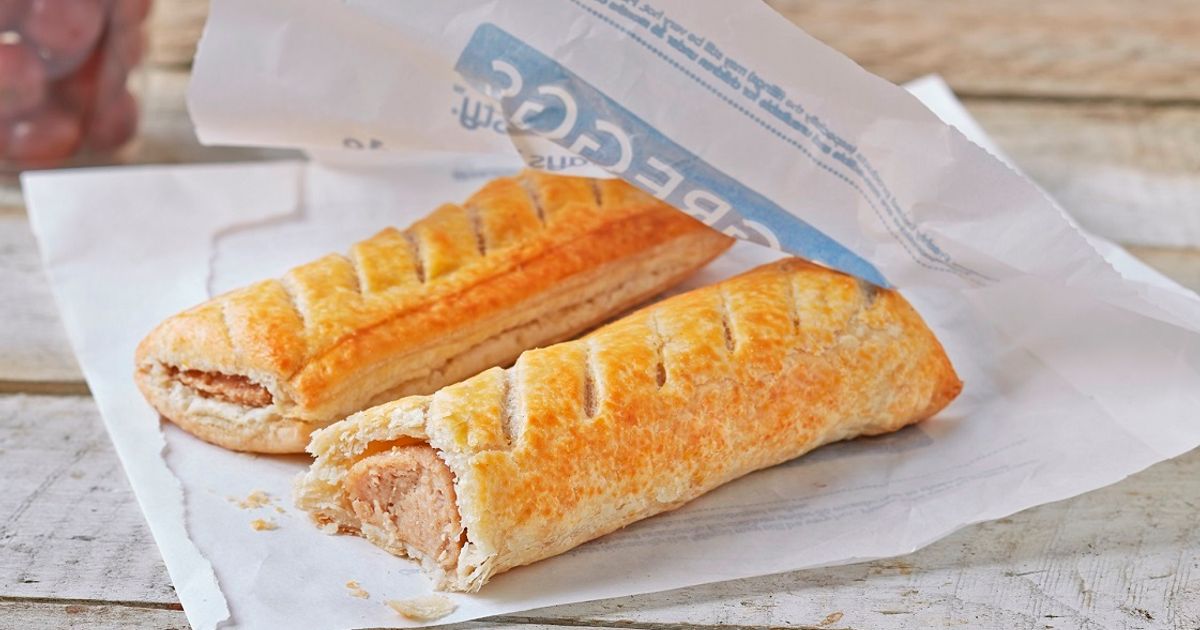
Greggs shares slid 6.5% to 1,658p after a trading update that left guidance for the current year unchanged but showed softer-than-expected like-for-like sales — +1.5% in Q3 and +2.9% in the final quarter. Management said trading improved modestly late in the year but against easier comparatives, and signalled a cautious 2026 outlook with demand uncertainty likely to restrain profit growth unless consumer confidence improves despite easing cost pressures.
Market structure: Greggs (GRG.L) weakness (shares -6.5% on the update) benefits low-cost supermarkets (TSCO.L, SBRY.L) and private-label meal providers as consumers trade down; upscale chains (SBUX) and travel-dependent food operators (SSPG.L) are less directly exposed. Like-for-like growth slowing to +1.5% (Q3) and +2.9% (Q4) against easy comps signals demand softness rather than supply disruption, implying limited immediate pricing power and margin risk if input costs reaccelerate. Cross-asset: softer UK consumption increases probability of a 10–30bp rally in 10y gilts and 0.5–1.0% downside pressure on GBP vs USD if data disappoints over the next 1–3 months.
Risk assessment: Tail risks include a commodity shock (wheat/sugar spike >10% raising COGS >3–5%), a UK retail labour strike wave raising wage bill >2pp, or fiscal surprises in the Budget that worsen consumer disposable income. Time horizons: immediate (days) sees volatility and positioning-driven declines; short-term (weeks–months) depends on January retail and Budget headlines; long-term (quarters) hinges on store rollout economics and lease covenants. Hidden dependencies: lease escalation clauses and wholesale wheat contracts can turn modest volume drops into double-digit EPS hits.
Trade implications: Tactical bearish exposure via limited-risk options is preferred: buy a 6‑month GRG.L put spread (buy 1650p / sell 1350p) sized 2–3% notional to cap max loss while capturing downside to ~1350p within 3–6 months. Implement a relative-value pair: short GRG.L (-1.5% portfolio) vs long TSCO.L (+1.5%) for 3–6 months to capture trade-down flows; rotate 3–5% portfolio from food-to-go names into staples (ULVR.L, SBRY.L) for 6–12 months. If long GRG, write 3‑6 month covered calls at ~1800p to collect premium.
Contrarian angles: Consensus overlooks Greggs’ low-price, convenience moat—if consumer confidence stabilises and input costs fall, GRG can reaccelerate; the market may be over-discounting a structural decline. Historical parallels (post-budget retail cool-offs in 2019–21) show recoveries within 9–12 months once inflation/income stabilises. Actionable mispricing: add small tactical long if GRG falls below 1500p with strict 1350p stop, or scale into long if UK CPI decelerates by >0.5pp over two months, which would likely restore multiple expansion.
AI-powered research, real-time alerts, and portfolio analytics for institutional investors.
Request DemoOverall Sentiment
moderately negative
Sentiment Score
-0.45
