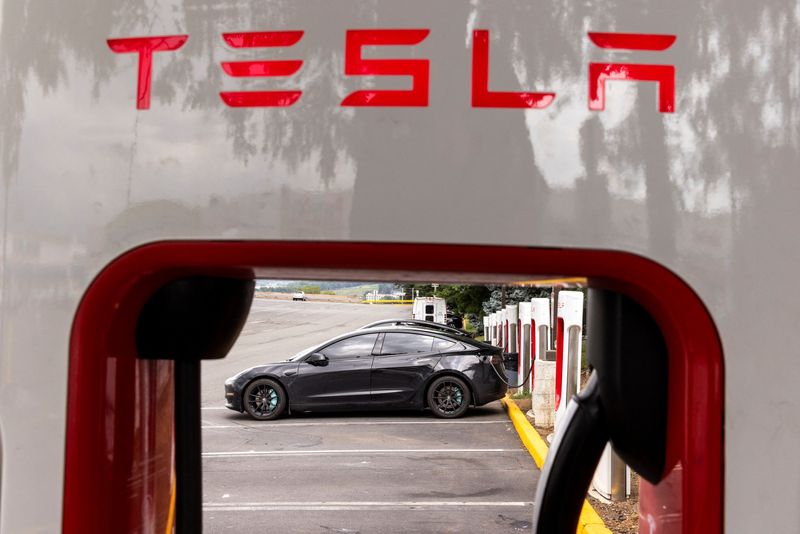
U.S. stock futures fell 0.5%-0.7% as investors weighed simmering U.S.-Iran tensions and fading hopes for peace talks, with Dow futures down 351 points, S&P 500 futures down 35 points, and Nasdaq 100 futures down 126 points. The article also highlighted a mixed earnings slate: Tesla beat estimates but shares reversed on $25B-plus capex plans, while IBM, Honeywell, and Lockheed Martin weakened on softer outlooks or cash flow. The risk-off tone is being driven more by geopolitics than by individual company results.
The market is pricing a classic risk-off mix, but the more important second-order effect is not the headline geopolitical noise; it is the margin of safety deterioration in companies with operational exposure to the region and in names whose capex or cash conversion is being re-rated by guidance. The broad tape weakness should not be read as a uniform “sell risk” signal — it is a dispersion event, where balance-sheet quality and pricing power will matter more than absolute earnings beats over the next 1-3 weeks.
The clearest loser is defense, where cash flow quality is now the cleaner signal than bookings. A negative free-cash-flow print after a strong geopolitical backdrop suggests execution risk, timing slippage, and working-capital drag; that combination tends to compress multiples even if the long-cycle demand story remains intact. In contrast, industrials exposed to the region face a near-term estimate reset through logistics disruption, insurance costs, and energy inputs; that can persist for several quarters if the geopolitical premium stays embedded in fuel and shipping.
On the upside, consumer-credit and broadband names are showing the kind of defensive operating leverage that attracts capital during macro stress. These are not “safe” because demand is booming; they are safer because estimates were low enough that even modest retention or affluent-spend strength creates positive revisions. The key nuance is that one or two resilient reports can quickly pull money back into quality compounders, even while the index remains under pressure.
The contrarian setup is that the market may be over-penalizing any company with Middle East exposure while underpricing how quickly some of the cash-burning stories can become self-financing if management tightens capital allocation. Tesla is the best example: the market reaction is less about the quarter and more about the credibility of future capital intensity versus free cash flow durability. If the broader tape stabilizes, the names with beat-and-raise potential and low direct geopolitics exposure could outperform sharply over the next 2-6 weeks.
AI-powered research, real-time alerts, and portfolio analytics for institutional investors.
Request TrialOverall Sentiment
mildly negative
Sentiment Score
-0.25
Ticker Sentiment
