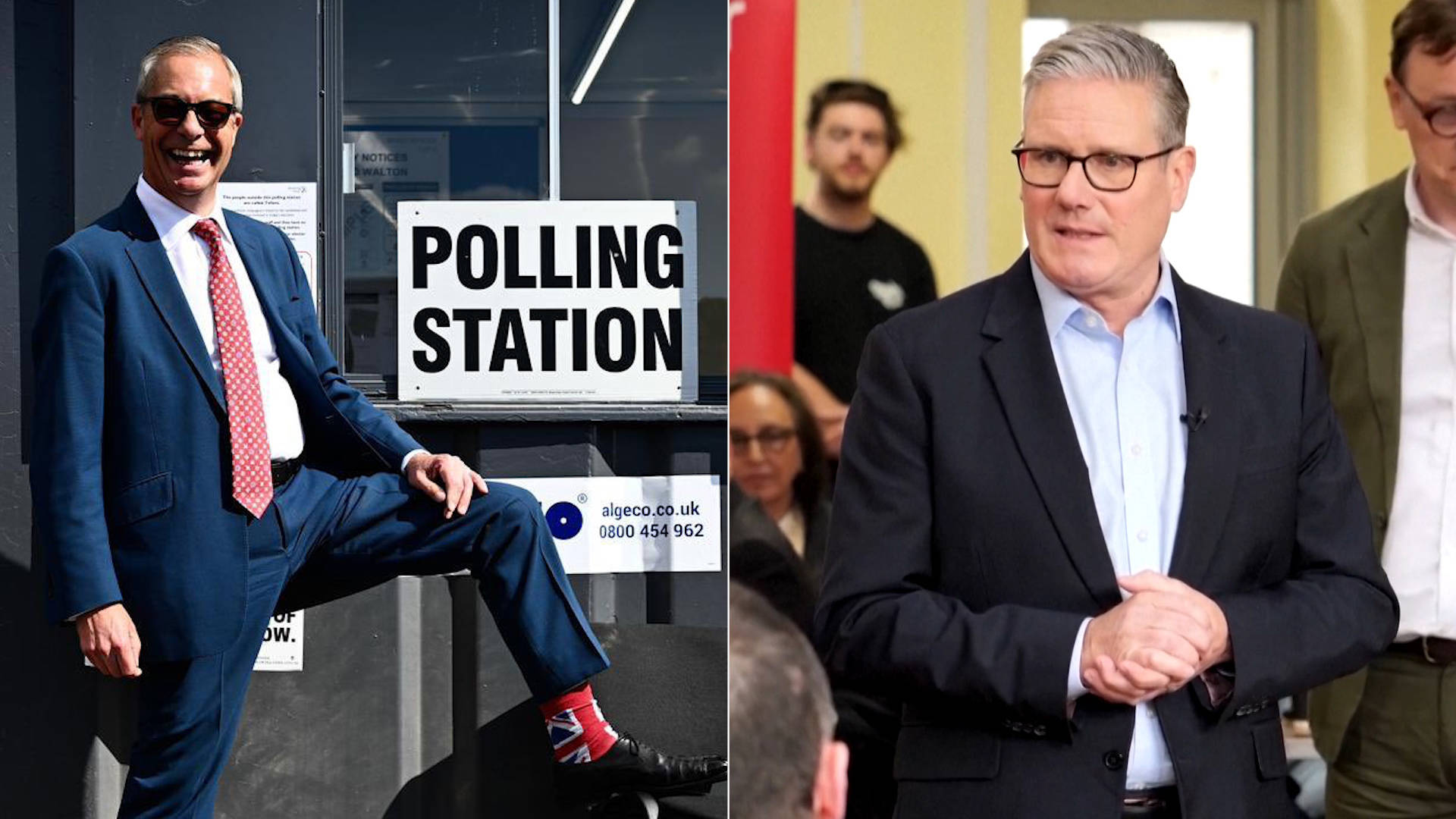
U.K. local elections delivered major losses for Labour and the Conservatives, while Reform UK surged and the Greens made significant gains, underscoring a sharp fragmentation of British politics. The article highlights rising anti-immigration populism, Labour’s crackdown on Palestine Action, and the widening risk that first-past-the-post politics may no longer reflect the electorate. Market impact is limited, but the political shift raises medium-term policy and governance uncertainty in the U.K.
The market implication is not a single-election trade; it is a regime trade on fragmentation. A more splintered UK political map raises the probability of weaker fiscal discipline, more aggressive immigration enforcement rhetoric, and higher policy churn into the next general election, which is usually bearish for domestic-duration assets, UK small caps, and any business exposed to labor supply elasticity. The first-order beneficiary is the populist right, but the second-order effect is that centrist incumbents lose agenda control, making coalition arithmetic more important than vote share and increasing tail risk around snap-policy shifts.
For rates and sterling, the key transmission is not ideology but governance credibility. If mainstream parties keep reacting with populist-adjacent measures on asylum, protest law, or public-order policy, investors should expect a higher volatility regime in UK gilts and GBP, especially around migration/data releases and election polling. The more interesting medium-term loser is the domestic consumer basket: tighter labor availability in hospitality, logistics, agriculture, and care would keep wage pressure sticky even in a softer growth backdrop, limiting the scope for BoE easing.
Contrarianly, the Greens’ rise may be underappreciated as a distributive rather than purely ideological threat to Labour. Their vote capture suggests a durable leakage among younger, urban, higher-income progressives who are sensitive to civil-liberty and Gaza issues; that weakens Labour’s path to a broad anti-populist coalition. The market is likely underpricing the chance that the next UK election becomes a four- or five-party contest with a materially lower threshold for policy gridlock, which historically favors defensives over domestically levered cyclicals.
The biggest tail risk is that punitive immigration and protest policies normalize further, making institutional checks weaker over a 12-24 month horizon. Once that happens, the path back to centrist stability becomes much harder, and the discount rate on UK political risk should stay elevated even if headline growth improves.
AI-powered research, real-time alerts, and portfolio analytics for institutional investors.
Request DemoOverall Sentiment
moderately negative
Sentiment Score
-0.35
