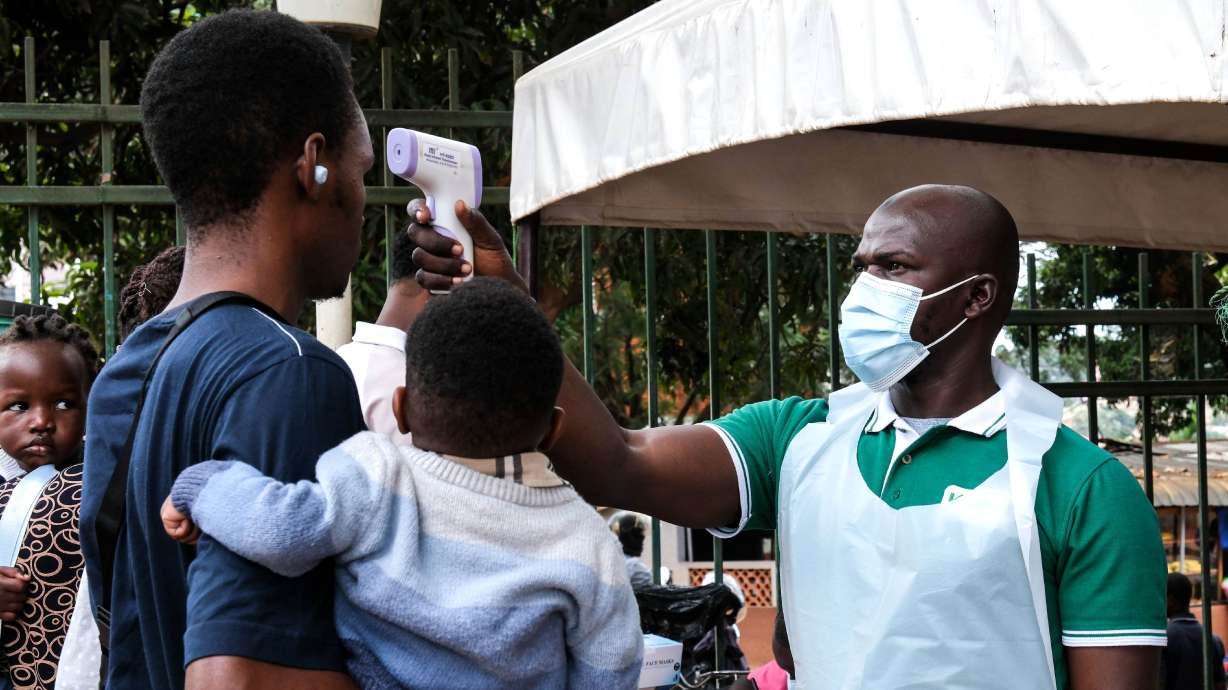
WHO declared the Ebola outbreak in the Democratic Republic of Congo and Uganda a public health emergency of international concern, citing at least 80 suspected deaths, 246 suspected cases, and two laboratory-confirmed cases in Uganda. The outbreak is driven by the Bundibugyo virus, for which there is no approved vaccine or specific treatment, raising the risk of further cross-border spread. The event is likely to drive broad risk-off sentiment, especially for emerging markets and healthcare preparedness.
This is less a direct market event than a stress test for frontier Africa risk premia. The first-order hit is to travel, airlines, and locally exposed consumer names in East Africa, but the more important second-order effect is on dollar funding, border logistics, and health-security budgets: when containment credibility weakens, investors typically demand a higher political-risk discount across Uganda/DRC hard-currency and quasi-sovereign paper, even if the macro growth impulse is modest.
The key issue is operational, not epidemiological headline count. An outbreak that has already crossed into a capital city changes the probability distribution from a contained rural-health event to a longer-duration surveillance and quarantine regime, which is bad for mobility-dependent sectors over the next 4-12 weeks. It also increases the odds of localized trade frictions at borders and ports of entry, creating knock-on pressure on regional trucking, warehousing, and informal retail chains that are usually invisible in the headline.
For global equities, the direct beneficiaries are the large diversified vaccine/diagnostics and medical logistics names if procurement ramps, but the bigger opportunity may be in suppliers of cold-chain, PPE, and rapid-testing infrastructure rather than one-off therapeutics. In biotech, the absence of an approved vaccine makes any platform with rapid-response viral capabilities a sentiment beneficiary, though the market will likely overpay for speculative Ebola optionality unless there is clear government stockpiling or WHO procurement.
The consensus may be underestimating duration. Even if case counts stabilize, the policy response can lag for weeks, and that creates a longer-than-expected drag on business travel, border commerce, and risk appetite for the broader EM complex. The main reversal catalyst is a visibly successful ring-fencing operation plus evidence of limited urban transmission; without that, the market will keep pricing in tail risk rather than the base rate.
AI-powered research, real-time alerts, and portfolio analytics for institutional investors.
Request DemoOverall Sentiment
strongly negative
Sentiment Score
-0.78
