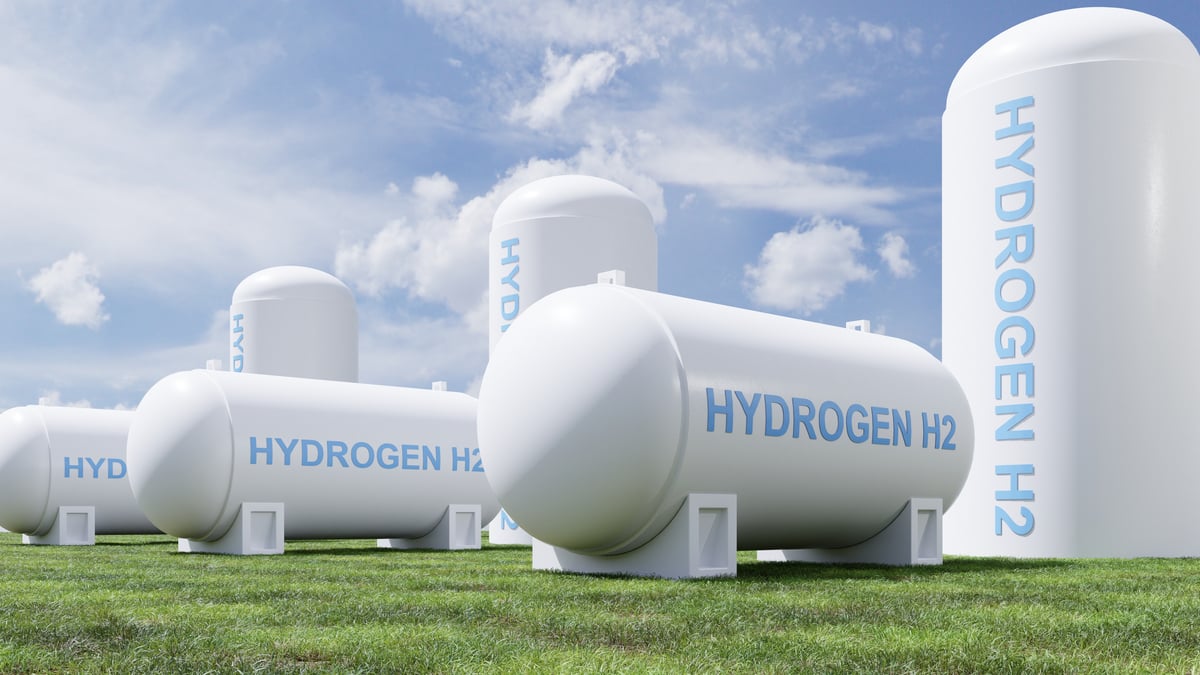
Plug Power has risen more than 30% since the start of 2026, and Craig-Hallum's Eric Stine reiterated a buy rating with a $7 price target, implying over 150% upside. But the article emphasizes that the stock is still up only about 35% over the past 10 years despite revenue growing from $86 million in 2016 to more than $700 million in 2025, alongside 673% share dilution. The piece remains skeptical on profitability, noting analysts still expect losses for at least the next two fiscal years.
The market is starting to price PLUG as an operating turnaround, but the equity remains a financing instrument first and a business second. That distinction matters because any revenue acceleration is likely to be mechanically offset by capital needs unless gross margin inflects fast enough to cover working capital and capex without fresh equity. In other words, the path to a higher stock price is not “more hydrogen demand,” it is “credible self-funding,” and the latter is much harder to prove than the former.
The second-order loser is the capital stack: every incremental quarter of losses increases the probability that equity holders absorb the burden while suppliers and lenders get protected. That usually creates a reflexive setup where positive operating headlines support the stock for days or weeks, but the tape ultimately cares about cash burn duration in months. If management keeps leaning on asset sales and dilution, rallies should be sold rather than chased because each financing event resets the ownership math lower.
The contrarian case is that the market may be underestimating how much optionality remains if hydrogen gets political or industrial policy support with long-duration contracts. That can re-rate the equity sharply from depressed levels, especially if short interest and sentiment are already leaning skeptical. But the asymmetry still favors trading PLUG as a volatility event, not a long-duration compounder, until there is at least two consecutive quarters of improving cash conversion and no balance-sheet patchwork.
Watch for any move that changes the funding narrative more than the product narrative: equity raises, convertible issuance, debt amendments, or guidance that reduces near-term burn. Those are the real catalysts over the next 1-3 quarters. Absent that, upside is likely to be intermittent and momentum-driven, while downside comes in larger chunks whenever dilution risk re-enters the tape.
AI-powered research, real-time alerts, and portfolio analytics for institutional investors.
Request DemoOverall Sentiment
mixed
Sentiment Score
-0.10
Ticker Sentiment
