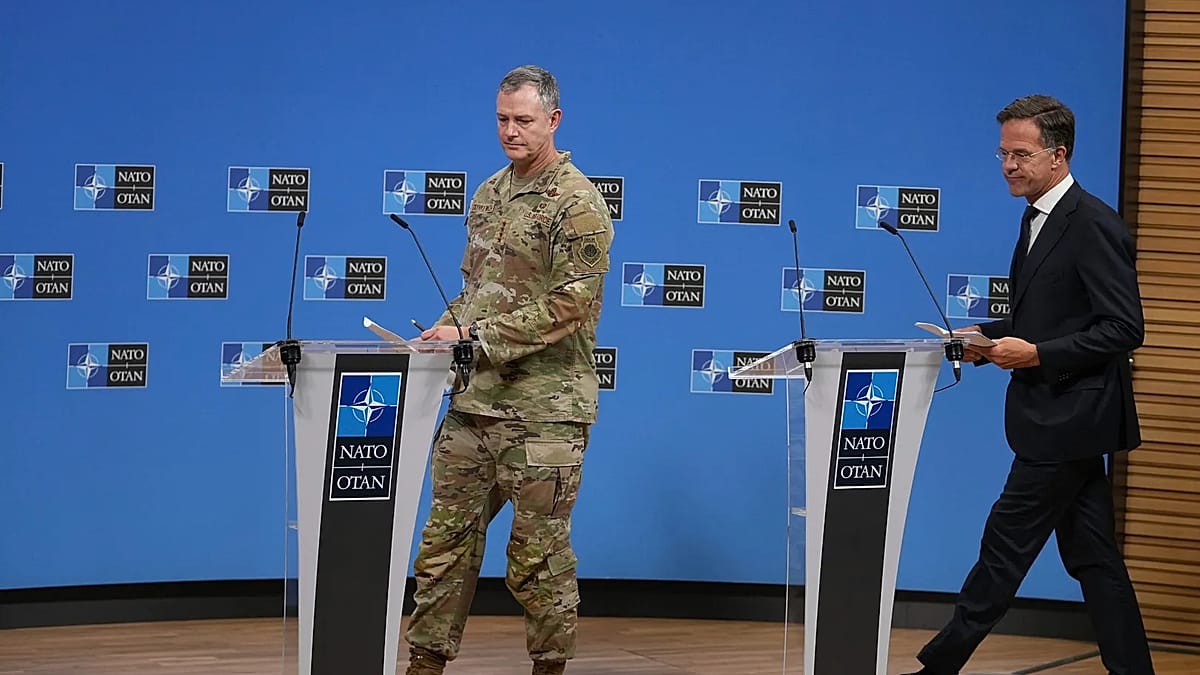
NATO allies are bracing for a reduction in guaranteed US support for European security, with the Trump administration set to clarify changes to its contribution on Friday. The alliance is also confronting depleted weapons stocks as the war in Iran strains US munitions, potentially reducing deliveries to Ukraine under the Prioritised Ukraine Requirements List. The meeting in Sweden comes ahead of the July NATO leaders' summit in Ankara and may determine whether Ukrainian President Volodymyr Zelenskyy receives an invite.
The market implication is less about headline defense spending and more about a forced re-architecture of demand. If US guarantees become conditional in crisis, European procurement shifts from a peacetime optimization problem to a readiness problem, which favors suppliers with existing production lines, munitions inventories, and sovereign European manufacturing footprints. That is structurally negative for US platform-heavy primes that rely on long-cycle export demand, and relatively positive for European ammo, air defense, and battlefield electronics suppliers that can monetize urgency within 1-3 quarters.
The more important second-order effect is inventory depletion. Once stockpiles are drawn down, allies can announce replenishment budgets quickly, but physical delivery lags can stretch 12-24 months, meaning the revenue recognition for defense OEMs may look strong while end-user readiness deteriorates further. That creates a vicious cycle for Ukraine support: every additional month of high-intensity warfare raises the probability that Europe must either accept lower aid flows or pay up for non-US substitutes, which should compress the gap between US and European defense valuations.
A near-term catalyst is the NATO summit cadence itself: rhetoric on industrial ramp-up is likely to support the sector for days, but the real tradeable event is any disclosure of which US capabilities lose guaranteed backing. If the withdrawn capabilities are air defense, ISR, or logistics enablers, the upside for European primes broadens materially because those are the bottlenecks that convert political budgets into operational capacity. Conversely, if the US retains the highest-value enablers while cutting low-value support, the market may overprice the strategic retreat narrative.
Consensus is likely underestimating how much of this is a procurement timing trade rather than a pure budget trade. The biggest beneficiary may be firms with capacity today, not the largest names, because urgency premiums accrue to whoever can ship in 6-9 months. That argues for being selective: long liquidity-rich European defense names, but avoid chasing crowded US-defense multiples until we see whether allied capex actually converts into incremental orders instead of just political statements.
AI-powered research, real-time alerts, and portfolio analytics for institutional investors.
Request DemoOverall Sentiment
moderately negative
Sentiment Score
-0.45
