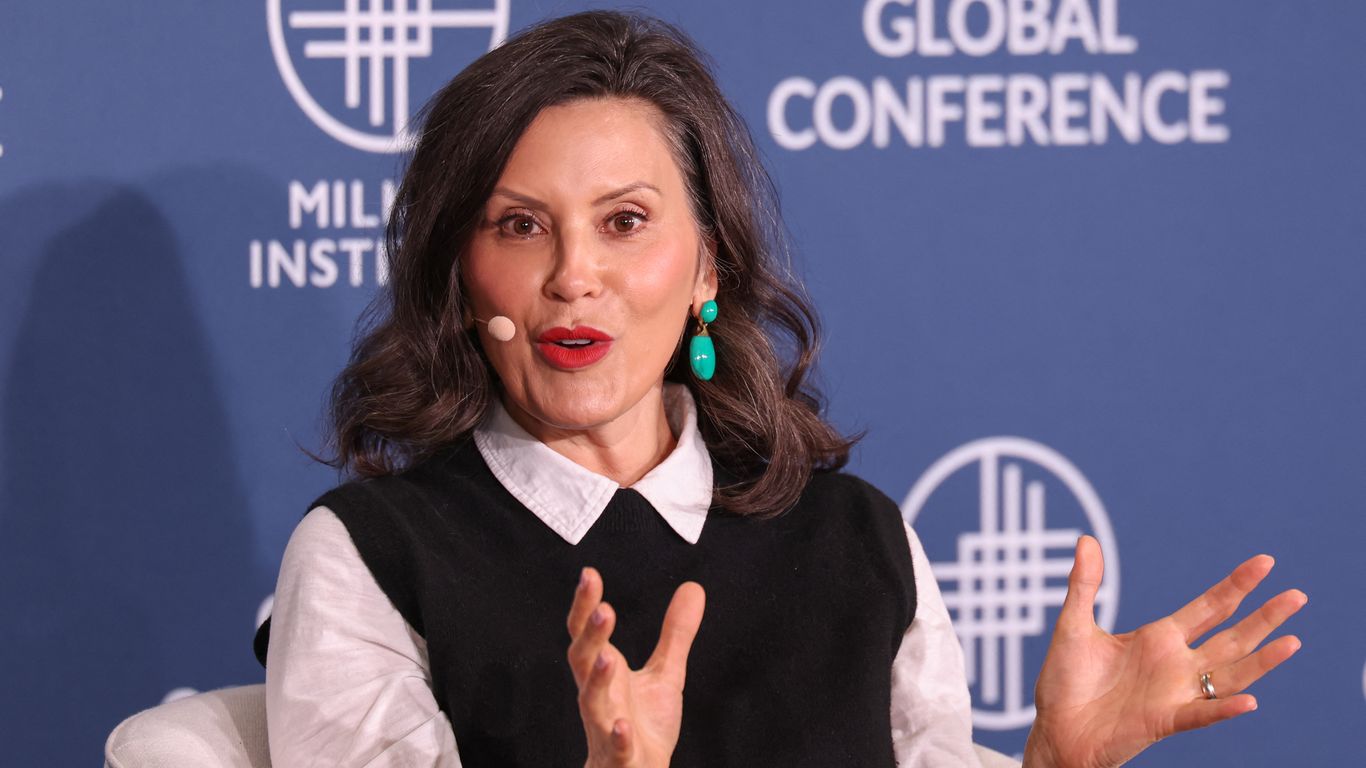
Gov. Gretchen Whitmer said she will not run for president in 2028, removing one of the most closely watched potential Democratic contenders from the early field. The announcement reshapes the 2028 presidential landscape but has no direct financial market implications. Whitmer remains term-limited and is taking a more cooperative approach with President Trump in his second term.
Whitmer’s exit removes one of the few Democrats with credible executive-management optics, Midwestern electoral texture, and enough donor/bench strength to unify establishment and labor lanes. The immediate market read is not about a single candidate; it is about a slower, more fragmented nomination process that increases the odds of an early, expensive primary season and reduces the probability of a clean centrist consolidation. That tends to favor candidates with existing national fundraising infrastructure and punish “governor-as-fixer” types who rely on general-election pragmatism rather than ideological enthusiasm.
The second-order effect is on party positioning, not just personalities. If the field drifts more progressive or more nationalized, corporate policy risk rises in pockets like antitrust, industrial policy, and labor even if the eventual nominee is moderate by historical standards. Over the next 6-18 months, the key catalyst is whether other credible governors/attorneys general fill the vacuum; if they don’t, the lane can be captured by higher-variance figures, which would raise implied policy volatility well before convention season.
Contrarian view: the market may be overpricing the negative because Whitmer’s decision can also sharpen the eventual nominee’s profile and prevent a divisive early favorite from becoming defined by the primary. In that sense, her staying out could improve the odds of a more disciplined general-election campaign by forcing a broader talent scan now rather than a late scramble. The bigger risk is not the headline itself, but the governance vacuum it reveals inside the Democratic bench, which could keep policy uncertainty elevated through the 2026 midterm cycle.
AI-powered research, real-time alerts, and portfolio analytics for institutional investors.
Request DemoOverall Sentiment
neutral
Sentiment Score
0.00
