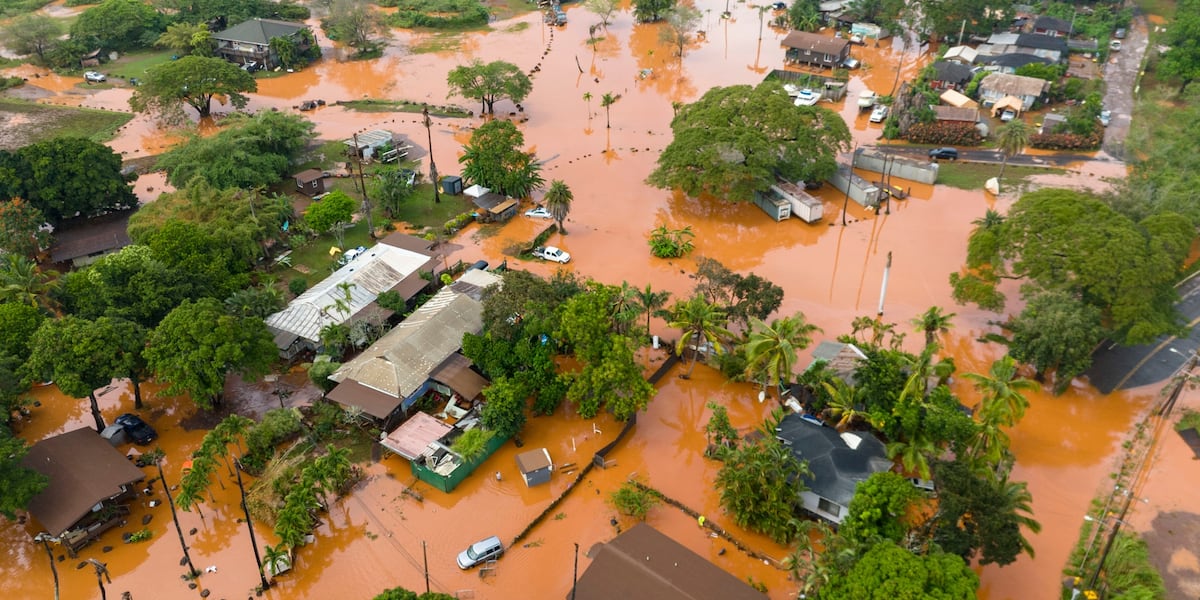
Over 230 rescues reported and evacuation orders are in effect for Waialua/Haleiwa amid heavy Kona low flooding; Governor Josh Green warned of potential ~$1 billion in damage and projects 8–10 inches of rain for parts of Maui over 48 hours. Critical infrastructure impacts include active monitoring of the North Shore Wahiawa Dam (evacuation threshold at 85 ft; increasing peril at 88–90 ft), power outages affecting Board of Water Supply pumps prompting conservation, suspended North Shore transit routes, and six shelters housing 131 people and ~40 pets overnight. Expect localized economic stress on utilities, insurers, transportation and regional housing repair demand, but limited broader market impact.
Island constraints amplify standard storm dynamics: limited trucking capacity, single-route bottlenecks and a constrained barge/airlift pipeline mean localized demand for building materials and equipment will spike and persist for months longer than mainland events. Expect lead times for heavy items (generators, pumps, structural timber, concrete) to stretch 6–12 weeks and spot shipping rates to jump regionally, creating a favorable pricing environment for national distributors and rental fleets with excess capacity.
Insurance and municipal-credit implications will play out on two clocks. Near-term P&L pressure for regional carriers and captive insurers can be acute (weeks–months) and will drive claims-management activity and potential reinsurance retrocessional disputes; medium-term (3–12 months) is when rate filings and repricing occur, benefiting reinsurers and specialty insurers that can scale capital. A catastrophic infrastructure failure (dam breach or major utility-asset loss) is the asymmetric tail: it would shift losses from local balance sheets to federal aid and reinsurance layers, materially changing which counterparties ultimately carry the cost.
The consensus focus on immediate relief understates the reconstruction and pricing-opportunity window. Federal and state rebuilding programs combined with constrained supply will direct capital to heavy civil contractors, building-product retailers and rental equipment providers — a multi-quarter structural demand uplift. Conversely, regional operators with concentrated exposure to the impacted geography (airline, local utility, small specialty insurers) look most vulnerable in the near term but could be recapitalized or otherwise insulated by aid flows over a longer horizon.
AI-powered research, real-time alerts, and portfolio analytics for institutional investors.
Request DemoOverall Sentiment
strongly negative
Sentiment Score
-0.60
