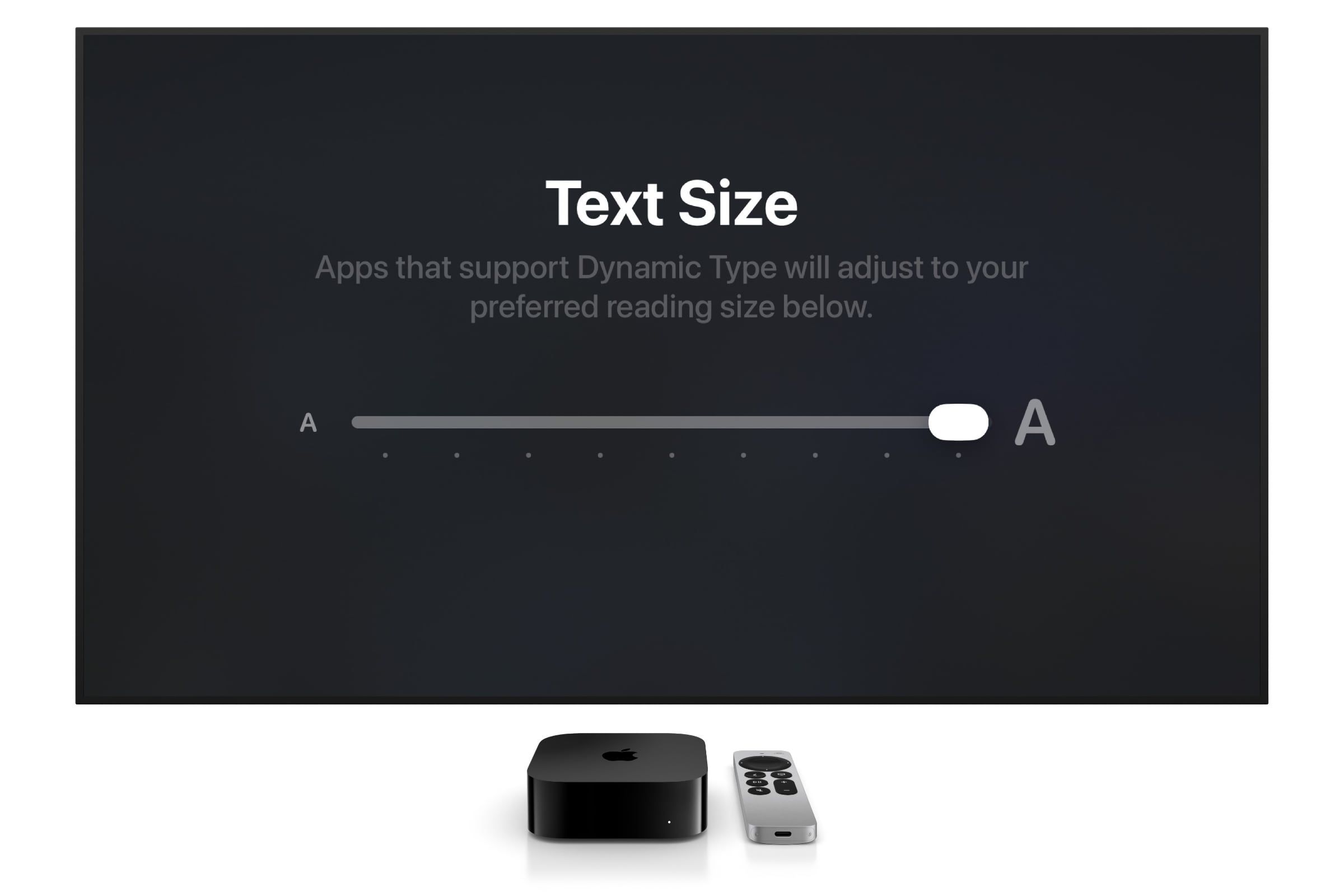
Apple is rolling out tvOS 27 accessibility upgrades for Apple TV 4K, including larger text and auto-generated subtitles for videos without captions. The features should improve usability broadly, but support may be limited in major streaming apps that do not use Apple's frameworks, such as Netflix and Prime Video. Initial subtitle support will be English-only, with broader language coverage coming later.
This is a small but real product-quality upgrade for AAPL because accessibility features are typically low-cost, high-retention improvements: they reduce friction for older users and households that share devices, which can lift engagement without a meaningful margin tradeoff. The bigger second-order effect is not on Apple TV hardware sales but on ecosystem stickiness; if text scaling and transcription become default behaviors across Apple devices, Apple reinforces the value of staying inside its framework stack rather than switching at the app layer.
The key competitive wrinkle is distribution power. Apps built on Apple’s native frameworks should benefit immediately, while closed-stack streaming apps can be functionally left behind, which subtly raises the relative quality gap between Apple-native video experiences and major third-party streaming clients. That creates a small but real incentive for consumers to spend more time in the Apple TV app layer, while also pressuring smaller OTT developers to adopt Apple frameworks or risk a worse UX on tvOS.
For NFLX, this is not a direct revenue hit, but it is a marginal UX negative because anything that makes third-party playback feel less integrated on Apple hardware can increase churn at the margin in households that use Apple TV as the primary living-room interface. The contrarian view is that the market may overestimate the immediacy of this issue: the impact is likely limited initially because most users will see the feature first in Apple-native and framework-compliant apps, so the real financial effect is a gradual ecosystem drift rather than an abrupt share loss.
Catalyst timing matters: the first visible read-through will likely be at WWDC and then in the beta cycle over the next 1-3 months, but any monetizable impact on AAPL or NFLX is a 6-18 month story. The biggest tail risk for the bull case is that adoption remains partial and the feature becomes a niche accessibility add-on rather than a widely used default, in which case the stock-level impact is negligible.
AI-powered research, real-time alerts, and portfolio analytics for institutional investors.
Request DemoOverall Sentiment
mildly positive
Sentiment Score
0.25
Ticker Sentiment
