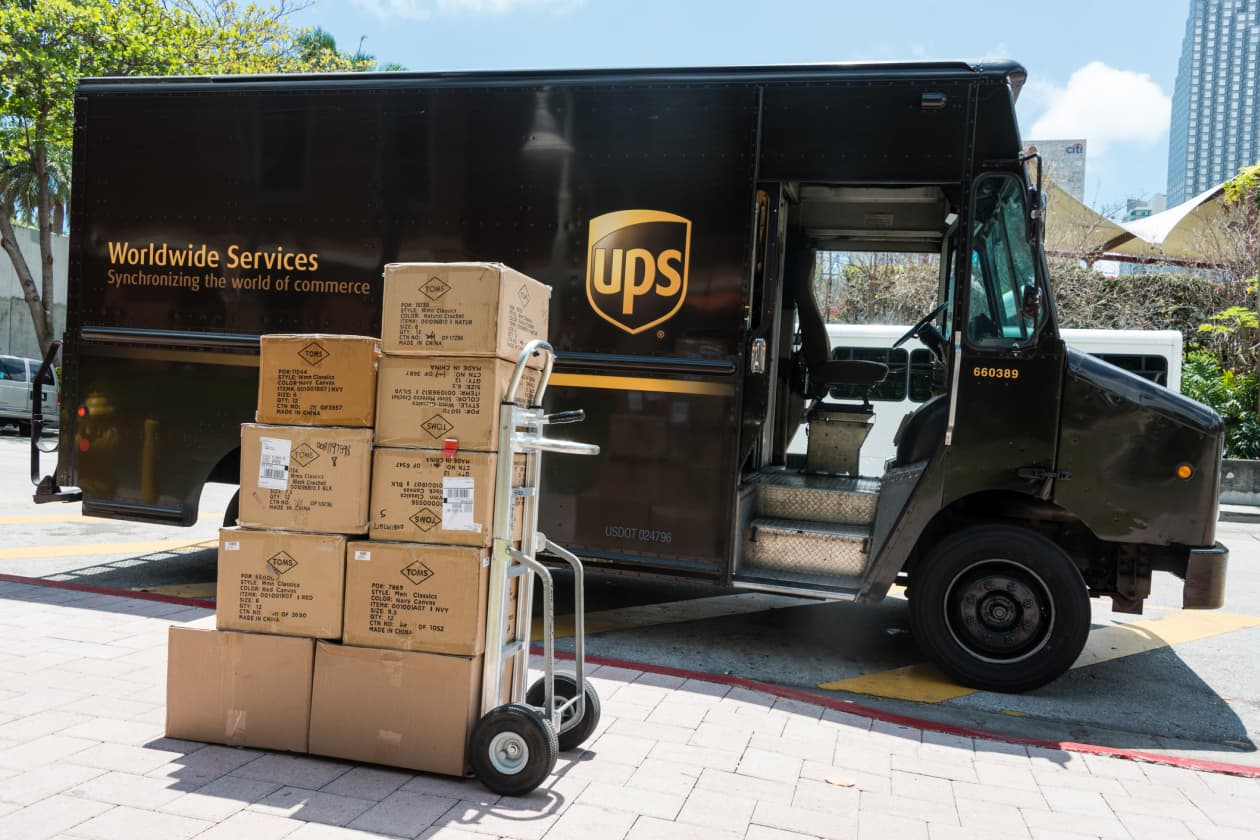
UPS beat first-quarter earnings expectations and revenue also topped Wall Street estimates, marking a fifth straight quarter of revenue beating projections. However, revenue still declined year over year for a fifth consecutive quarter amid ongoing weakness in U.S. business, and the company left its full-year outlook unchanged. Management said results marked a "critical transition point" with revenue and profit growth expected to resume in the current quarter.
UPS is signaling that the earnings floor may be near, but the market is treating “guidance unchanged” as the more important message: if management had real visibility into a clean re-acceleration, they likely would have pre-committed to a tighter range. That makes the near-term setup less about the quarter just reported and more about whether U.S. parcel volumes and pricing can improve fast enough to offset mix pressure from lower-margin business. In logistics, fixed-cost leverage works both ways; modest volume disappointment can erase a lot of incremental margin before investors see it in the top line.
The second-order read-through is for the broader transportation complex: if UPS is still not seeing durable domestic demand recovery, that usually implies retailers and industrial shippers remain cautious on inventory replenishment and expedited shipping. Smaller competitors with weaker density and less scale are more exposed because they cannot spread route costs as efficiently, while large shippers may keep using this window to renegotiate rates and service levels. That can pressure pricing across parcel and LTL over the next 1-2 quarters even if volumes stabilize.
The stock reaction suggests investors are already discounting a slower path to growth, but the contrarian risk is that consensus may be underestimating operating leverage once volumes inflect. If management is right and growth resumes this quarter, the market could re-rate the name quickly because expectations have reset low and the equity is trading more like a cyclical than a quality compounder. The key catalyst is not the headline earnings beat; it is evidence of sustained U.S. package demand improvement and margin stabilization over the next 30-90 days.
AI-powered research, real-time alerts, and portfolio analytics for institutional investors.
Overall Sentiment
neutral
Sentiment Score
0.05
Ticker Sentiment
