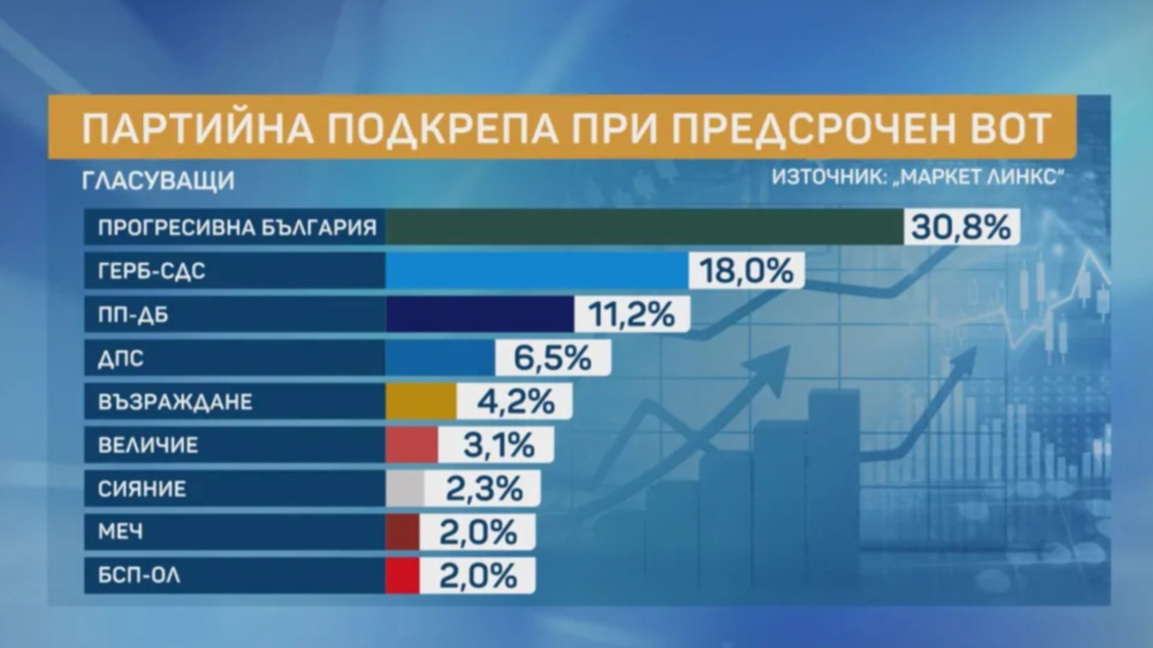
Ahead of Sunday’s snap elections, polling shows Progressive Bulgaria leading with 30.8% support, followed by GERB-SDS at 18.0% and We Continue the Change - Democratic Bulgaria at 11.2%. The survey suggests five parties could win seats, while several others are hovering near the 4% parliamentary threshold. Expected turnout is about 54%, with undecided voters reportedly leaning toward Progressive Bulgaria.
The market implication is less about the headline frontrunner and more about governability risk. A parliament that likely needs a fragmented coalition raises the odds of a slow cabinet formation, a caretaker extension, or another election cycle, which typically keeps local risk premia elevated even if the first print looks orderly. The nearer-term beneficiary is the incumbent/large-cap complex with external revenue and eurozone linkage; domestic cyclicals, banks, and utilities usually underperform when policy visibility is poor and fiscal decisions get pushed out.
The second-order effect is positioning rather than fundamentals: when undecideds break late toward the leading bloc, the first trade is often a relief rally in local assets, but that move can fade quickly if coalition arithmetic proves messy. The key timeline is days to 2-6 weeks, not months; if negotiations stall, foreign investors tend to reduce exposure before any macro data deteriorates. The threshold parties matter because a small shift in turnout could swing marginal seats and change whether the eventual governing coalition is stable enough to pass budgets and procurement decisions.
Contrarian view: the consensus may be overpricing instability because fragmented parliaments sometimes force a more market-friendly, technocratic outcome. If the leading bloc can assemble a workable coalition, the removal of election overhang could trigger a short-covering move in domestic financials and SOEs. The asymmetry, however, remains skewed to downside until coalition math is known, since the burden of proof is on post-election cooperation rather than poll momentum.
From a trade construction standpoint, the cleanest expression is relative-value: long internationally exposed Bulgarian/EU proxies versus short or underweight domestic beta, rather than an outright macro short on the country. For outright event risk, short-dated index downside hedges are preferable because the catalyst resolves quickly, but the follow-through risk lasts into coalition talks and cabinet vote timing.
AI-powered research, real-time alerts, and portfolio analytics for institutional investors.
Request DemoOverall Sentiment
neutral
Sentiment Score
0.00
