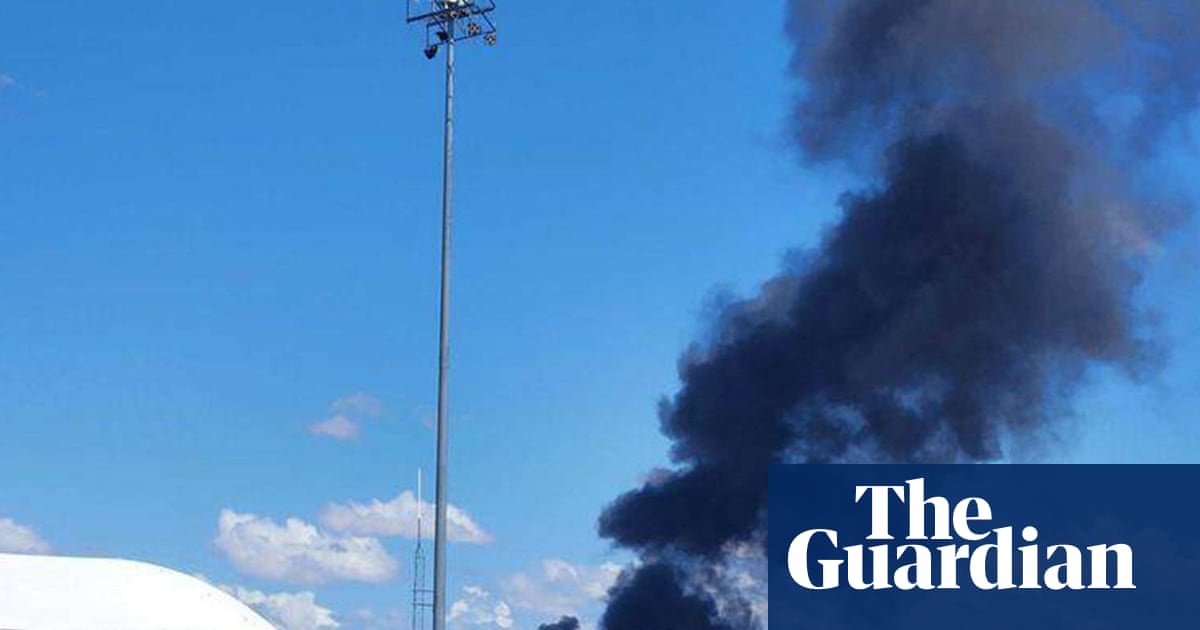
Two US Navy EA-18G Growler jets collided during an aerial demonstration at Mountain Home Air Force Base in Idaho, but all four crew members safely ejected and were evaluated by medical personnel. The air show was canceled and the base was locked down while responders investigated the crash. The incident is negative for military aviation safety, but broader market impact appears limited.
The immediate market impact is less about direct earnings and more about operational credibility: the incident reinforces that air shows are a low-probability, high-visibility execution risk for military aviation programs. That matters because the broader defense stack increasingly relies on public demo cycles, recruitment events, and international airshow presence to sustain procurement narratives and export optionality. A temporary reputational hit is most likely to accrue to the platform/operator ecosystem rather than any one contractor, but it can still create a short-lived pause in demos, tighter oversight, and incremental insurance/contingency costs.
The second-order effect is on near-term training and readiness optics. If investigators identify procedural or maintenance issues, the risk is not budgetary but schedule-related: stand-downs, retraining, and internal reviews can ripple across a squadron for weeks to months. In a geopolitically tense environment, any headline involving advanced electronic warfare assets can also sharpen scrutiny around operational risk tolerance, which slightly favors primes with diversified franchises over niche exposure tied to a single aircraft narrative.
For travel and leisure, the event is a reminder that regional air shows are fragile demand products: attendance, sponsorship, and municipal support can be highly sensitive to perceived safety. That is usually a one-event impact, but repeated incidents can compress future turnout and vendor economics, especially for bases or organizers dependent on infrequent marquee events. The contrarian view is that the move is probably overdone if anyone sells defense broadly; unless the investigation finds a systemic issue, this is more likely a headline decay event than a fundamental budget or demand shock.
From a risk lens, the key catalyst is the investigation timeline: initial findings in days can drive sentiment, while any safety-action memo could matter for 1-2 quarters. The tail risk is a broader grounding or demo restriction that trims airshow participation and export marketing effectiveness; that would matter over months, not days. Absent that, this should fade quickly and may even reinforce demand for more simulation, redundancy, and training systems.
AI-powered research, real-time alerts, and portfolio analytics for institutional investors.
Request DemoOverall Sentiment
mildly negative
Sentiment Score
-0.25
