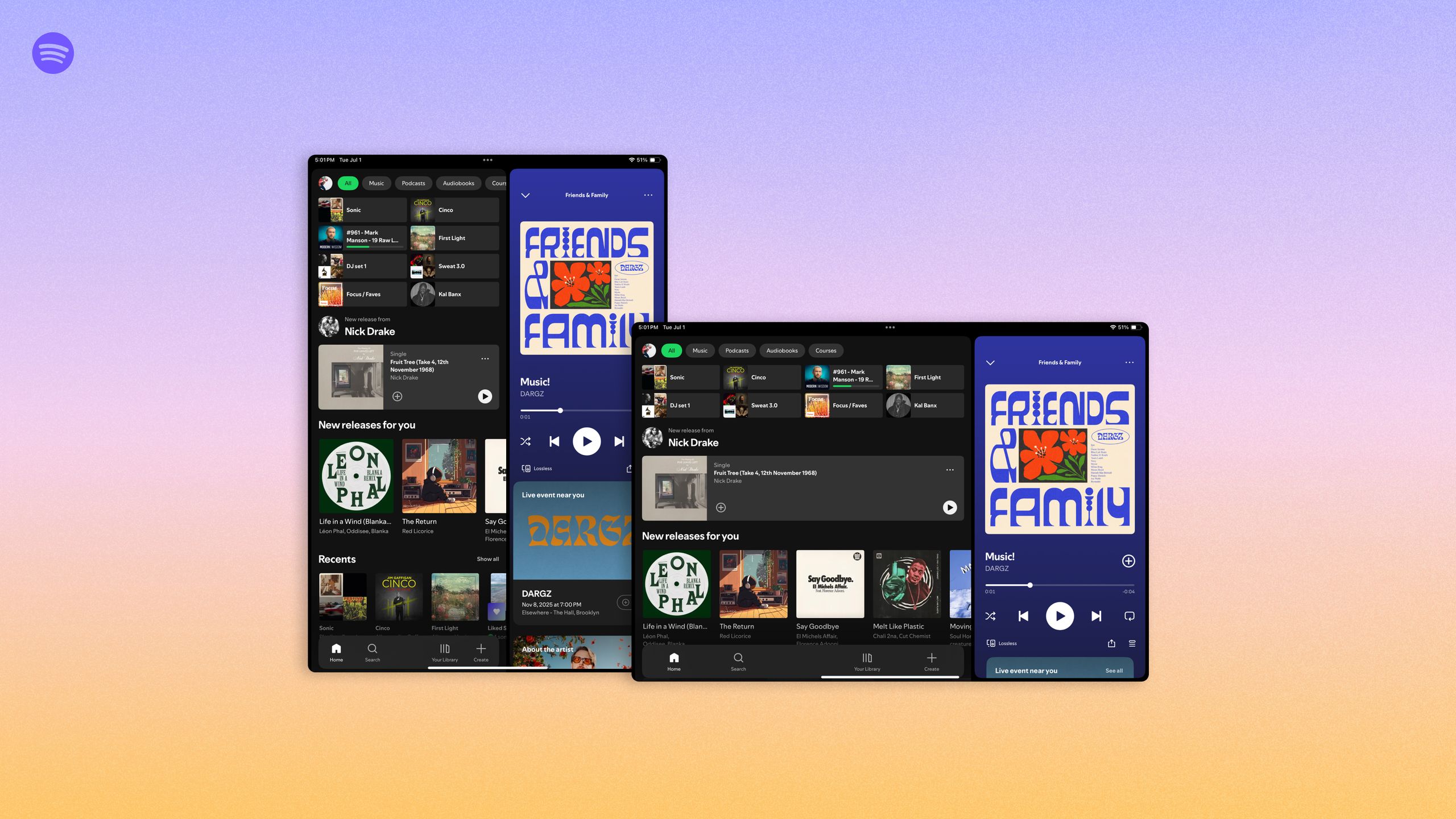
Spotify is rolling out a redesigned tablet app on Android and iOS today, with an adaptive interface that reconfigures for landscape and portrait modes and adds cleaner sidebar and parallel browsing features. The update also expands Bookshop.org integration to Spotify users in the U.S. and U.K., alongside broader audiobook Page Match language support. The news is positive for product experience but appears unlikely to materially move the stock.
This is a product-quality improvement, not a new monetization event, so the immediate P&L impact is likely modest. The second-order winner is retention: tablets are often shared, higher-engagement devices used in homes, and a better large-screen experience should reduce friction in discovery sessions where Spotify competes against YouTube, Apple Music, and even passive TV usage. That matters because music streaming is a low-differentiation category; small UX deltas can shift listening minutes, and listening minutes are the real leading indicator for ad inventory and premium renewal durability.
The more interesting read-through is cross-device consistency. Spotify is signaling that its operating model is becoming more platform-agnostic, which lowers the risk that tablets remain a dead-end surface and increases the odds of better conversion from free to paid in households with multiple screens. If parallel browsing and video access increase session depth, the upside is not just more time spent but more cross-sell surface area for audiobooks and commerce-like partnerships, which could incrementally improve ARPU mix over the next 2-4 quarters.
The contrarian point is that the market may be over-penalizing Spotify for being "just" a streamer when the broader story is product-led engagement expansion. That said, this is still a UX iteration, so expectations should stay anchored: the risk is that any lift in engagement is swallowed by churn normalization or offset by marketing spend if Spotify uses the redesign to push adoption rather than harvest it. The key catalyst window is the next 1-2 earnings prints, where management can quantify whether tablet engagement translated into premium conversion, audiobook attach, or better ad load efficiency.
From a competitive perspective, Apple Music is the most exposed if Spotify’s tablet polish improves household stickiness, because Apple’s ecosystem advantage is strongest when the experience is seamless across devices. The larger strategic risk is that Spotify continues building a "super-app" adjacency around audio and books, which could justify a higher long-duration multiple even if near-term revenue acceleration remains muted.
AI-powered research, real-time alerts, and portfolio analytics for institutional investors.
Request DemoOverall Sentiment
mildly positive
Sentiment Score
0.30
Ticker Sentiment
