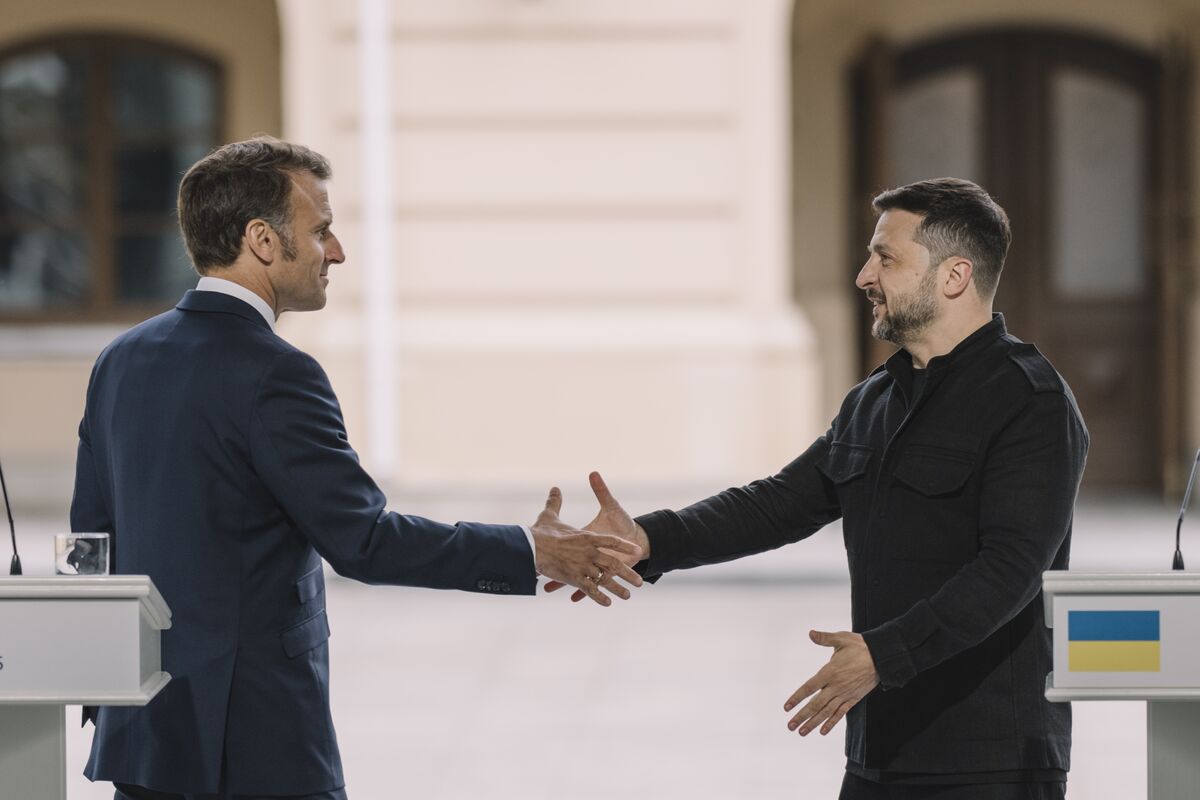
Presidents Emmanuel Macron and Volodymyr Zelenskiy are slated to meet following the US-Russia talks held in Alaska, as confirmed by the Elysee Palace. This high-level engagement underscores continued diplomatic efforts regarding the geopolitical landscape, particularly concerning Ukraine, in the wake of superpower discussions. No specific details regarding the timing or location of their meeting were provided.
A high-level diplomatic meeting between French President Emmanuel Macron and Ukrainian President Volodymyr Zelenskiy has been confirmed, with its timing contingent on the conclusion of US-Russia talks in Alaska. This scheduling explicitly links the Franco-Ukrainian dialogue to the outcomes of superpower negotiations, suggesting a coordinated Western approach or a reactive strategy to developments concerning Russia. The confirmation from the Elysee Palace, while lacking specifics on date and location, signals continued diplomatic engagement aimed at addressing the geopolitical situation in Ukraine. For investors, this event is a forward-looking indicator of potential shifts in regional stability, though the announcement itself carries a neutral market impact due to its preliminary nature and absence of concrete outcomes.
AI-powered research, real-time alerts, and portfolio analytics for institutional investors.
Request DemoOverall Sentiment
neutral
Sentiment Score
0.00
