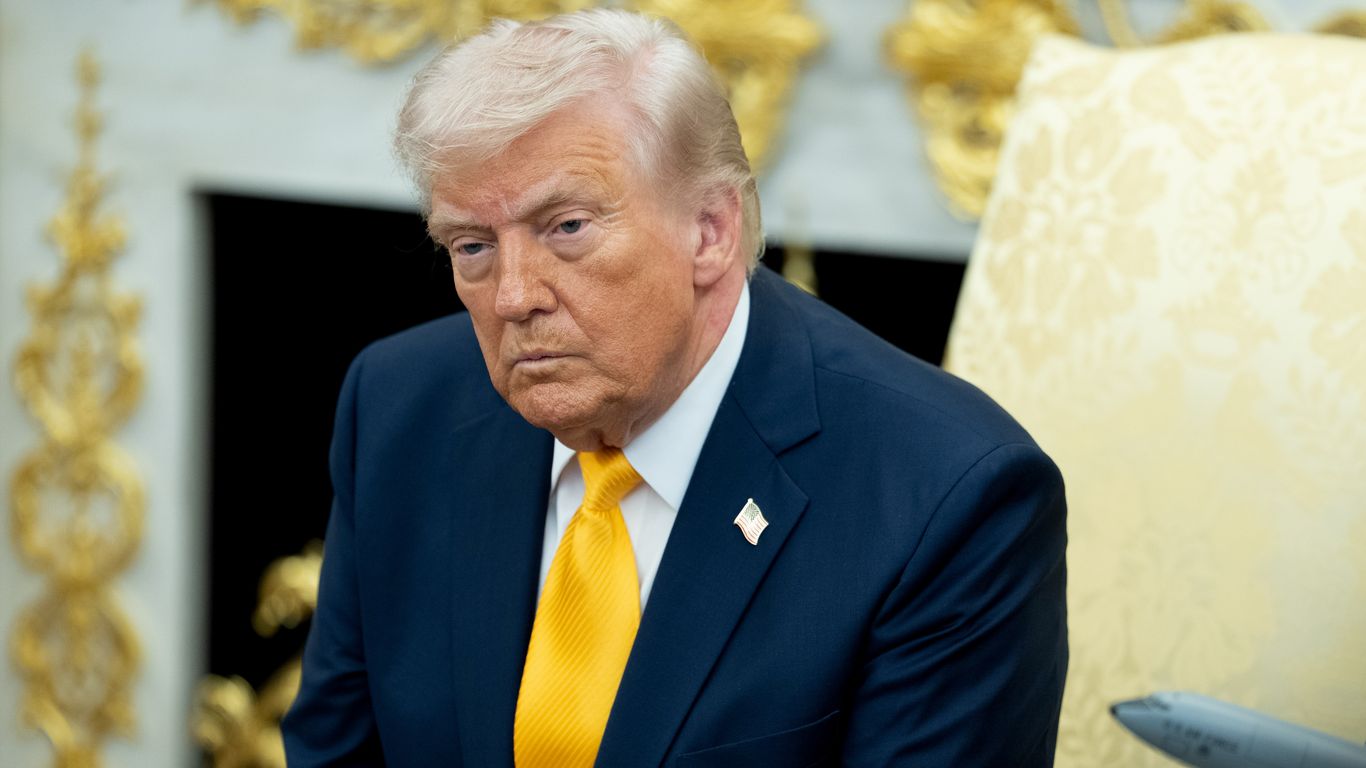
Trump signaled he's considering 'winding down' the war with Iran even if the Strait of Hormuz remains closed, while U.S. officials say strikes continue and the White House expected the mission to take ~4–6 weeks (tomorrow marks week 3). The U.S. is sending 'thousands of Marines' and conducting extensive strikes, but most allies declined to commit ships/minesweepers, leaving responsibility for guarding Hormuz to other nations if the U.S. pulls back. Leaving the strait closed would risk a major economic shock and upward pressure on global oil and U.S. gasoline prices, creating significant geopolitical and market uncertainty.
The market is positioned for a binary path: a rapid U.S. de-escalation that leaves the Hormuz choke point contested by regional actors, or continued kinetic pressure that preserves a high-risk premium. In the short run (days–weeks) that premium shows up as spiky oil volatility and sharply higher tanker insurance and spot freight; if the strait remains at risk, expect a 15–30% knee-jerk move in regional freight and insurance-sensitive equities and a 5–15% move in Brent/WTI depending on outage magnitude. Over the medium term (1–6 months) the more important second-order effect is demand re-routing and inventory rebalancing: buyers will bid for non-Gulf barrels, forcing spreads and refinery crack structures to reset across Asia, Europe, and the U.S. Gulf Coast.
A U.S. pullback reduces the political tail that justified multi-year premium pricing in certain defense contractors, compressing forward multiple expansion in 3–9 months if revenues tied to prolonged deployments are written down. Conversely, energy incumbents with flexible production (U.S. shale E&Ps) and physical logistics owners (tankers, storage owners) capture immediate margin reprieves; their cash flows react faster than integrated majors’ long-cycle projects. Watch the liquidity-sensitive parts of the market — tanker owners, marine insurers, and short-term crude ETFs — for rapid re-pricing that precedes corporate earnings revisions.
The key catalyst set: confirmed redeployments (days), allied force commitments or seizures of choke assets (weeks), and visible shifts in refinery crude sourcing (1–3 months). Reverse moves will come from a credible multinational convoy or rapid reopening of alternative export routes; such outcomes would compress oil and freight premia by 40–70% off peak within 30–90 days. Position sizing should assume high kurtosis: large intraday swings around sparse political data points, but with mean reversion once logistics solutions scale.
AI-powered research, real-time alerts, and portfolio analytics for institutional investors.
Request DemoOverall Sentiment
mildly negative
Sentiment Score
-0.30
