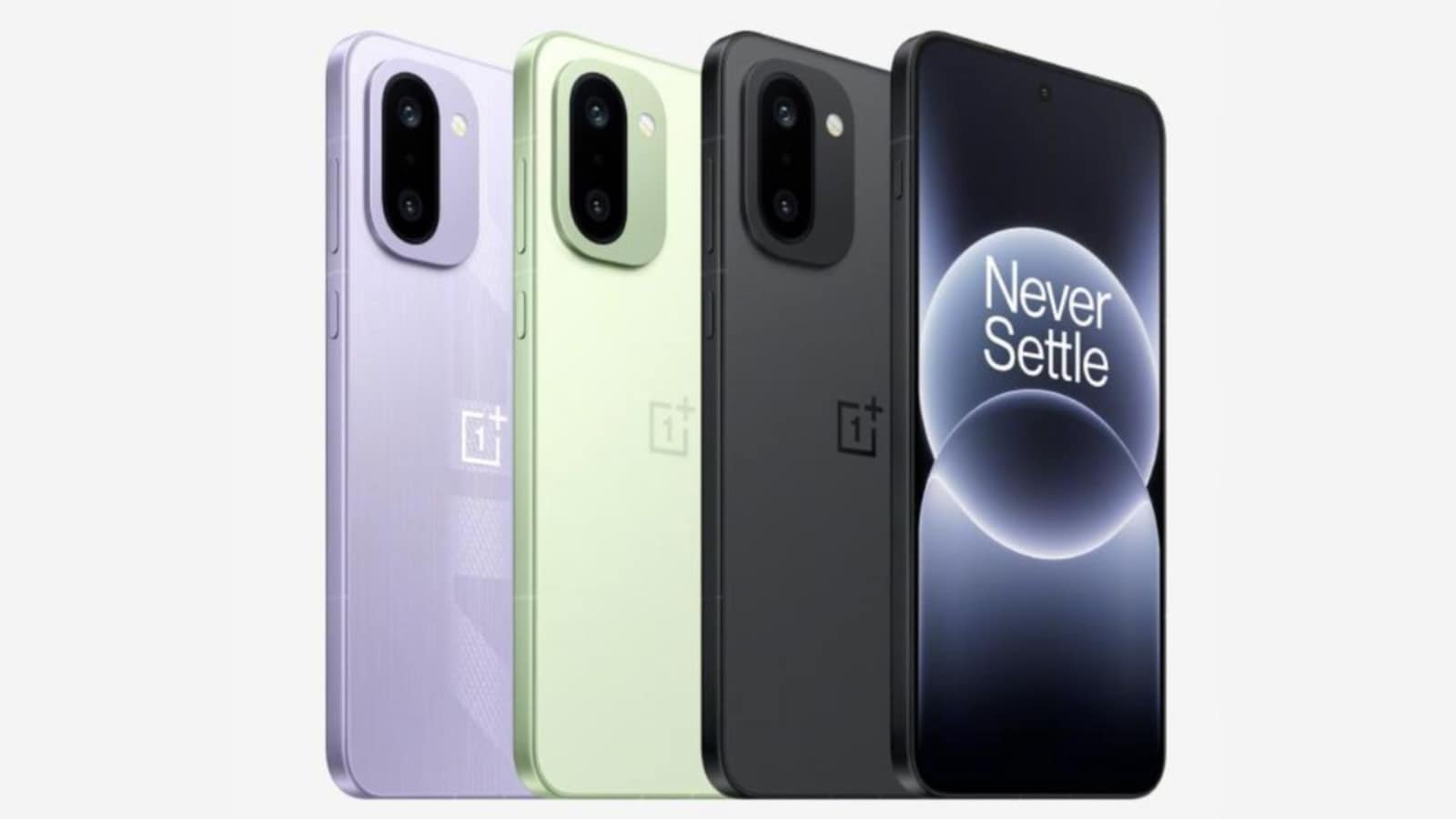
OnePlus will launch the OnePlus 15R in India on December 17 alongside the Pad Go 2, positioning the device as a high-spec, competitively priced flagship variant (expected around Rs 45,000) and available via Amazon. Key specs include the Snapdragon 8 Gen 5 chipset, OxygenOS 16 on Android 16, a 7,400mAh battery with 80W wired charging (rated to retain ≥80% capacity after 4 years), a 6.83-inch 1.5K 165Hz AMOLED display, dual cameras (50MP Sony IMX906 main + 8MP ultrawide) and 4K video at 120fps; the model is rumored to be a rebranded OnePlus Ace 6T for China. These features and distribution choices may modestly bolster OnePlus’s competitive positioning in the Indian premium smartphone segment but are unlikely to be materially market-moving on their own.
Market structure: OnePlus’s 15R (≈Rs45k/~$540) targets the mid‑premium India segment, benefiting component suppliers (Sony for IMX906 sensors, Qualcomm for Snapdragon 8 Gen 5) and Amazon (AMZN) as distribution partner; expect modest upside to SONY sensor revenues and incremental QCOM SoC pull-through over the next 3–6 months, while incumbents in Apple/Samsung’s midrange could face ASP pressure and share erosion in India by 1–3ppt if adoption scales. Supply/demand: a 7,400mAh battery and flagship SoC adoption signal demand for higher‑capacity cells and premium SoCs — short term constraints possible on high‑end Qualcomm wafer allocation, longer term modest lift to lithium/cathode demand over 6–24 months. Cross‑asset: negligible bond impact; battery metal commodities (lithium/copper) get small structural support; INR could strengthen marginally on export/retail receipts if India sales exceed internal forecasts.
Risk assessment: Tail risks include Qualcomm supply shortfalls or Sony sensor supply constraints causing delayed shipments (low probability, high impact over 0–3 months), and a product safety recall or battery longevity litigation that would crater consumer confidence and force returns over 1–12 months. Hidden dependencies: OnePlus’s battery longevity claim depends on specific cell chemistry and supplier (partner risk), and rebranding from Ace 6T means India SKU/configuration changes could alter margins. Catalysts to watch: India sales rank on Amazon and 30‑day sell‑through, Qualcomm allocation statements, and Sony sensor revenue guidance in next quarterly reports.
Trade implications: Tactical longs: SONY (sensor upside) and QCOM (SoC adoption) with 3–6 month horizons; battery metals exposure (lithium ETF or ALB) on a 6–18 month horizon if multiple OEMs enlarge battery capacities. Options: use 3‑6 month call spreads on QCOM to limit premium outlay if IV is elevated, and buy a protective put on SONY sized to 1% portfolio to cap tail loss. Sector rotation: overweight semiconductors/components and e‑commerce retail (AMZN) in Asia exposure, underweight low‑ASP India OEMs and midrange incumbents likely to cede share.
Contrarian angles: Consensus underestimates execution risk — high battery capacity claims often translate to heavier devices and return friction; if user reviews flag thermal or longevity issues, parts suppliers (SONY/QCOM) may see muted revenue impact despite initial placement. The market may be underpricing the long‑run commodities uplift from larger batteries; a disciplined 6–18 month metal exposure could outperform if >3 OEMs follow suit. Historical parallel: previous cycles where Chinese OEMs moved flagship tech into mid‑premium showed rapid share gains but narrow margins — profits for component suppliers, not necessarily for OEMs, so prefer supplier plays over private OEM equity.
AI-powered research, real-time alerts, and portfolio analytics for institutional investors.
Request DemoOverall Sentiment
mildly positive
Sentiment Score
0.25
Ticker Sentiment
