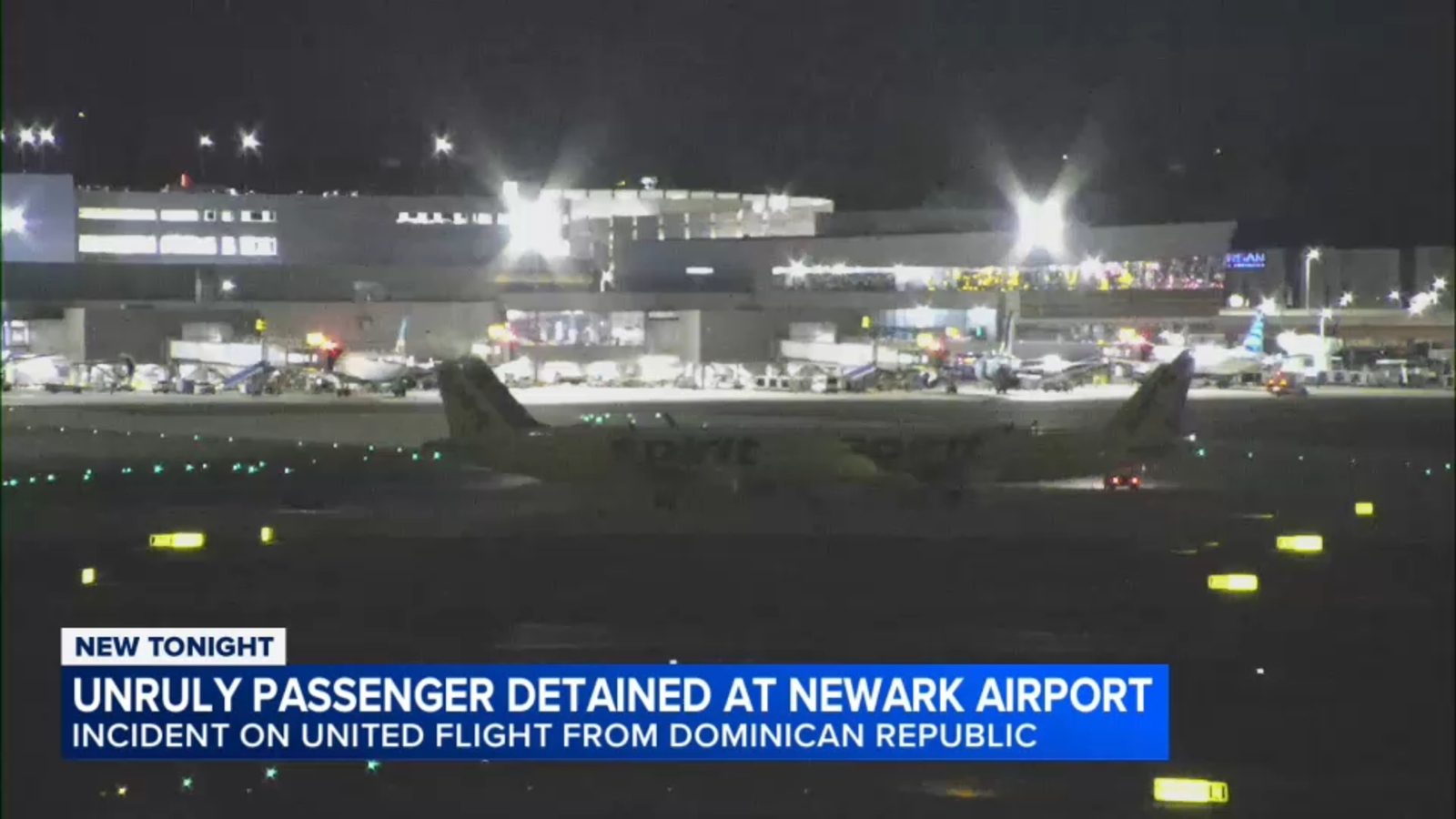
A 48-year-old passenger was detained at Newark Liberty Airport after an unruly incident on United flight 1837, which arrived from the Dominican Republic with 170 passengers and six crewmembers aboard a Boeing 737. The passenger was taken to the hospital for a psychiatric evaluation, and one person refused medical attention. The report is factual and localized, with minimal broader market relevance.
This reads as a low-conviction headline for UAL rather than a fundamental impairment. Single-passenger disturbances rarely move the earnings line, but they do matter at the margin because they increase operational friction: gate holds, crew time, rebooking risk, and the small but real probability of knock-on delays in a tightly scheduled hub system. The immediate market impact should fade within days unless the incident becomes part of a broader pattern of onboard disruptions or triggers additional scrutiny around security handling at major East Coast hubs.
The second-order effect is reputational, not financial: airlines with higher exposure to leisure-heavy, international returns into congested airports are more vulnerable to social-media amplification of isolated incidents. That can pressure customer sentiment at the margin, but the magnitude is usually too small to change load factors unless there is a cluster of events or a visible uptick in unruly-passenger headlines across the sector. For competitors, this is not a share-take event; if anything, it reinforces the structural need for stronger onboard policing and mental-health intervention protocols, which can modestly lift airport/airline operating costs over time.
The healthcare angle is subtle: the psychiatric-evaluation component highlights the increasing intersection between aviation security and behavioral health. That creates a slow-burn tailwind for vendors tied to airport medical response, crisis intervention, and surveillance systems, but it is not enough to justify a thematic trade on its own. The more investable catalyst would be any policy response that forces airlines or airports to spend on prevention, training, or technology over the next 6-24 months.
Consensus is probably overestimating headline noise and underestimating how little this changes UAL’s earnings trajectory. The right framing is that this is a volatility event, not a thesis event; unless it feeds into a broader trend of unruly-passenger incidents, any dip in UAL should be treated as a transient sentiment dislocation rather than a fundamental short.
AI-powered research, real-time alerts, and portfolio analytics for institutional investors.
Request DemoOverall Sentiment
neutral
Sentiment Score
-0.10
Ticker Sentiment
