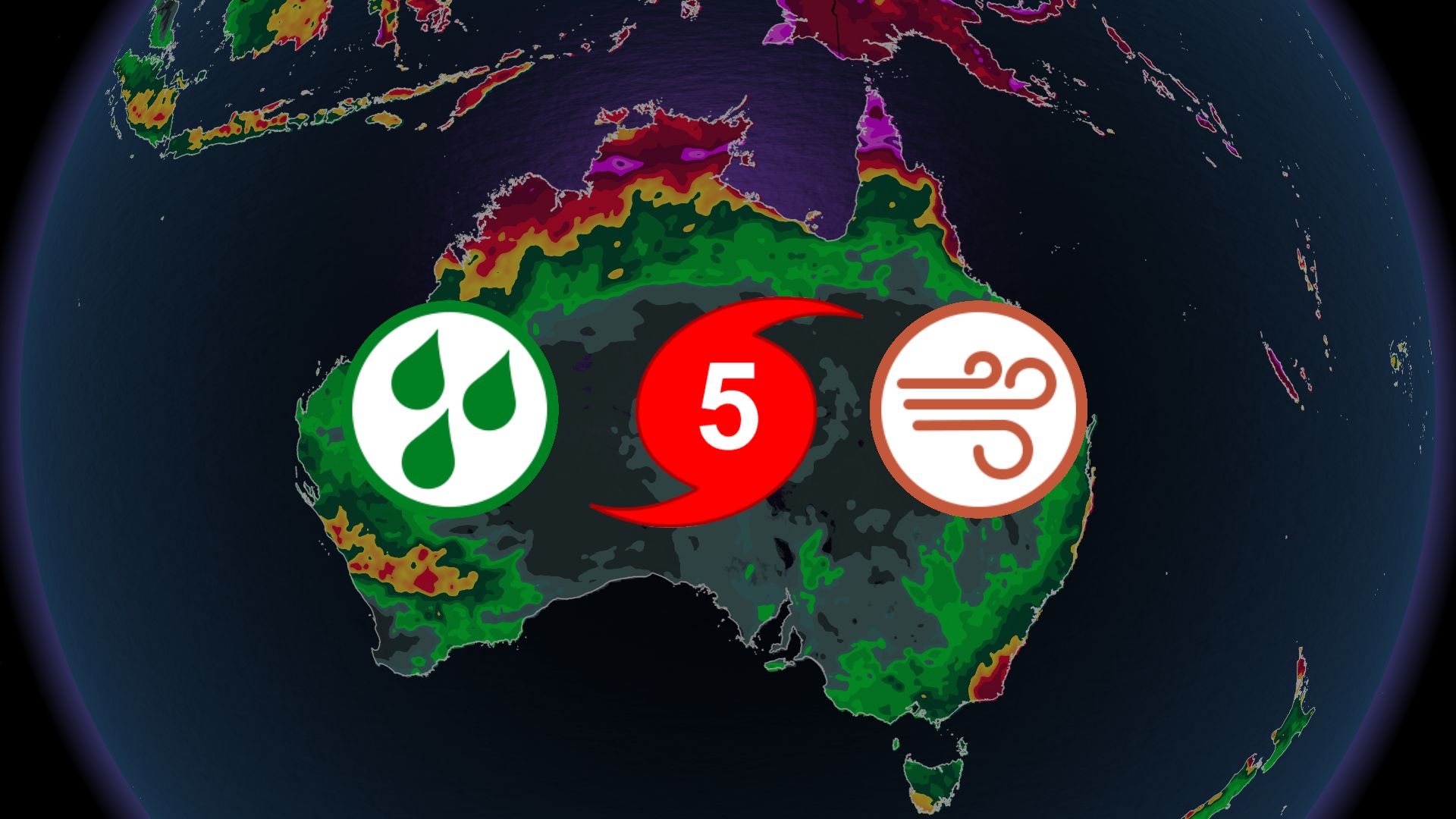
Cyclone Narelle has intensified to Category 5 with wind gusts up to 315 km/h and is forecast to make landfall Friday between Lockhart River and Cape Melville. Very destructive gusts in excess of 250 km/h and heavy rainfall with flash flooding are expected across Cape York Peninsula; the storm will cross the Gulf of Carpentaria and may re-intensify to impact eastern Northern Territory late Saturday, with a possible rare third landfall in Western Australia. Anticipate acute localized disruption to infrastructure, transport and energy assets and elevated insured loss risk concentrated in Queensland and the Northern Territory.
This event is a concentrated supply-chain shock with front-loaded operational impacts (hours–days) that cascade into multi-week export dislocations for commodity nodes and port logistics across northern Australia. Expect measured but visible squeezes in regional seaborne flows (bauxite/alumina, base metals, LNG cargo scheduling, and coastal bulk freight) that will lift spot freight and prompt ad hoc reroutes; these effects typically normalize in 2–8 weeks but can leave price spikes and backlog into the next quarter.
Insurance and reinsurance will see headline volatility immediately, but the structural story matters more: premium-rate momentum going into forthcoming renewals means balance-sheet hits are more likely to crystallize as earnings volatility and reserve adjustments over 1–3 quarters rather than an instantaneous solvency shock. A rare multi-landfall outcome is the asymmetric tail: it converts a localized P&L event into a broader reinsurance-capacity repricing cycle, which historically drives elevated rates and improved new-business economics for insurers 6–18 months out.
Policy and infrastructure responses create durable second-order winners. Rapid reconstruction lifts demand for cement, aggregates, and mid-tier contractors; federal/state emergency spending accelerates capex allocation decisions and may prompt muni-like issuance at the state level. Conversely, any prolonged disruption to northern logistics hubs increases the option value of nearby diversified players (ports, relievers, and national logistics providers) while temporarily penalizing smaller, coastal-dependent operators.
AI-powered research, real-time alerts, and portfolio analytics for institutional investors.
Request DemoOverall Sentiment
strongly negative
Sentiment Score
-0.70
