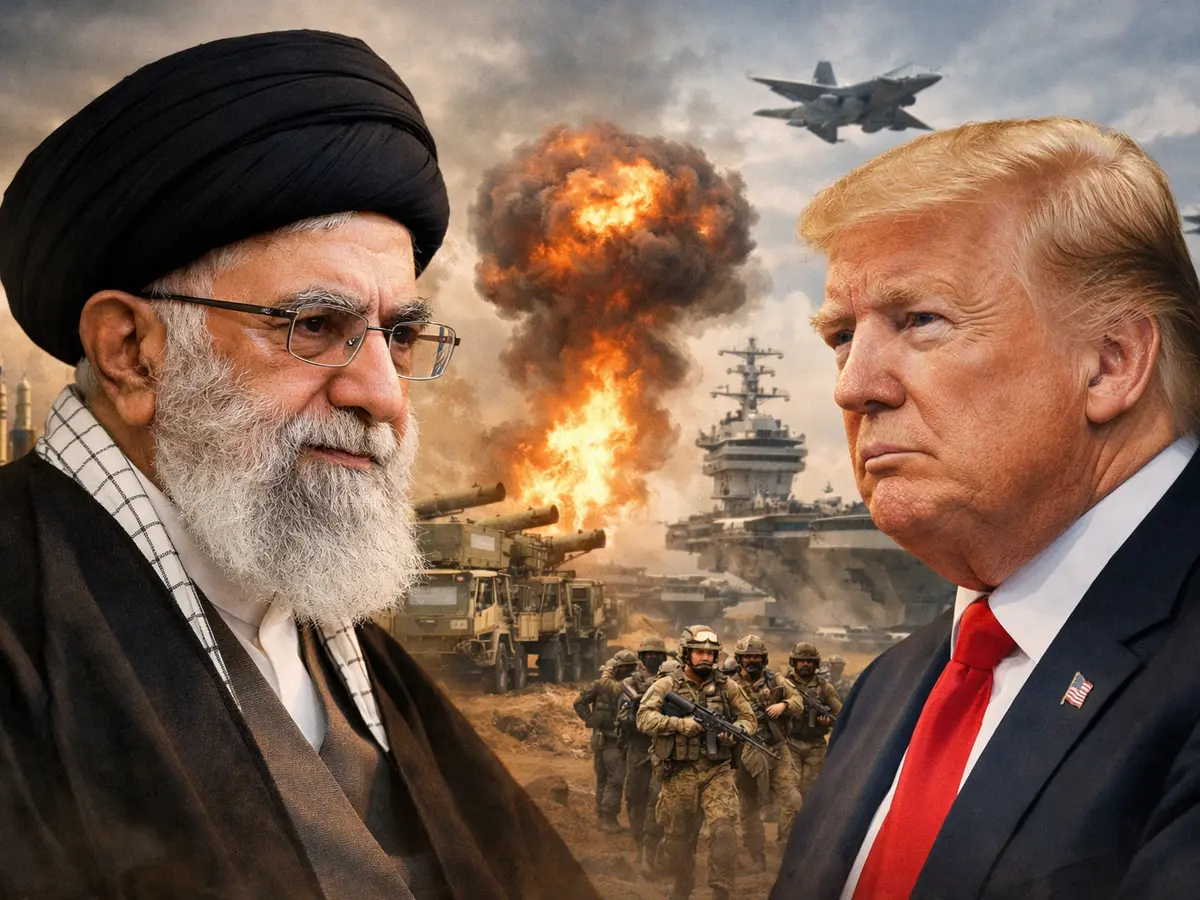
Iranian cyber and unmanned-weapon capabilities — notably the matured 'Charming Kitten' and 'Mint Sandstorm' hacking groups and low-cost loitering munitions — pose a growing asymmetric threat to U.S. cities and critical infrastructure, particularly power, water and financial systems. Although Tehran currently lacks a confirmed operational ICBM able to strike the U.S. mainland, analysts warn its dual-use space launch technology and converted commercial vessels (e.g., mobile sea bases) could enable long-range strikes or drone launches; Washington has responded by positioning the USS Abraham Lincoln and relying on GMD interceptors while federal agencies increase monitoring of Iran-linked networks on U.S. soil. These developments raise persistent homeland-security and defense-readiness risks that could influence defense, insurance and critical-infrastructure exposures.
Market structure: Defense primes (LMT, NOC, RTX, GD) and cyber vendors (PANW, CRWD, FTNT) stand to gain near-term revenue upside from accelerated orders and emergency IT spend; expect a 5–15% re-rating on credible escalation within 1–6 months, while travel, leisure, and certain commercial shipping names could underperform by 10–30% on route disruptions and insurance cost spikes. Pricing power will favor large prime contractors and cloud-native security firms with recurring SaaS economics; small integrators and legacy on-prem vendors lose share as customers prioritize rapid, managed-response capabilities.
Risk assessment: Near-term (days) tail risks include a state-linked cyberattack that shocks markets (exchange/hydro grid outage) producing >5% intraday equity moves and a 20–40 bps Treasury yield flight-to-safety; short-term (weeks–months) risks are protracted asymmetric retaliation raising oil by +10–25% and supply-chain insurance costs; long-term (years) implies permanently higher baseline defense and cyber budgets (+$20–50bn annually over 3 years). Hidden dependencies: defense upside hinges on Congress funding cycles; cyber vendor bookings hinge on renewal cohorts and MSP adoption.
Trade implications: Direct plays — overweight LMT/NOC/RTX (2–3% portfolio each) and buy 3–9 month call spreads on PANW/CRWD (10–20% OTM funded) to capture IV skew while capping cost; add 0.5–1% tactical long in TLT or IEF for immediate hedging expecting a 3–7% rally in risk-off. Rotate out of airlines/cruise names (AAL, RCL) by trimming 30–50% exposure over next 30 days and redeploy into defensives (DUK, NEE) for dividend stability.
Contrarian angles: The market may overpay for cyber pure-plays post-alerts — small-cap cyber names could mean-revert 20–40% once headlines fade; conversely, defense primes are underpriced for multi-year topline improvement tied to sustained budget increases. Historical parallels (post-9/11 surge vs 2019 Gulf scares) show initial spikes can persist if policy & appropriations follow; set strict entry bands and 8–12% stop-losses to avoid headline whipsaw.
AI-powered research, real-time alerts, and portfolio analytics for institutional investors.
Request DemoOverall Sentiment
moderately negative
Sentiment Score
-0.55
