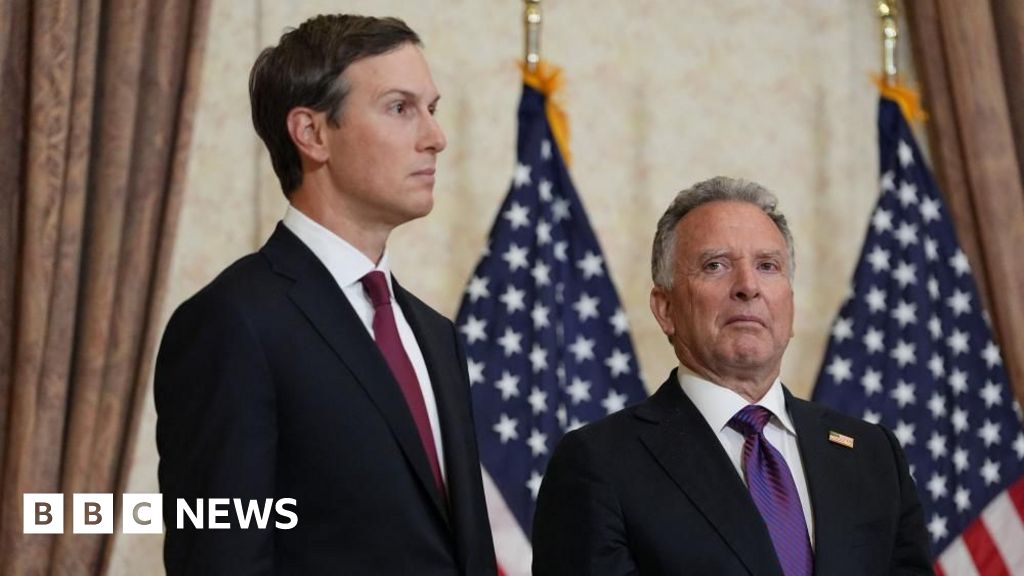
The US is sending Steve Witkoff and Jared Kushner to Pakistan for Iran talks, while oil markets remain under pressure from the Strait of Hormuz blockade and broader Middle East conflict. Washington also imposed sanctions on a major Chinese refinery and 40 other vessels/owners tied to Iran's oil trade. The article points to continued geopolitical risk and elevated energy price volatility, with oil prices already described as having skyrocketed globally.
The market is still mispricing the asymmetry between “talks continue” headlines and the physical-market reality of a contested Hormuz corridor. Even if diplomacy de-escalates the headline risk, the shipping reroute/insurance premium embedded in crude and refined products is likely to persist for weeks, not days, because charterers will wait for verified passage normalization before re-optimizing routes. That means the first tradable effect is not a clean directional oil spike, but a widening in freight, tanker utilization, and product cracks as Asia and Europe scramble for replacement barrels.
The bigger second-order winner is the non-U.S. Atlantic Basin supply stack: USGC refiners, Latin American crude exporters, and long-haul tanker owners all gain from dislocation even if Brent retraces. Chinese import channels are likely to be the most vulnerable because sanctions on connected refineries and vessels can force incremental compliance friction, reducing discounted Iranian supply and tightening the marginal barrel into Asia. Over a 1-3 month horizon, that supports a relative value long on energy logistics and export-oriented producers versus domestic transport and industrial names exposed to higher fuel costs.
The key risk is a sudden diplomatic breakthrough that narrows the risk premium faster than freight adjusts. But even in that case, sanctions enforcement is sticky: once counterparties are flagged, trade finance and vessel utilization recover slowly, so the downside to logistics names is capped while upside from renewed congestion can be large. The contrarian view is that the oil spike may already be overextended in spot, but the cleaner expression is not outright crude long; it is owning the infrastructure of friction—tankers, pipelines, and select refiners that benefit from wider spreads and rerouting.
AI-powered research, real-time alerts, and portfolio analytics for institutional investors.
Request TrialOverall Sentiment
moderately negative
Sentiment Score
-0.45
