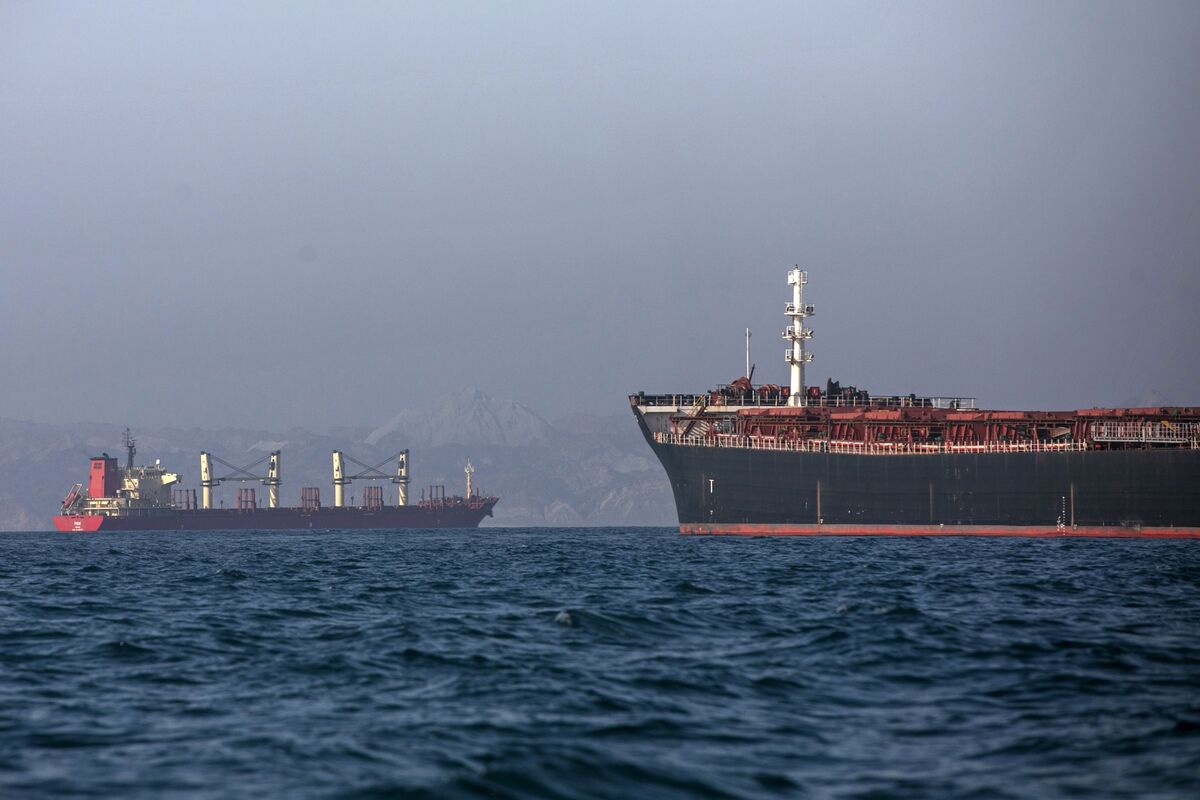
Iran said there has been no recent progress on an interim peace deal with the US, while skirmishes persisted and the unresolved enriched-uranium stockpile continues to cloud negotiations. The backdrop remains market-sensitive for oil and broader risk assets because Trafigura said much of its >$4 billion first-half profit came before the Iran war and near-closure of the Strait of Hormuz, though it also disclosed a record dividend payout of just over $3 billion. Overall, the article points to elevated geopolitical risk rather than a clear new policy breakthrough.
The market’s biggest mistake here is treating this as a binary diplomacy headline instead of a supply-chain optionality event. The unresolved inspection issue keeps the “fat-tail” premium embedded in Middle East energy logistics, but the first-order move is usually less about outright crude and more about refining, freight, and insurance: the longer uncertainty persists, the more buyers preemptively diversify routes, raise inventories, and pay up for non-Gulf barrels. That tends to benefit Atlantic Basin producers, non-Russian medium/sour grades, and shipping names with lower regional concentration, while penalizing refiners and industrial users exposed to margin squeeze.
A key second-order effect is on volatility itself. Conflicting signals from Washington and Tehran raise the probability of short, violent price spikes rather than a durable trend, which is favorable for option sellers only if they can withstand gap risk; otherwise, it argues for long convexity in energy proxies. The market is likely underestimating how quickly a “no progress” narrative can translate into precautionary stockpiling by Asian importers, which can tighten prompt markets even without a physical supply interruption.
Trafigura’s outsized payout is also telling: trading houses monetize dislocations long before fundamentals show up in consensus estimates. Record capital return here suggests the opportunity set remains unusually rich in physical arbitrage, especially in flows constrained by sanctions and route risk. That is a warning signal for anyone fading geopolitical risk too early: the firms closest to the barrel are behaving like the regime remains unstable, not normalized.
The contrarian view is that the market may be overpricing immediate supply loss and underpricing diplomatic backtracking. If talks resume with credible inspection access, the risk premium can deflate quickly because positioning is already crowded for escalation. In that scenario, the trade pain is likely concentrated in energy volatility longs and freight hedges, while broad equities could see a relief bid within days.
AI-powered research, real-time alerts, and portfolio analytics for institutional investors.
Request DemoOverall Sentiment
mildly negative
Sentiment Score
-0.15
