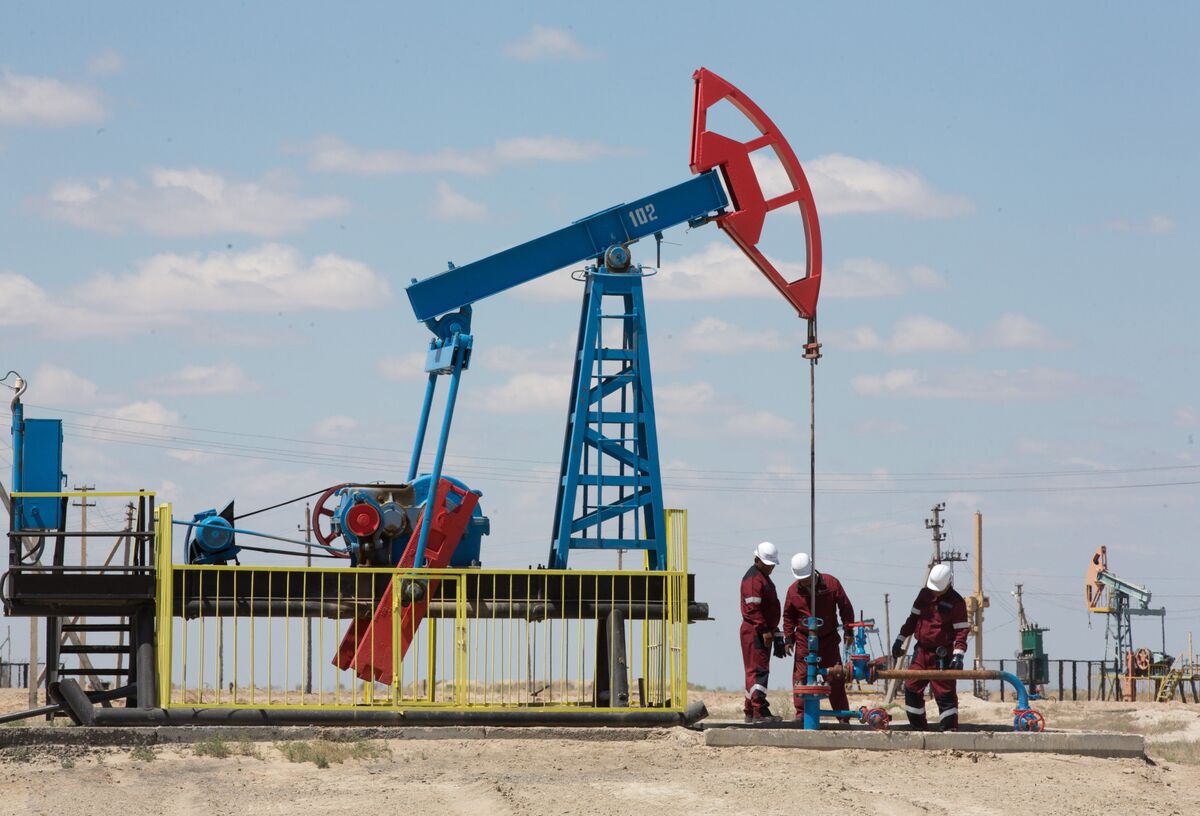
Loadings of CPC Blend from Russia’s Black Sea coast are expected to rise to about 1.7 million barrels a day in May, matching the September record of 1.72 million barrels a day. The higher Kazakh and Russian-origin supply should ease pressure on European refiners after the effective closure of the Strait of Hormuz. The development is supportive for crude availability and supply-chain resilience, with a meaningful but not system-wide market impact.
The immediate beneficiary is not just European refiners but the entire marginal barrel ecosystem in the Atlantic Basin: a reliable, near-term non-Middle East supply source reduces panic bidding for light sour grades and should cap the most acute dislocations in gasoil and jet cracks. The second-order effect is that shipping and crude quality optionality improves for refiners with flexibility to run CPC Blend, which favors complex coastal plants over inland or simple-run operations that are more exposed to regional shortages. The supply signal is more important than the volume itself. When a politically constrained route can still deliver at record rates, it compresses the risk premium embedded in prompt Brent and narrows time-spread backwardation, but only if traders believe the flow is durable for multiple loadings rather than a one-off clearing event. That makes the next 2-6 weeks critical: any loading slippage, weather disruption, or sanctions enforcement change would quickly reprice the market because refiners have already been forced to de-stock around the Hormuz shock. The contrarian view is that this is a relief rally for crude differentials, not a structural fix for global balances. If CPC barrels displace Middle East flows into Europe, the shortage may simply reappear in Asia, where buyers are more price-sensitive and can defer runs, so the net effect could be a re-routing rather than true supply expansion. Also, the market may be underestimating how much of the resilience is operationally fragile; a single chokepoint incident would restore a scarcity premium fast enough to matter for prompt contracts but not necessarily for later-dated futures. For investors, the best expression is a tactical short in front-end volatility rather than outright crude direction: the market should see less panic, but not a clean bearish trend. Any compression in prompt spreads is likely to be the more reliable trade than a decisive selloff in Brent, especially if inventories remain tight and traders continue to price geopolitical tail risk.
AI-powered research, real-time alerts, and portfolio analytics for institutional investors.
Request DemoOverall Sentiment
mildly positive
Sentiment Score
0.25
