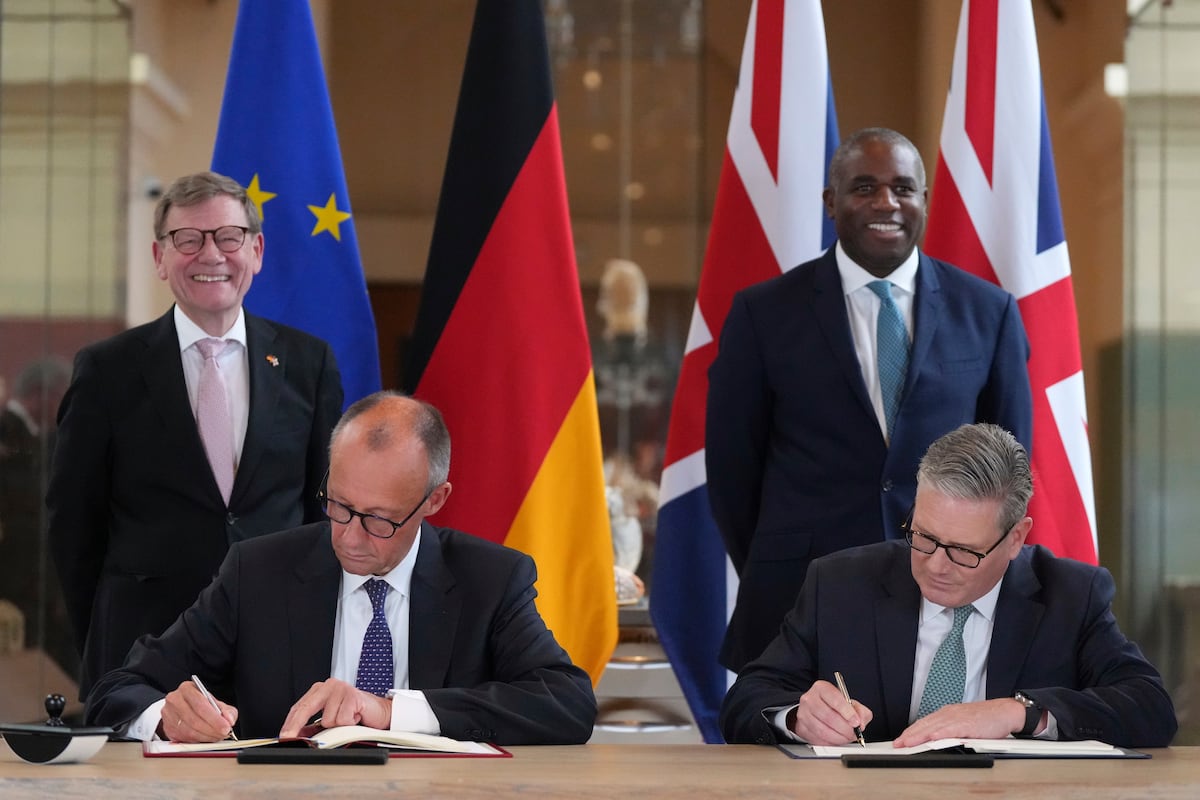
Germany and the UK have formalized their first bilateral defense pact since WWII, the "Treaty of Friendship and Bilateral Cooperation," committing to mutual military aid, joint military-industrial exports, and co-development of advanced precision strike weapons. This significant agreement deepens European defense integration, potentially easing German export restrictions for joint projects, while simultaneously signaling increased long-range weapon provisions to Ukraine, which has prompted renewed warnings from Russia regarding retaliatory strikes on European targets, underscoring heightened geopolitical risks and implications for defense sector investments.
The signing of the first bilateral defense pact between Germany and the United Kingdom since World War II marks a significant acceleration in European defense integration, driven by the war in Ukraine and shifting transatlantic dynamics. The "Kensington Treaty" establishes a mutual defense commitment and, critically for investors, formalizes deep industrial collaboration. The pact includes joint development of a next-generation deep precision strike weapon with a range exceeding 2,000 kilometers and cooperation on uncrewed aerial systems and submarine threats, signaling long-term, high-value procurement cycles. Furthermore, the agreement aims to facilitate joint military-industrial exports of platforms like the Eurofighter Typhoon and Boxer armored vehicles, potentially overcoming Germany's historically restrictive arms export policies that have previously hindered sales. This development is paired with an immediate increase in geopolitical risk; the announcement of substantial new long-range weapon support for Ukraine has prompted explicit threats from Russia of retaliatory strikes against military facilities in Western Europe. This creates a dual narrative of a bullish outlook for the European defense sector, underpinned by concrete long-term spending, alongside a heightened risk of direct military escalation.
AI-powered research, real-time alerts, and portfolio analytics for institutional investors.
Overall Sentiment
mixed
Sentiment Score
0.00
