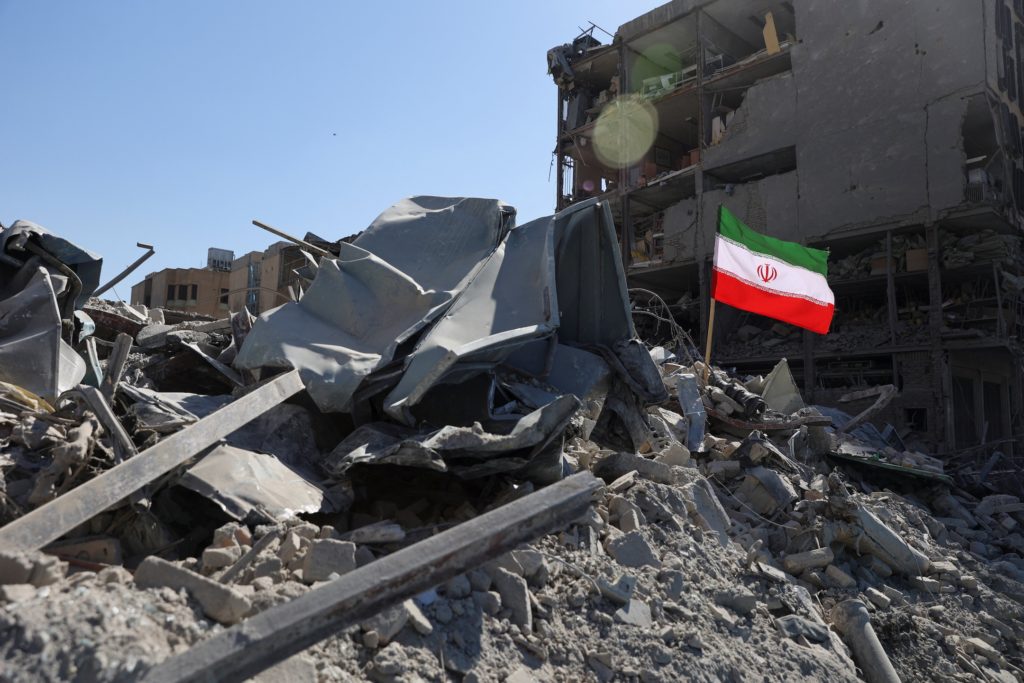
U.S. and Israeli strikes inside Iran have escalated into a wider regional conflict as Iran struck American diplomatic facilities across the Gulf (including attacks near the Dubai consulate and embassies in Riyadh and Kuwait), prompting the U.S. State Department to order large-scale evacuations and report widespread civilian airspace closures. More than a million people across 14 countries were told to evacuate, roughly 9,000 Americans have left so far, and disruptions to airports and airspace are constraining evacuation logistics and regional transportation; the situation raises near-term risks to energy and logistics flows and increases demand-side upside for defense-related suppliers while driving a broader risk-off reaction among investors.
Market structure: Immediate winners are defense contractors (LMT, RTX, NOC, GD) and commodity producers (XOM, CVX) as risk premia and military demand rise; losers are airlines/airports (AAL, UAL, DAL), travel/leisure (CCL, MAR) and regional Gulf logistics. Oil supply risk (Strait of Hormuz / Gulf terminals) increases realized volatility and widens refining crack spreads; expect Brent to trade in a new near-term range $85–120/bbl depending on escalation, pressuring airline unit revenues by 10–30% via fuel cost spikes and route closures.
Risk assessment: Tail scenarios include closure of Strait of Hormuz (Brent +30–60% to $120–150 within 1–4 weeks), cyberattacks on trading infrastructure, or US force mobilization expanding conflict (6–12 months). Short-term (days–weeks) see flight-to-safety into USTs and gold; medium (months) sees commodity-driven inflation and fiscal/military spending lift for defense contractors; long-term (quarters+) depends on de-escalation vs protracted attrition. Hidden dependencies: insurance & re-routing costs, sovereign credit stress in Gulf banks, and forced liquidations in EM funds.
Trade implications: Favor 2–3% tactical longs in XOM/CVX and 1–2% long in GLD for 1–3 month horizon; establish 2% long in LMT or ITA (defense ETF) on 3–12 month thesis of higher defense budgets. Short 2–3% positions in UAL/AAL as immediate pain trade with stop-loss at 10% and profit targets 20–35% if air travel volumes fall 15–25%. Use options: buy 3-month calls on XOM/CVX (OTM-to-ATM spreads) sized 0.5–1% portfolio and buy VIX 1–2% call exposure as tail hedge.
Contrarian angles: Consensus overweights defense names already; relative value lies in refiners (VLO, PSX) and shipping/crude storage plays that benefit from wide physical spreads — consider 1–2% longs. If Brent fails to sustain >$100 for 6 weeks, unwind oil equities; conversely, if Brent >$120 on Strait disruption, add 1–2% more to integrated majors and refiners. Monitor OPEC+ spare capacity (weekly) and shipping insurance premium moves (+50% implies sustained routing risk) as concrete triggers to scale positions.
AI-powered research, real-time alerts, and portfolio analytics for institutional investors.
Request TrialOverall Sentiment
strongly negative
Sentiment Score
-0.72
