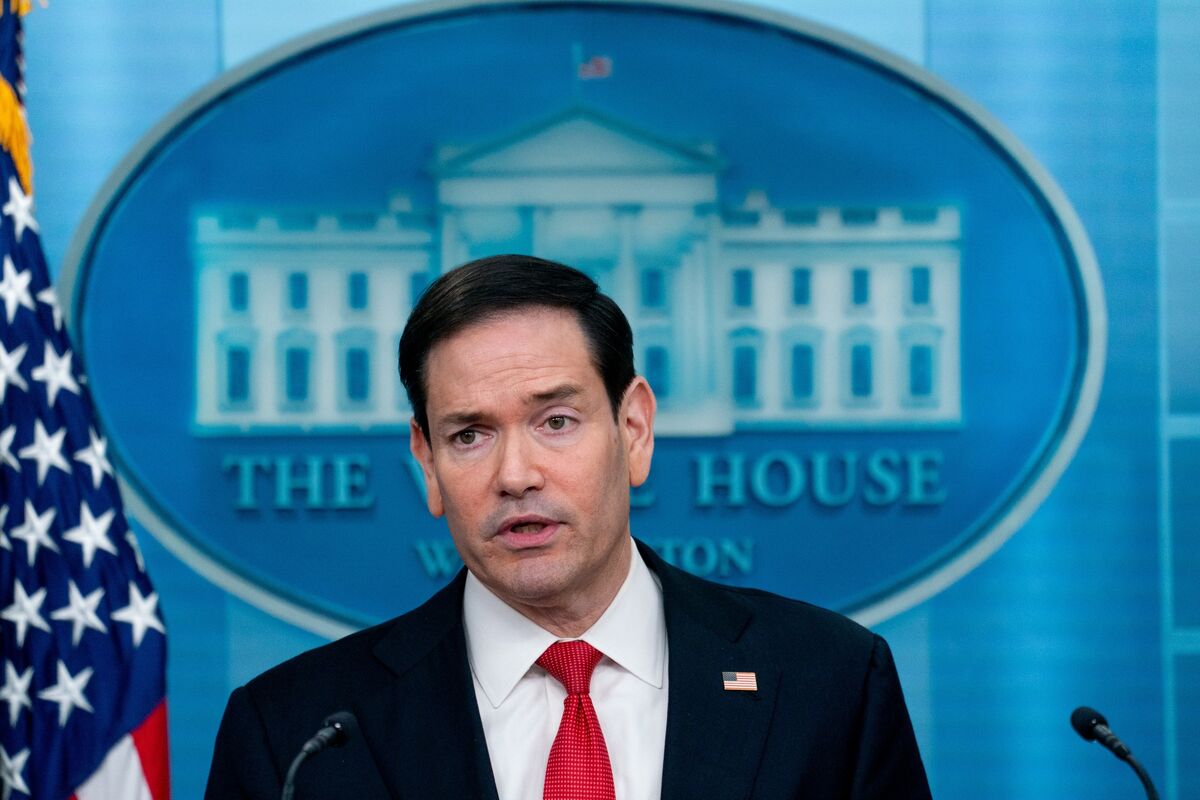
Secretary of State Marco Rubio said President Trump and Xi Jinping are expected to discuss Taiwan next week, while stressing that neither the U.S. nor China wants the Indo-Pacific destabilized. The remarks suggest a cautious but stable tone on a major geopolitical flashpoint, with no immediate escalation signaled. Market impact is moderate given the Taiwan-related risk premium for Asia, defense, semiconductors, and broader risk assets.
The immediate market signal is not a de-escalation of Taiwan risk, but a reduction in the probability of an imminent shock premium. That should compress short-dated volatility in semis and freight/logistics, while leaving longer-dated strategic risk intact. The key second-order effect is that investors may reprice a "managed competition" baseline: fewer headline-driven dislocations, but continued structural spending on reshoring, defense, and redundancy.
The most important beneficiaries are not Taiwan-exposed stocks on the equity index level, but suppliers tied to non-China capacity migration: US industrial automation, power equipment, defense electronics, and selected memory/logic names with diversified packaging and fabrication footprints. On the flip side, any relief in geopolitical hedging can temporarily weigh on defense multiples and on beneficiaries of emergency inventory builds, especially where demand has been pulled forward over the last 12-18 months.
Catalyst risk is concentrated around the meeting itself and the 1-4 week window after it. A neutral tone today can reverse quickly if either side uses Taiwan as leverage in trade or export-control negotiations, or if military activity around the Strait rises. The underappreciated tail risk is that "stability" language encourages complacency just as supply chains remain brittle; one incident would reprice shipping, semis, and FX in a matter of sessions, not quarters.
The contrarian view is that the market may overestimate the durability of any détente narrative and underestimate how much policy already assumes a slow-burn conflict. If so, the best trade is not a directional bet on Taiwan headlines, but on volatility and regional diversification: own the firms that benefit from persistence of fragmentation, and fade the ones whose valuation assumes a clean normalization of cross-strait trade and capex.
AI-powered research, real-time alerts, and portfolio analytics for institutional investors.
Request DemoOverall Sentiment
neutral
Sentiment Score
0.05
