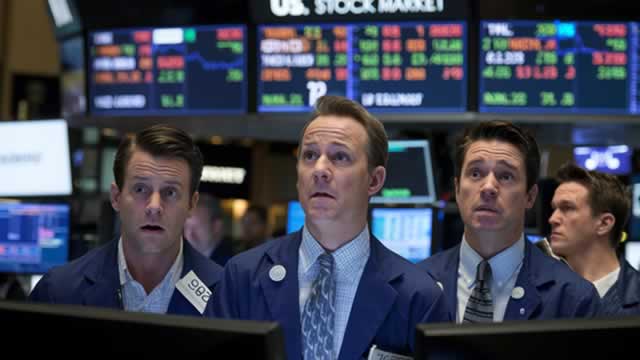
The July U.S. nonfarm payrolls report came in weaker than expected, which may lead markets to rethink the Fed’s interest-rate path. George Boubouras argues Fed Chairman Kevin Warsh’s push to reduce reliance on forward guidance could be a positive evolution in policy communication. Overall, the news adds mild downside risk to the near-term rate outlook while shifting expectations toward a more data-driven framework.
The immediate market read-through is a lower front-end rate path, but the cleaner expression is a bull-steepener rather than a simple duration rally. If labor softness is real, the first beneficiaries are long-duration assets and rate-sensitive equities; the first casualties are lenders and credit proxies that need a still-healthy labor market to protect asset quality and deposit growth. The key distinction is days versus months: the first reaction is a Treasury move, while the 1-3 month trade is whether this becomes a soft-landing repricing or the first crack in employment.
The push to de-emphasize forward guidance is more important for volatility than for the policy level. Less explicit path-setting usually means the market has to re-price on every data point, which raises rates vol and makes the front end more tradable via options than outright direction. That setup favors owning convexity in rates and being careful about assuming a smooth cut cycle.
Contrarian view: the market may be underpricing how quickly a weaker payroll trend can turn into a broader credit scare, but it may also be overpricing the number of cuts if inflation stays sticky. If the next CPI or wage print re-accelerates, the current easing narrative can unwind fast and punish long-duration crowded positions. Over 6-18 months, the more structural effect is a higher-vol Fed regime where single macro prints matter more than central-bank rhetoric.
AI-powered research, real-time alerts, and portfolio analytics for institutional investors.
Overall Sentiment
mildly negative
Sentiment Score
-0.15
Ticker Sentiment
