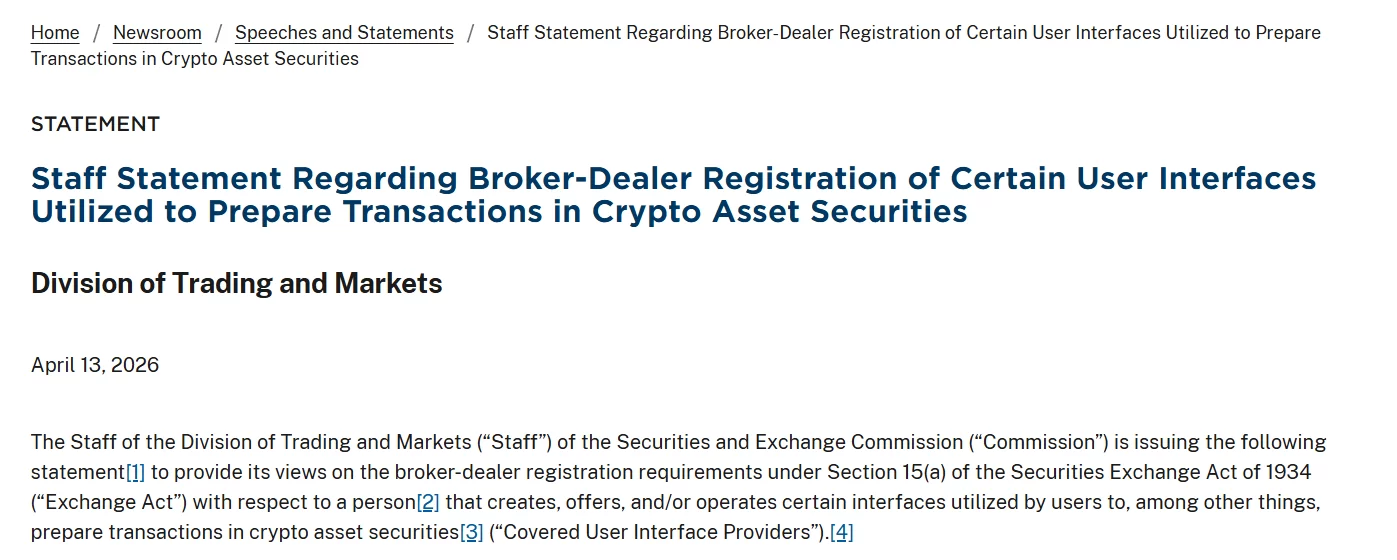
The SEC has eased rules for certain DeFi interfaces, allowing self-custodial web interfaces, wallet extensions, and mobile apps to facilitate crypto trading without broker-dealer registration or KYC, provided they remain neutral and do not custody assets or direct orders. The guidance is set to remain in place for five years unless superseded, giving DeFi teams a clearer compliance framework and room to expand product offerings. The move is likely to support sector growth and could be material for crypto-focused platforms and infrastructure providers.
This is less about a one-day repricing of DeFi tokens and more about removing a structural discount on the entire onshore crypto stack. The immediate beneficiary is the set of wallet, routing, and front-end providers that can now monetize U.S. traffic without carrying the compliance overhead that made customer acquisition uneconomic; the second-order winner is liquidity itself, because lower friction should compress spreads and increase transaction frequency, which is what durable fee models need. The biggest relative loser is any centralized venue or broker that relied on regulatory ambiguity as a moat, since neutral interfaces can now compete more directly on UX, latency, and fee take-rate. The market may underappreciate that this is a five-year optionality window, not a permanent regime change. That means the right framing is to own names with the highest operating leverage to U.S. self-custodial flow and the least balance-sheet/contagion risk if the guidance is narrowed later. The critical catalyst set is adoption, not the headline: wallet installs, active addresses, and swap volumes should inflect over the next 1-3 quarters if this is real, but any high-profile compliance failure or evidence of sanctioned/illicit flow through these interfaces could quickly force the SEC to re-tighten rules. Contrarian view: the move is probably bullish for incumbents that can meet the letter of neutrality, but it is not an automatic green light for every DeFi asset. Many protocols still depend on centralized liquidity, stablecoin rails, and front-end operators that may keep KYC in place for risk management, so the revenue uplift will likely concentrate in the top few interfaces rather than the long tail. In other words, the headline is broad, but the trade should be narrow: the best upside comes from picks-and-shovels exposure to U.S. crypto usage, not from generic beta to speculative DeFi tokens.
AI-powered research, real-time alerts, and portfolio analytics for institutional investors.
Request DemoOverall Sentiment
moderately positive
Sentiment Score
0.62
Ticker Sentiment
