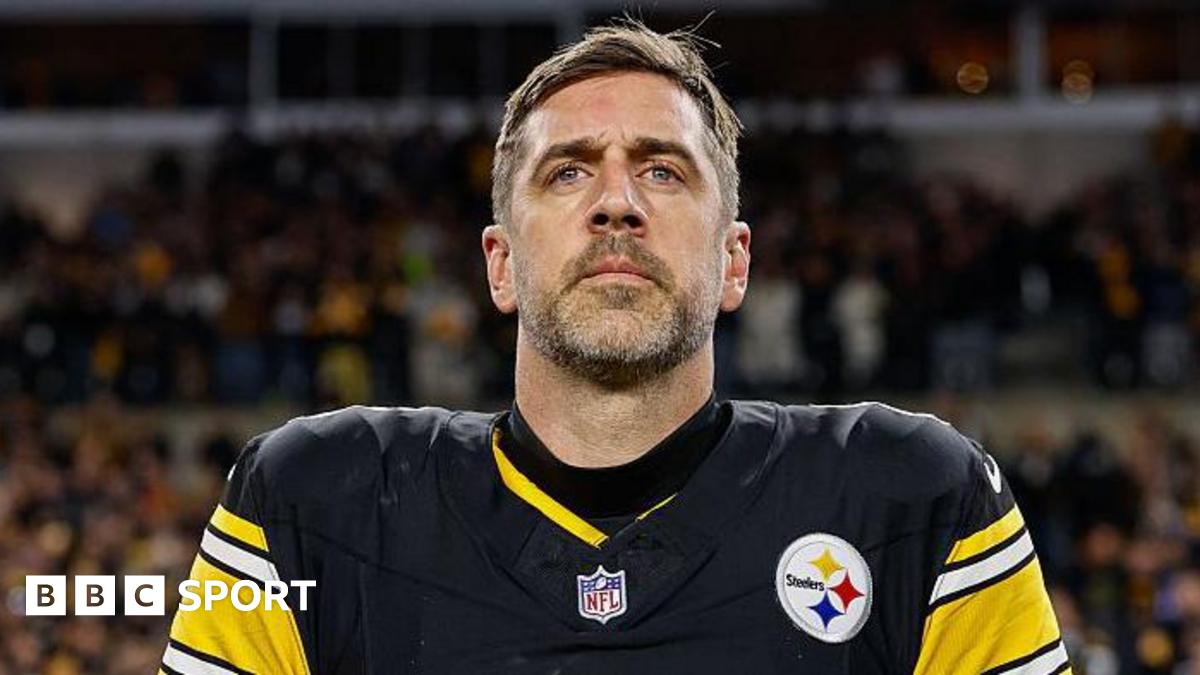
Aaron Rodgers has agreed a new one-year contract with the Pittsburgh Steelers, reportedly worth a guaranteed $22m and up to $25m with incentives. The deal removes uncertainty around the 42-year-old quarterback’s future and keeps him in Pittsburgh for a 22nd NFL season after he helped the Steelers to a 10-7 record and the AFC North title last year. Market impact is limited, but the extension is a meaningful roster update for the team and its playoff outlook.
This is less about one quarterback and more about reducing organizational variance. A one-year commitment from a veteran bridge starter usually compresses near-term uncertainty in the entire football ecosystem: coaching job security improves, the front office can delay a full reset, and developmental assets get a cleaner runway rather than being forced into premature action. The market is likely underestimating how much this tilts the probability distribution toward a second straight competitive season, even if the ceiling remains capped.
The second-order effect is on succession planning. If the team has already spent draft capital on younger quarterbacks, a credible veteran buyback can actually increase the option value of those picks by allowing them to sit for 12 months rather than being exposed to game-speed failure. That said, the clock is now explicit: any decline in arm strength, mobility, or availability over the first half of the season would rapidly flip the narrative from stability to sunk-cost management, because the team would have to choose between maximizing a short-term push and accelerating the next starter.
From a risk perspective, this is a classic late-career injury/efficiency trade-off. The immediate upside is modest and front-loaded over the next 2-4 months, but the tail risk is ugly: one missed stretch can force a midseason regime change, which historically tends to hit team performance and internal cohesion harder than preseason uncertainty. The contract structure also suggests the franchise is buying optionality rather than conviction, so any early-season losing streak should be treated as a catalyst for sentiment reversal rather than just noise.
Consensus is probably too focused on the headline and not enough on the organizational signal: this does not eliminate transition risk, it simply postpones it. If the veteran is merely adequate, the team likely overachieves relative to low expectations; if he is below average, the front office can still justify a pivot because the long-term succession path is already in place. That asymmetry makes the setup mildly bullish on stability, but only until the first real sign of physical deterioration or losses stack up.
AI-powered research, real-time alerts, and portfolio analytics for institutional investors.
Request DemoOverall Sentiment
mildly positive
Sentiment Score
0.18
