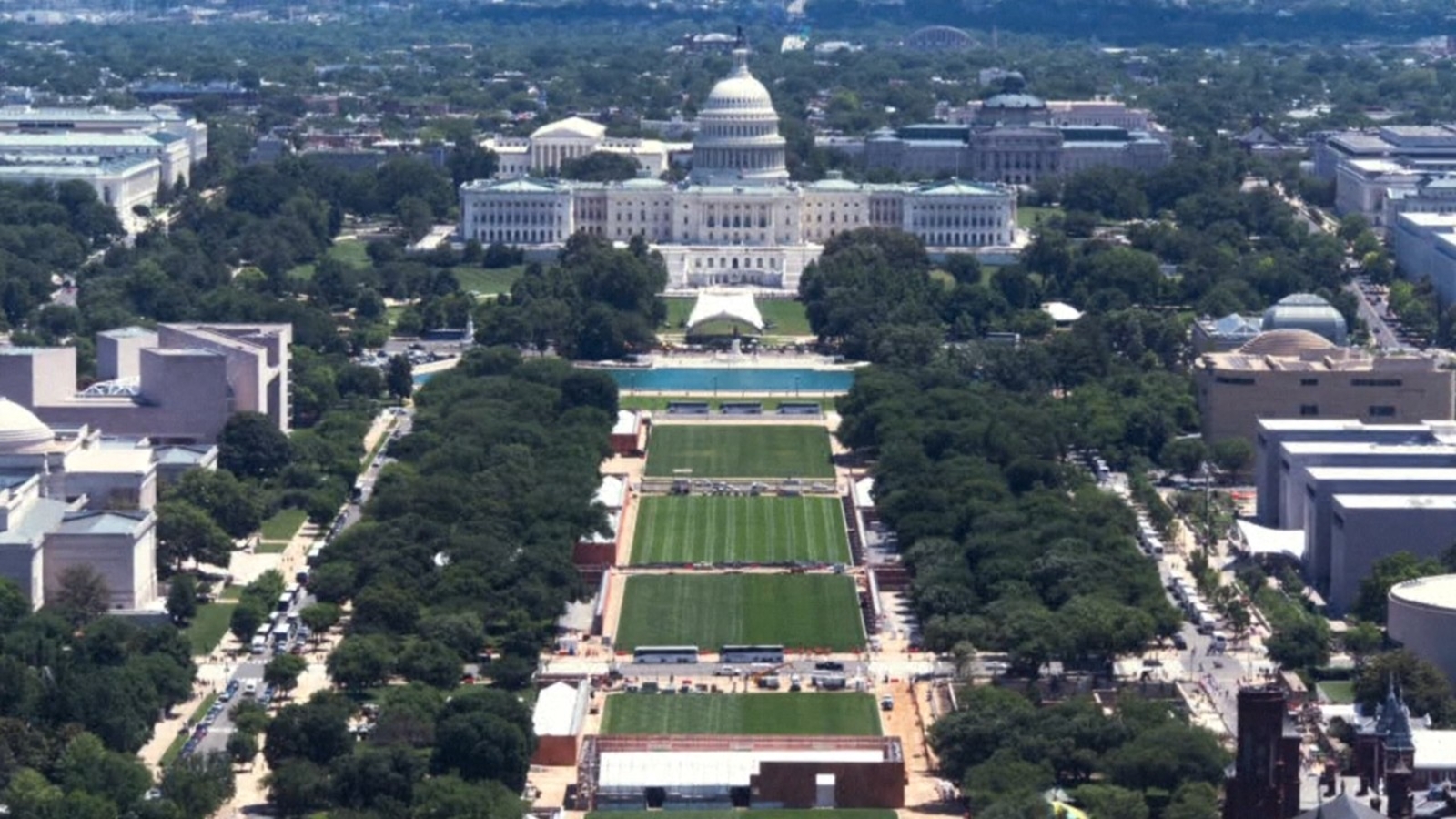
Freedom 250’s Great American State Fair lineup has already seen several cancellations, including Young MC, Morris Day, the Commodores and Martina McBride, after the inaugural performer slate was announced for the June 25-July 10 event. The controversy centers on the Trump-affiliated, politically charged nature of the National Mall concerts, with several artists saying they were assured the event was nonpartisan. The news is largely event- and entertainment-specific, with limited broader market impact.
This is less a music story than a signaling problem for any consumer-facing brand that is forced into a political adjacency without explicit control over the message. The immediate loser is the event organizer’s ability to convert legacy acts into broad, cross-partisan reach; each cancellation increases the odds that the lineup skews toward a narrower, higher-risk audience and turns the event into a liability magnet rather than a cultural tentpole.
The second-order effect is on artist booking economics. Once a single show becomes a visible political test, the option value of future appearances at any federally branded or politically proximate event falls, which should raise risk premia for promoters and suppress participation from mainstream legacy acts for 6-12 months. That pushes substitute demand toward lower-tier nostalgia acts that are more price-sensitive and less reputation-protective, degrading event quality and sponsorship appeal.
For investors, the relevant angle is not direct revenue exposure but reputation spillover into adjacent media, live events, and brands that rely on apolitical mass-audience positioning. The market usually underprices the duration of reputational contagion: the first cancellations are the easy part, but the real damage comes when agents, managers, and sponsors quietly blacklist similar formats, creating a persistent supply constraint for premium talent. The counterpoint is that controversy can still draw attention and attendance, but that benefit accrues mostly to political media and polarization-driven platforms, not to traditional entertainment intermediaries.
Near term, the key catalyst is whether additional cancellations force a re-brand or lineup reset within days to a few weeks. If that happens, the organizer’s credibility weakens further and sponsor diligence rises across comparable events into the summer booking cycle; if not, the event may muddle through as a niche spectacle with limited broader market impact.
AI-powered research, real-time alerts, and portfolio analytics for institutional investors.
Request DemoOverall Sentiment
neutral
Sentiment Score
-0.05
