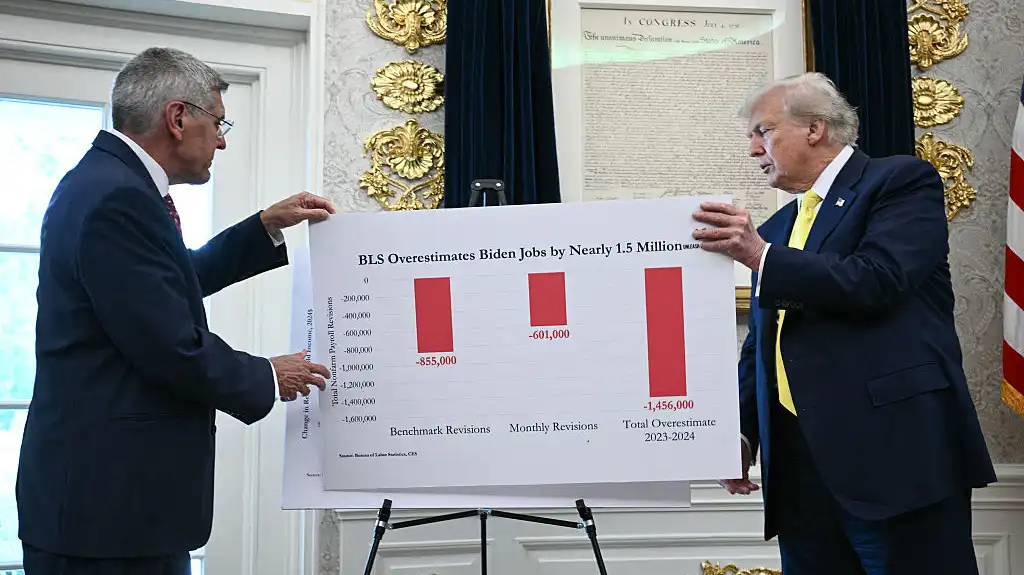
An investigation by the Department of Labor's watchdog into the Bureau of Labor Statistics' data collection, prompted by significant downward revisions to job numbers and political pressure, is raising concerns about the integrity of U.S. economic statistics. This erosion of trust in official data, likened to practices in less stable economies, poses a serious risk to the U.S.'s credibility as a borrower, potentially leading to higher borrowing costs in international capital markets and impacting global financial stability.
An investigation by the Department of Labor's watchdog into the Bureau of Labor Statistics (BLS) data collection practices is elevating concerns about the politicization of U.S. economic data. This scrutiny follows significant downward revisions to employment figures, which were 1 million jobs lower than initially reported for the year through March, and political pressure culminating in the firing of the BLS commissioner. The core risk, as highlighted by economists, is the erosion of trust in the integrity of official statistics, a practice typically associated with developing economies like Argentina or autocratic regimes, not a global economic leader. This loss of credibility poses a fundamental threat to the U.S.'s status as a reliable borrower in international markets. Should foreign lenders perceive U.S. economic data as untrustworthy, they may demand a higher risk premium, leading to increased borrowing costs for the U.S. government. This could have cascading effects throughout the economy, potentially raising interest rates for consumers and businesses, irrespective of the underlying economic strength.
AI-powered research, real-time alerts, and portfolio analytics for institutional investors.
Overall Sentiment
strongly negative
Sentiment Score
-0.70
