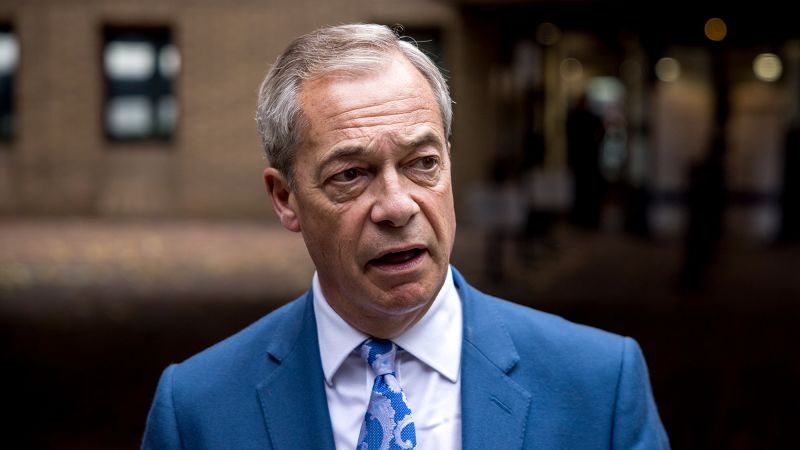
Approximately 20 former classmates from Dulwich College have publicly accused Reform UK leader Nigel Farage of racist and antisemitic bullying during the 1970s and 1980s; Farage, 61, has categorically denied the claims. The allegations threaten to undermine Reform’s effort to expand beyond its roughly 15% core support by alienating moderate voters ahead of a general election not due until 2029, with YouGov polling in September showing a plurality of white British voters view Reform as racist (46% vs 36% not) and only 13% of ethnic minority voters favorable toward Farage. For investors, the story increases political uncertainty and reputational risk around a potential Farage-led government, but is unlikely to be an immediate market-moving event absent broader shifts in polling or coalition dynamics.
Market structure: A sustained rise in Nigel Farage/Reform support is a negative shock for domestically‑focused UK assets and sterling and a relative positive for large-cap exporters and commodity producers. Expect FTSE 250 (domestic SMEs, regional banks, retail, leisure) to underperform FTSE 100 exporters by 5–15% on a meaningful GBP selloff (3–8%) and a 25–75bp repricing higher in 10y gilts in a shock scenario. Passive flows will amplify moves because ETFs concentrate retail exposure to domestic indices. Risk assessment: Tail risk is low‑probability but high‑impact: a credible Reform surge or coalition lead could deliver GBPUSD -5% to -12% and UK 10y +50–150bp within weeks, while a swift tactical‑voter coalition could reverse the move just as fast. Immediate horizon (days): headlines/poll spikes; short term (weeks/months): tactical voting and media cycles; long term (quarters/years): policy uncertainty if Reform reaches double digits consistently. Hidden dependency: markets price policy risk only when polling persistently exceeds ~20–25%; below that level volatility is transitory. Trade implications: Favored plays are FX and index-relative positions, not broad directional long/short UK equity bets. Tactical ideas: 3‑month GBP put spreads as a cheap tail hedge; short FTSE 250 futures vs long FTSE 100 futures to capture exporter/dollar‑earnings cushion; selective longs in USD‑earning majors (BP, HSBC) as natural hedges if GBP weakens. Size trades conservatively (0.5–2% NAV each) and use clear poll/price triggers (see decisions). Contrarian angles: The market consensus may overstate permanence—historical parallels (UKIP 2014–16) show volatility often reverses once mainstream parties react or tactical voting mobilizes. If Reform stalls under ~20% support or allegations grow politically stale, domestic cyclicals can rebound 10–20% from oversold levels; consider staged accumulation on >10% index dislocation. The key risk to these trades is rapid coalition formation or policy clarity that removes uncertainty, which would tighten spreads and reverse FX moves.
AI-powered research, real-time alerts, and portfolio analytics for institutional investors.
Request DemoOverall Sentiment
moderately negative
Sentiment Score
-0.25
