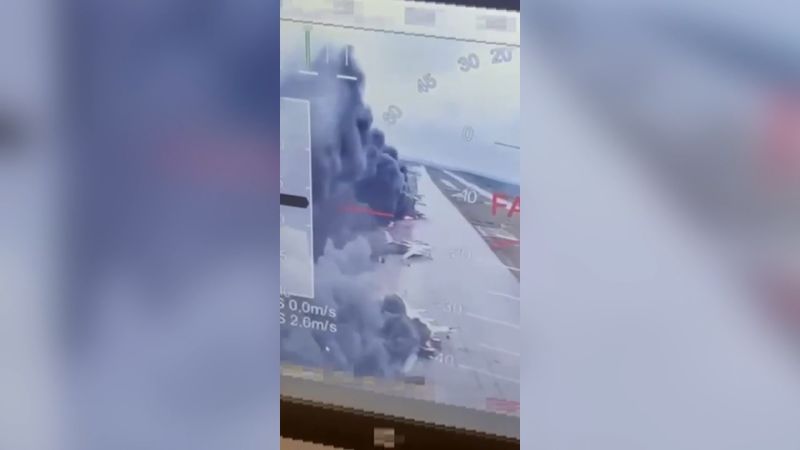
Ukraine conducted a sophisticated drone attack against four Russian airfields deep within Russia, reportedly damaging or destroying 41 aircraft, including strategic bombers and surveillance planes. The attacks, launched from within Russia using smuggled drones, bypassed traditional long-range missile limitations and exploited insufficient Russian air defenses, potentially impacting Russia's capacity for long-range missile strikes against Ukraine and nuclear deterrence patrols. While Russian officials downplayed the damage, Ukrainian sources claim significant losses, including a substantial portion of Russia's strategic cruise missile carriers and a costly blow to its air fleet.
Ukraine's recent drone offensive against four Russian airfields, some located thousands of kilometers from its border, demonstrates a significant evolution in its operational capabilities and highlights critical vulnerabilities in Russian strategic asset protection. The Ukrainian Security Service (SBU) claims 41 aircraft were damaged or destroyed, including strategic bombers like the Tu-95 and Tu-22M3, and potentially an A-50 surveillance plane, with an estimated $7 billion in damages and impacting up to 34% of Russia's strategic cruise missile carriers at key bases. This meticulously planned operation, reportedly developed over more than a year and involving 117 drones smuggled into Russia for launch from close proximity, circumvented Russia's conventional long-range air defenses, which appeared unprepared for low-altitude, short-range attacks on assets previously deemed secure due to distance—a complacency perhaps underscored by aircraft being visibly parked in the open on commercial satellite imagery. While Russian official statements sought to downplay the incident, acknowledging only minor damage and repelled attacks in some areas, prominent Russian military bloggers voiced significant criticism, describing the event as a "tragic loss" attributable to "criminal negligence." Justin Bronk, a senior research fellow at RUSI, assessed that if even half of Ukraine's claimed aircraft losses are confirmed, it would significantly impair Russia's capacity for large-scale cruise missile salvos and its nuclear deterrence patrols, particularly as some of these Soviet-era aircraft, such as the Tu-95, are decades old and difficult to replace from a fleet that included 57 Tu-95s and 55 Tu-22M3s at the start of the year. The innovative tactics, including the use of operatives within Russia, concealed mobile launch platforms, and leveraging local telecommunication networks for drone control, signify a sophisticated advancement in asymmetric warfare capabilities.
AI-powered research, real-time alerts, and portfolio analytics for institutional investors.
Request DemoOverall Sentiment
mildly positive
Sentiment Score
0.30
Ticker Sentiment
