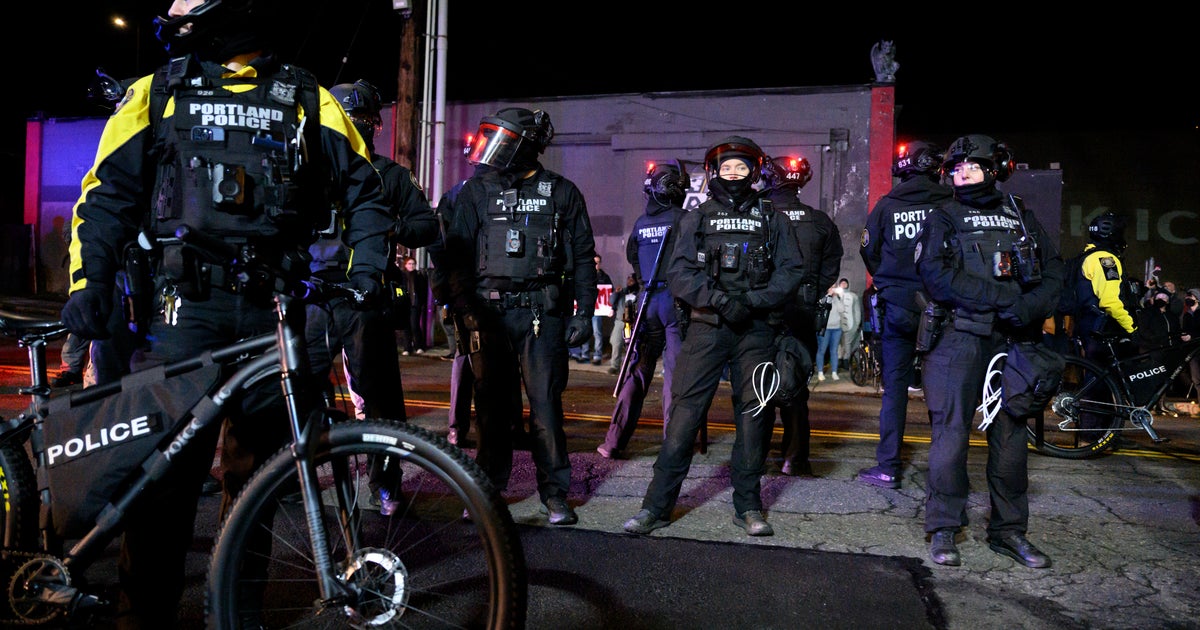
Portland Mayor Keith Wilson demanded that ICE leave the city after federal agents deployed tear gas, pepper balls and rubber bullets at a largely peaceful 'ICE out' protest that included families and children; Portland police made no arrests and the mayor announced plans to impose a fee on detention facilities that use chemical agents. Oregon Governor Tina Kotek condemned the actions, and the incident is one of several nationwide amid the Trump administration's immigration enforcement push, with President Trump directing Homeland Security to have federal agents protect federal property. The situation raises localized political, legal and reputational risk and could prompt municipal regulatory or fiscal responses, but is unlikely to materially move broad financial markets.
Market structure: Immediate winners are defense primes (LMT, RTX, GD) and commercial suppliers of non‑lethal crowd‑control, surveillance and body‑cams (AXON) because federal deployments raise procurement probability and pricing power for equipment/maintenance; losers are detention operators (CXW, GEO) and municipal services in protest hotspots if local fees/legal exposure roll into P&L. Competitive dynamics favour large incumbents with federal contracts (scale, compliance track records) over smaller security OEMs; private prisons face concentrated bilateral counterparty risk if ICE contracts decline by >10–20% regionally.
Risk assessment: Tail scenarios include (a) sustained national unrest that forces a +5–10% reallocation of DHS discretionary budgets into equipment and contractor spend (positive for LMT/RTX) or (b) successful litigation/state bans and municipal fees that reduce private‑prison EBITDA by 10–30% over 6–18 months. Immediate noise (days) drives sentiment and local muni credit spreads; medium term (3–12 months) depends on DHS/congressional budget and election outcomes; long term (12–36 months) depends on policy direction and litigation precedents.
Trade implications: Bias to selectively long large defense primes and AXON and hedge with sovereign duration (TLT) for risk‑off spikes; selectively short CXW/GEO via limited put spreads if municipal ordinances proliferate beyond 3 cities in 90 days. Options are efficient: buy 6–12 month calls on LMT/RTX (theta tolerance) and 3–6 month put spreads on CXW/GEO to cap premium outlay.
Contrarian angles: Consensus frames this as political, yet the underpriced outcome is a structural procurement bid stream to large contractors — a 2–6% upside re‑rating if DHS draft increases border/homeland equipment budgets by >5% next fiscal year. Conversely, the market may already over‑discount CXW/GEO for idiosyncratic city actions; if fee proposals remain localized, short convexity could underperform. Watch for unintended effect: consolidated federal sourcing (favouring primes) and no national ban increases concentration risk in winners.
AI-powered research, real-time alerts, and portfolio analytics for institutional investors.
Request DemoOverall Sentiment
moderately negative
Sentiment Score
-0.30
