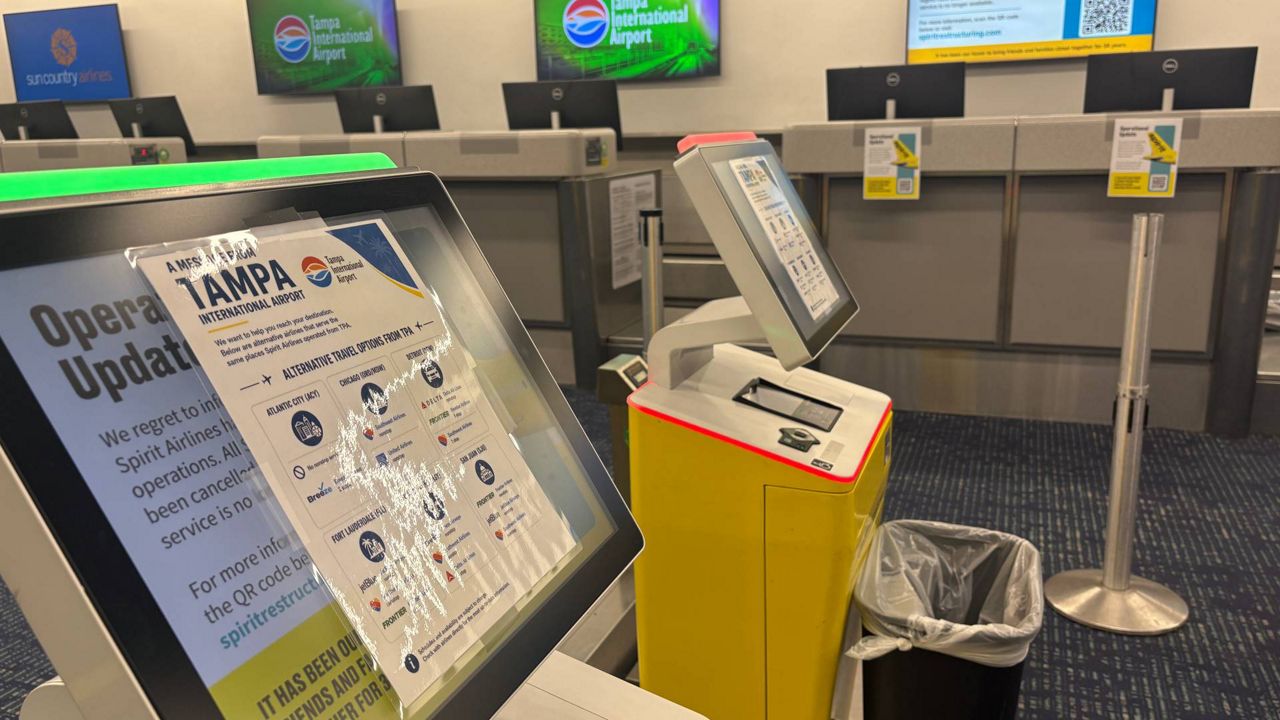
Spirit Airlines shut down abruptly, leaving former employees without clear guidance on benefits, healthcare, or 401(k) access, with some saying they received notice only an hour before the closure. The airline's exit is expected to lift fares as low-cost competition disappears, with industry commentary warning of higher ticket prices through summer and into fall amid fuel costs that have more than doubled in two months. Rival carriers are already targeting former Spirit customers and workers through loyalty-point offers and hiring portals.
Spirit’s exit is less a one-off bankruptcy than a forced re-pricing event for the entire domestic leisure stack. The immediate winner set is not just the obvious legacy carriers, but any airline with spare domestic capacity, healthier balance sheets, and the ability to absorb price-sensitive demand without destroying yields. The second-order effect is that the ultra-low-fare “anchor” that disciplined pricing in leisure-heavy city pairs is gone, so competitors can likely hold fare increases longer than the market expects, especially on routes where Spirit was the last meaningful budget constraint.
The more important near-term catalyst is network reallocation, not headline share capture. Travelers displaced from Spirit do not move 1:1 to legacy carriers; many will either shift to secondary LCCs or simply suppress travel, which means the revenue uplift to AAL/DAL/UAL may be smaller than the fare lift headline suggests, but unit revenue can still improve because the mix skews away from the lowest-yield seats. That argues for margin expansion rather than dramatic volume gains, with the cleanest read-through in the next 1-2 quarters as summer bookings clear and consumers accept higher baseline fares.
The risk is that this becomes a temporary dislocation rather than a durable pricing reset. If competitors over-allocate capacity to former Spirit routes, the fare support could compress quickly by late summer; conversely, if fuel remains elevated and consumer demand cracks, the industry may trade yield for load factor. The contrarian miss is that the shutdown may ultimately be bullish for fare discipline across the market, but bearish for total passenger miles, meaning airlines can look better on earnings even as underlying travel demand weakens.
For the labor angle, the more useful signal is the broader hiring pressure on legacy carriers: they can capture trained labor while maintaining selective growth, which reduces training bottlenecks and supports operational reliability into peak season. That is a subtle positive for execution quality at the larger carriers, particularly if they can convert rehired Spirit crew into lower-cost staffing at constrained bases. Over 3-6 months, this can matter more than the immediate consumer fare narrative because operational stability tends to support premium cabin and business demand resilience.
AI-powered research, real-time alerts, and portfolio analytics for institutional investors.
Request DemoOverall Sentiment
strongly negative
Sentiment Score
-0.70
Ticker Sentiment
